
Fuzz testing works by sending unexpected, malformed, or randomized input into Android interfaces and watching for crashes, abnormal behavior, or security failures. It remains one of the most effective ways to discover vulnerabilities because modern software handles enormous amounts of untrusted input every day.
What makes fuzz testing interesting to me is that it does not begin by assuming the developer already understands where the bug is hiding. Instead, it pressures the system continuously and looks for weak behavior under stress.
That matters on Android because devices constantly process outside input: media files, browser content, wireless communication, app messages, USB traffic, and inter-process communication requests. Every one of those pathways creates opportunities for malformed data to reach complex code.
Many vulnerabilities are not obvious during ordinary testing because normal users rarely interact with software in abnormal ways. Fuzzing changes that completely.
Takeaways
- Fuzz testing exposes weaknesses by feeding malformed input into reachable interfaces.
- Android attack surfaces such as browsers, broadcast receivers, and USB handlers are common fuzzing targets.
- The goal is not random chaos alone but systematic stress against exposed code paths.
- Crashes, hangs, and unexpected behavior often reveal deeper security flaws.
Fuzz Testing Starts With a Simple Idea
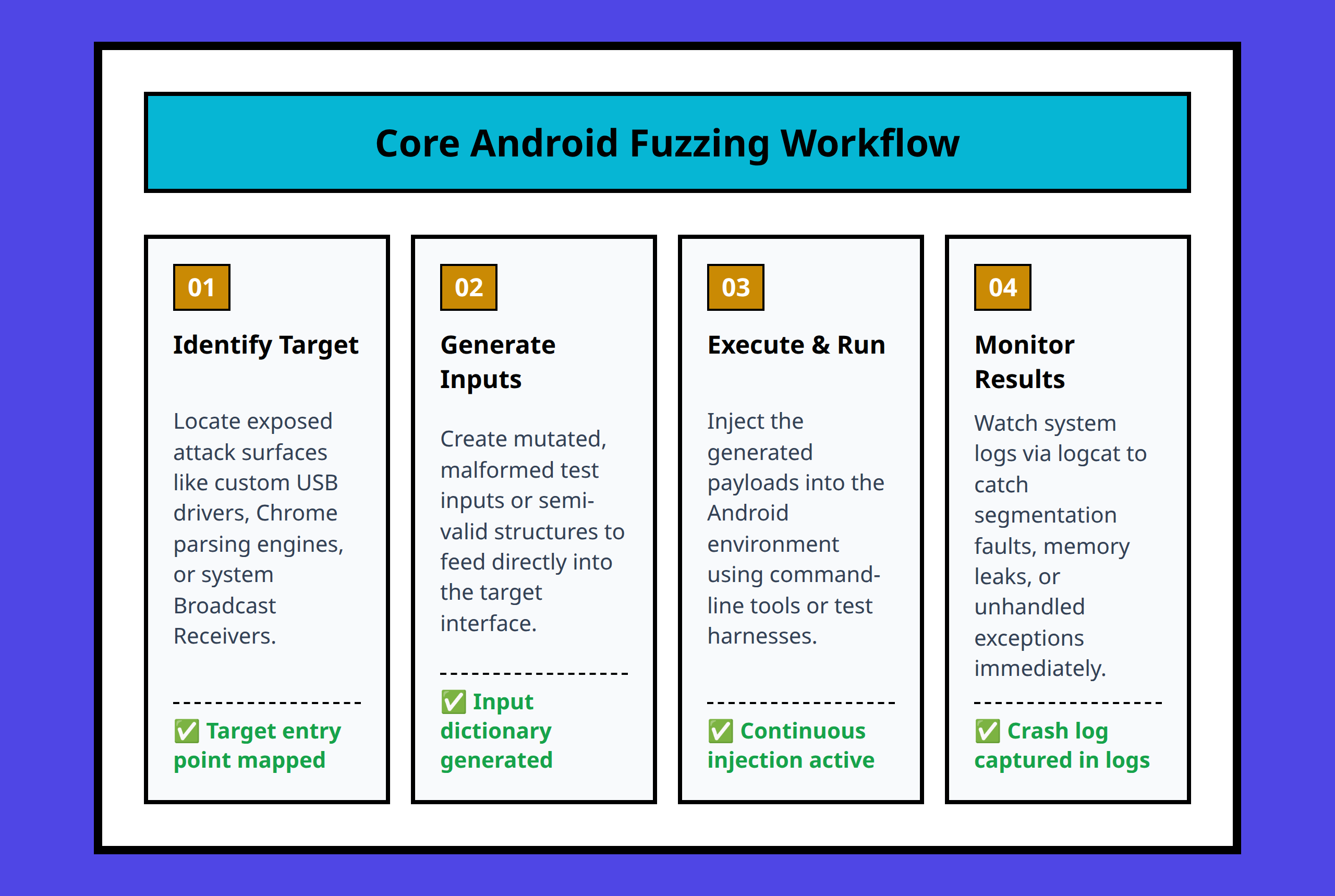
At its core, fuzz testing asks a straightforward question:
What happens if software receives input it was never expecting?
That input may be corrupted, oversized, incomplete, malformed, randomized, or structured in unusual ways.
The important point is that fuzzing intentionally breaks normal assumptions.
Many applications behave correctly when they receive clean, expected data. Security problems often appear when input falls outside what the developer anticipated.
I think this is one reason fuzzing remains so effective even as software testing improves. Traditional testing usually checks whether features work correctly. Fuzz testing checks how systems behave when things stop looking normal.
Good Fuzzing Depends on Choosing the Right Target
One mistake beginners make is treating fuzzing like blind randomness.
In practice, useful fuzz testing starts with target selection.
Researchers first identify interfaces that:
- Process untrusted input
- Handle complex data structures
- Accept external communication
- Run with meaningful privileges
- Interact with parsers or decoders
Android devices contain many such surfaces.
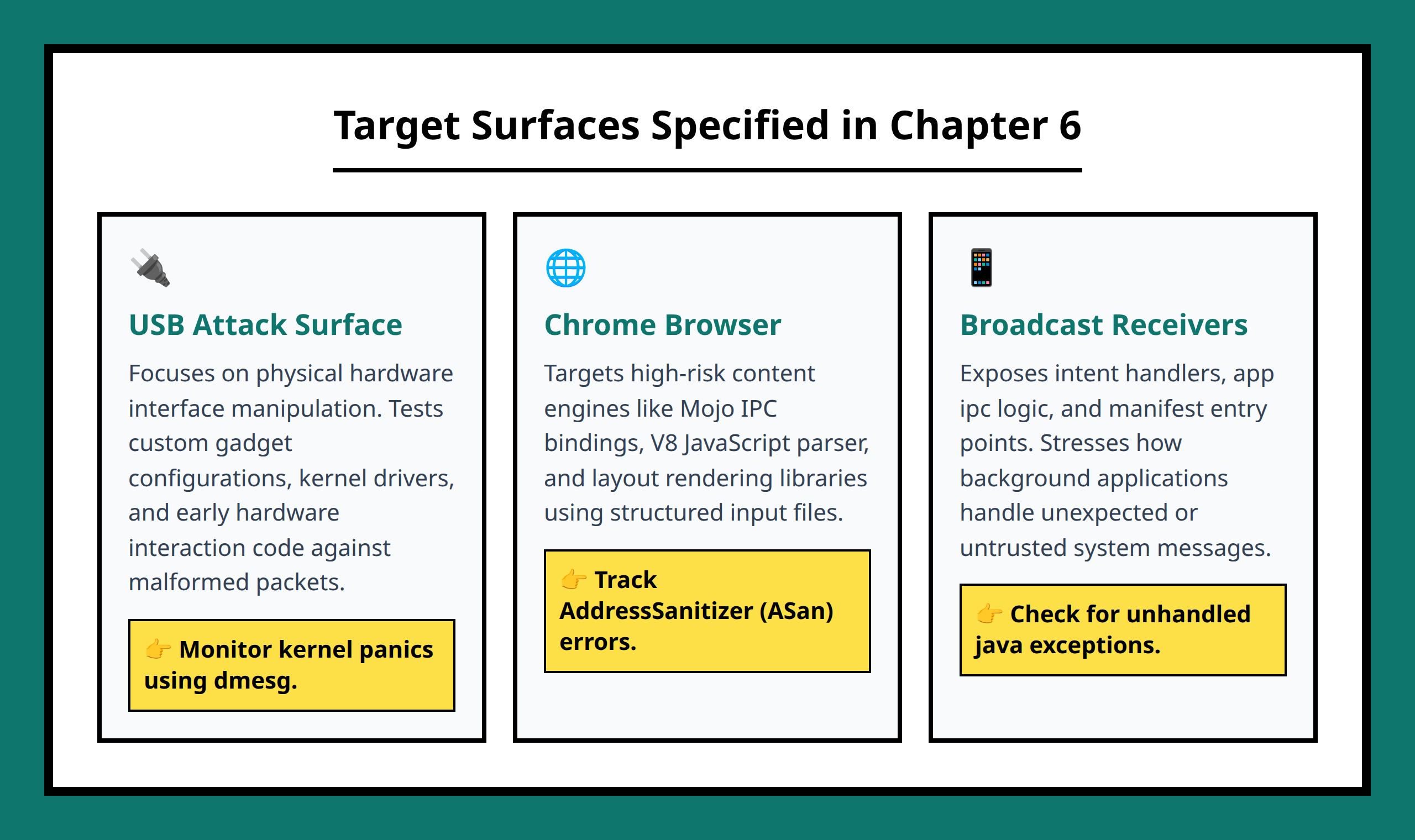
Browsers interpret web content. Media frameworks parse audio and video formats. Broadcast receivers process inter-application messages. USB services interact with external hardware. Wireless protocols continuously handle nearby device communication.
I usually look for code paths where complexity and exposure overlap.
A simple interface with minimal parsing logic may not justify heavy fuzzing effort. A highly exposed parser handling unpredictable external data becomes much more interesting.
Malformed Input Is More Useful Than Random Noise
People sometimes imagine fuzzing as typing random garbage into software until something crashes.
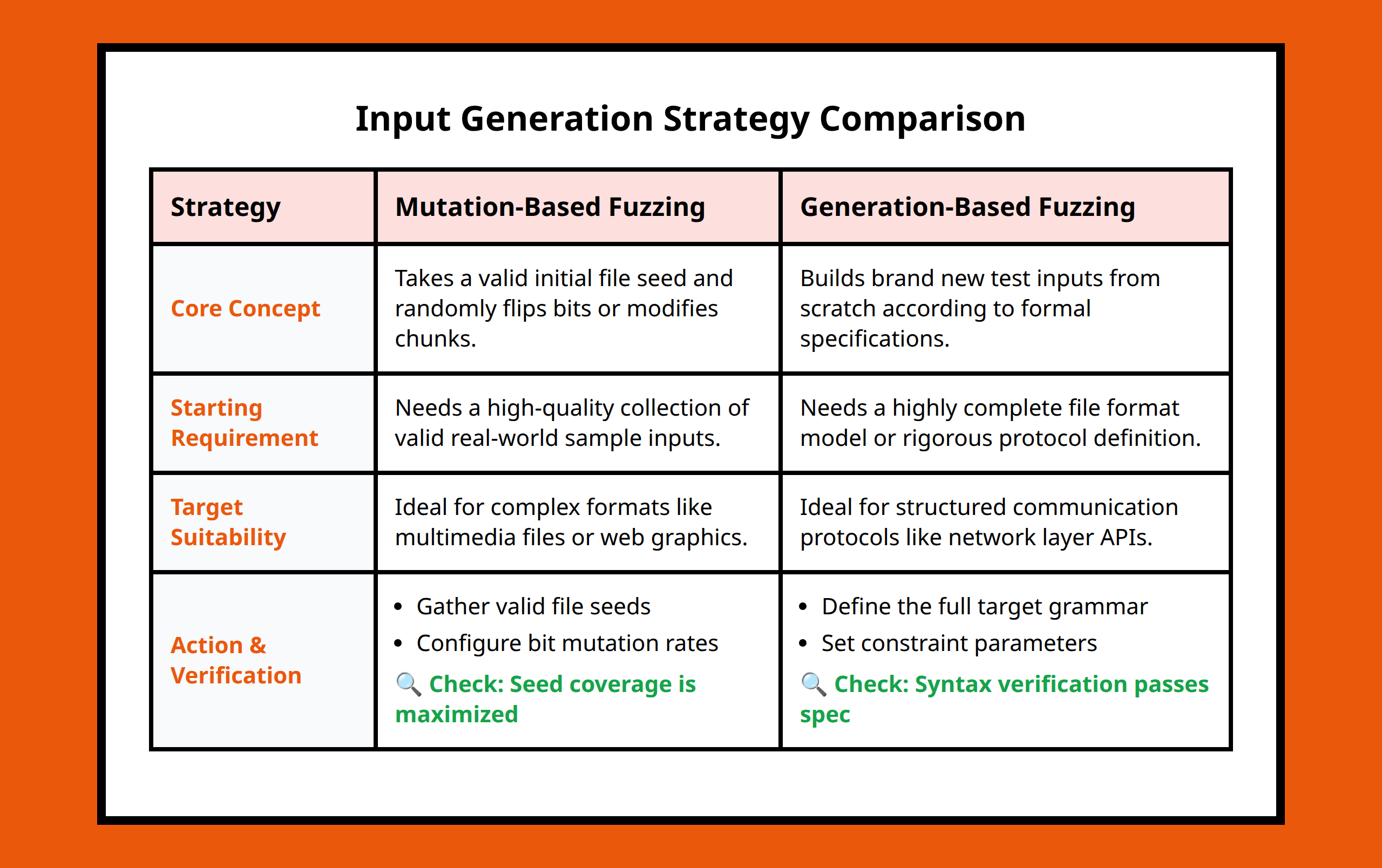
Modern fuzz testing is usually more structured than that.
Researchers often generate malformed inputs that still partially resemble valid data formats. That matters because completely invalid input may get rejected immediately before reaching deeper code.
A malformed image file, corrupted browser response, or damaged protocol packet may travel much farther through internal logic before failure occurs.
The goal is not simply producing chaos. The goal is exploring code paths developers did not fully anticipate.
I think of fuzzing as controlled pressure against assumptions.
Every parser, decoder, or input handler contains assumptions about structure, size, sequence, timing, or formatting. Fuzz testing systematically challenges those assumptions.
Monitoring Matters as Much as Input Generation
Generating malformed input is only part of the process.
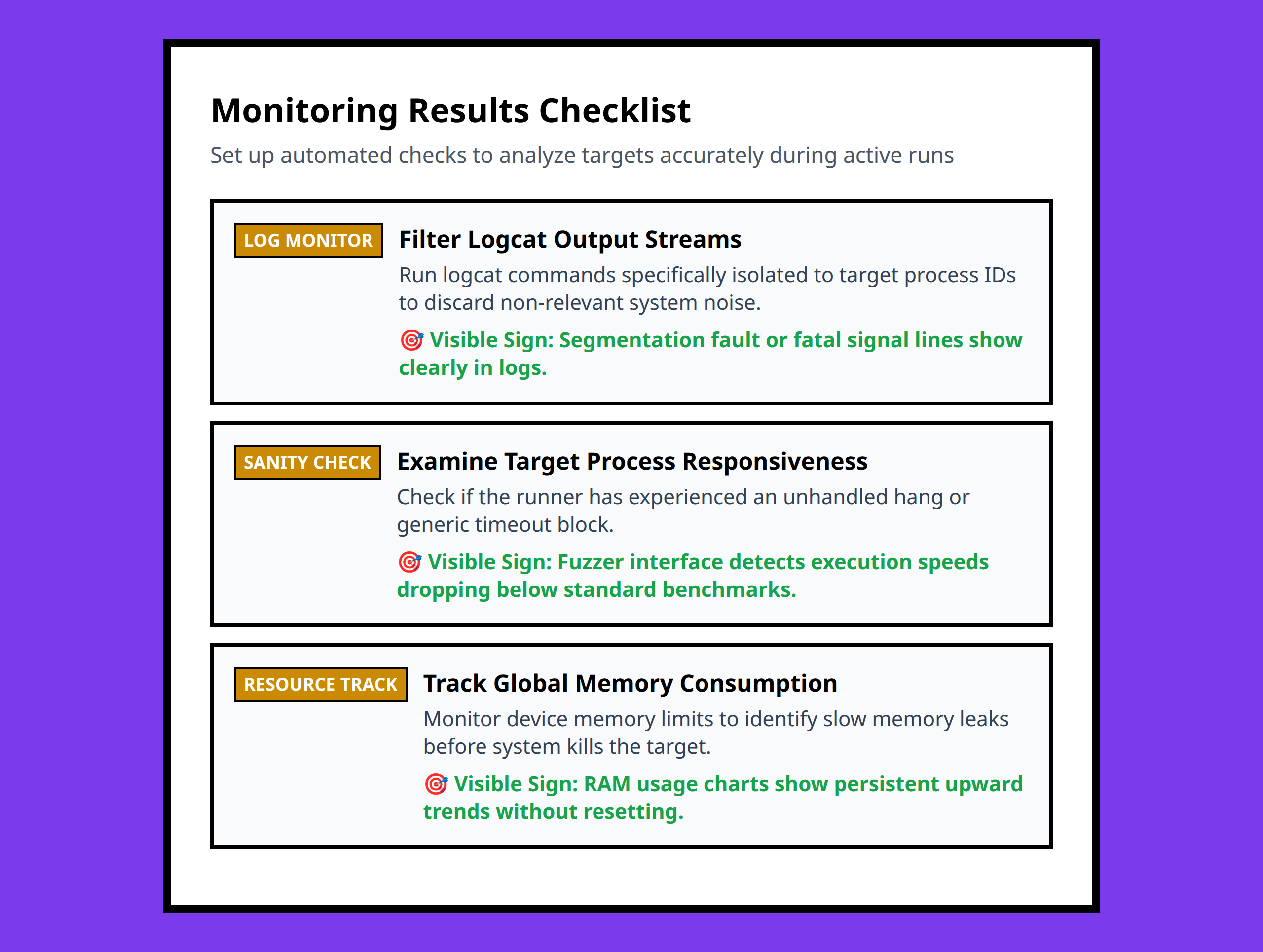
Researchers also need ways to observe how the target behaves afterward.
Fuzz testing often monitors for:
- Application crashes
- Memory corruption symptoms
- System hangs
- Unexpected reboots
- Security exceptions
- Abnormal resource usage
Without monitoring, fuzzing becomes noisy and difficult to interpret.
I think this is where fuzzing starts to feel less like random experimentation and more like operational analysis.
A crash itself is not automatically a critical vulnerability. Some crashes are harmless stability problems. Others reveal dangerous memory handling flaws or unsafe assumptions inside privileged components.
The monitoring phase helps researchers separate meaningless failures from behavior worth investigating further.
Broadcast Receivers Are Interesting Android Fuzzing Targets
Android broadcast receivers create useful fuzzing opportunities because they process incoming messages from other applications or system events.
If a receiver accepts external input carelessly, malformed intents or unexpected data structures may trigger unsafe behavior.
What makes broadcast receivers important is that they often sit at trust boundaries between applications.
A realistic situation might involve a developer exposing a receiver for convenience during app integration. Under normal use, the receiver processes expected messages correctly. But fuzzing reveals the component crashes when receiving malformed extras, oversized payloads, or unexpected values.
The application may appear stable during ordinary testing while still containing fragile handling logic underneath.
I pay close attention to externally reachable components because Android apps frequently communicate with each other in ways developers partially trust.
Browser Fuzzing Shows Why Parsers Are High-Risk
Browsers are classic fuzzing targets because they process enormous amounts of untrusted content constantly.
HTML, JavaScript, media content, images, fonts, and network responses all flow through complicated parsing systems.
Complexity increases risk.
The more input formats software supports, the harder it becomes to predict every edge case safely.
I think browser fuzzing illustrates one of the biggest lessons in Android security:
Highly exposed software handling complex external data deserves aggressive testing.
Even small parsing mistakes may create instability or security weaknesses because the browser continuously interacts with untrusted content from outside sources.
USB Fuzzing Changes the Threat Model
USB fuzzing introduces a different type of attack surface.
Instead of testing internet-facing content or inter-app communication, researchers analyze how Android handles external hardware interaction.
USB interfaces may expose:
- Device communication handlers
- Driver interactions
- Protocol parsers
- Data transfer mechanisms
- Accessory communication logic
What makes USB fuzzing interesting is that physical interaction changes assumptions.
A phone charging at a public kiosk, connecting to a laptop, or interacting with unfamiliar accessories may process input from external hardware automatically.
I would not classify USB surfaces as universally more dangerous than remote surfaces, but they often receive less everyday attention from normal users.
That mismatch between visibility and exposure makes hardware communication paths worth studying carefully.
Fuzz Testing Works Best as a Long-Term Process
One misconception about fuzzing is that it instantly reveals dramatic vulnerabilities.
Sometimes it does. More often, fuzz testing is valuable because it keeps applying pressure across large numbers of inputs over time.
The process is repetitive by design.
Software handling millions of possible input variations cannot realistically be tested manually case by case. Fuzzing automates abnormal interaction at scale.
I think the biggest strength of fuzz testing is that it reveals where developers made hidden assumptions about input safety.
Many Android vulnerabilities begin exactly there: a parser assumes a field length is reasonable, a receiver assumes values arrive in the correct order, or a service assumes outside data follows expected structure.
Fuzz testing systematically challenges those assumptions before attackers do.
- Fuzz testing: A testing method that feeds malformed or unexpected input into software to identify crashes, instability, or security weaknesses.
- Parser: Software that reads and interprets structured data such as files, network messages, or media content.
- Broadcast receiver: An Android component that receives and processes messages from apps or system events.
- Intent: An Android messaging object used for communication between applications or system components.
- Attack surface: The collection of reachable interfaces attackers may interact with on a device or application.
- Memory corruption: A software error where memory is accessed or modified incorrectly, potentially leading to crashes or security vulnerabilities.
- Protocol: A defined set of communication rules used by devices, applications, or services to exchange information.
- Decoder: Software that converts encoded or structured data into usable information.
References:
- https://security.googleblog.com/2023/08/android-goes-all-in-on-fuzzing.html
- https://zimperium.com/glossary/fuzz-testing
- https://blackhat.com/docs/eu-15/materials/eu-15-Blanda-Fuzzing-Android-A-Recipe-For-Uncovering-Vulnerabilities-Inside-System-Components-In-Android-wp.pdf
- https://blog.convisoappsec.com/en/introduction-to-fuzzing-android-native-components/
- https://proandroiddev.com/break-your-android-build-563e93171438
- https://www.oreilly.com/library/view/android-hackers-handbook/9781118608647/9781118922255c06.xhtml
- https://ietresearch.onlinelibrary.wiley.com/doi/10.1049/ise2/5001786
- https://testgrid.io/blog/fuzz-testing/
- https://medium.com/@natarajanck2/getting-started-with-fuzzing-what-it-is-and-why-it-matters-5dc4a5fc88ee