
Hardware debug interfaces give engineers powerful low-level access to Android devices, but those same interfaces can also become security weak points. UART, JTAG, SPI, and USB pathways sometimes expose firmware, memory access, debugging capabilities, or privileged communication channels that bypass normal software protections entirely.
Most Android security discussions focus on software exploits, malicious apps, or network attacks. I understand why those topics get attention because they affect large numbers of users remotely. But once physical access enters the picture, the security model changes dramatically.
A device may have strong sandboxing, modern exploit mitigations, and carefully managed permissions at the operating-system level. None of that automatically matters if hidden hardware interfaces quietly expose low-level access underneath the software stack.
That is what makes hardware debugging interfaces so interesting from a security perspective. They often exist for legitimate engineering and manufacturing reasons, yet they can accidentally create pathways around many of the protections users assume are protecting the device.
Takeaways
- Hardware debug interfaces often expose privileged low-level access hidden beneath Android software protections.
- UART and JTAG interfaces can reveal boot logs, memory access, debugging functions, or firmware interaction.
- Physical possession changes the attack model because attackers can interact directly with device hardware.
- Many hardware security risks come from exposed debugging functionality left accessible after manufacturing.
Hardware Interfaces Exist Because Devices Need to Be Built and Tested
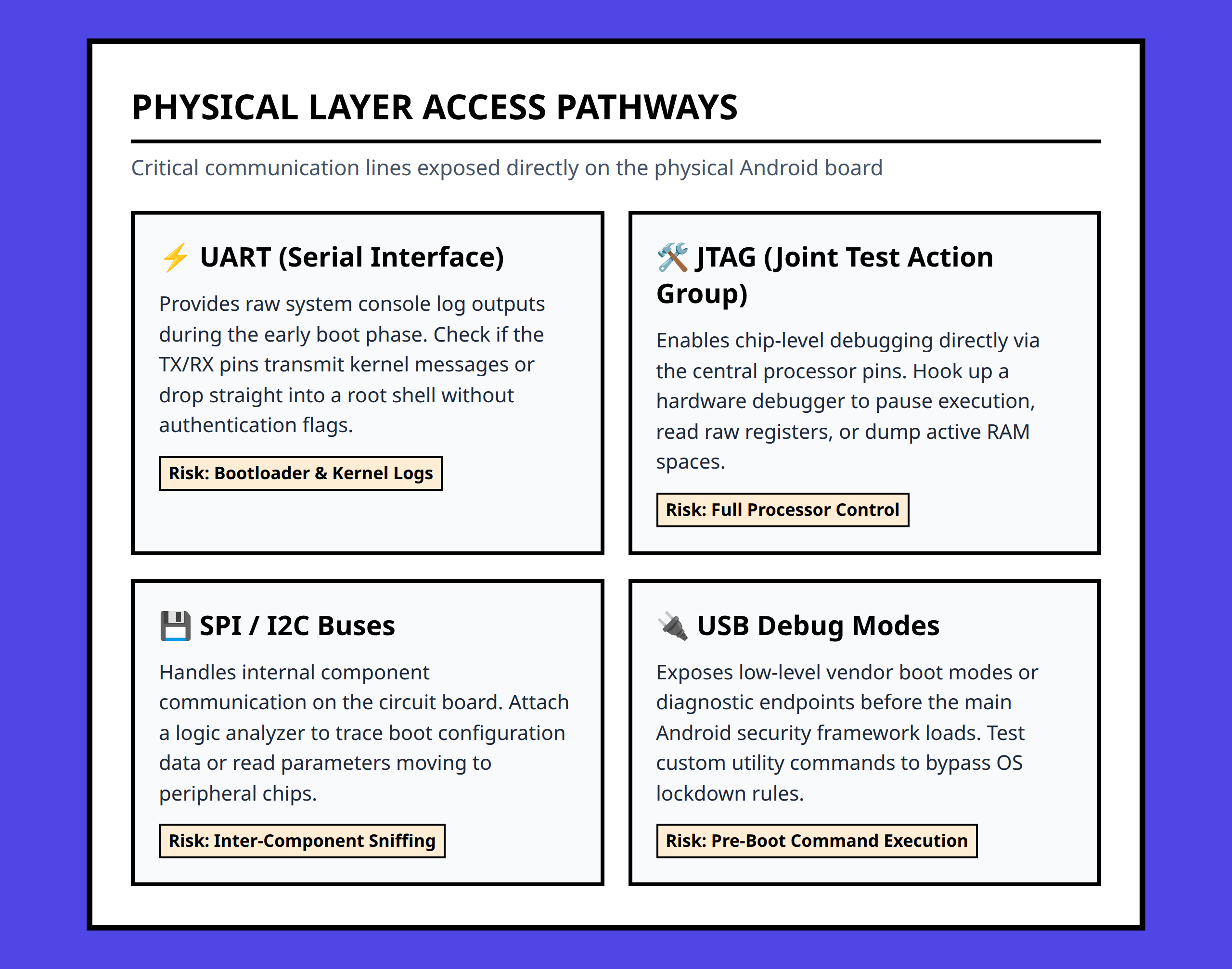
Modern Android devices are incredibly complicated systems.
Manufacturers need ways to test hardware, diagnose failures, recover damaged devices, inspect boot behavior, and debug low-level software during development. Hardware communication interfaces make that possible.
Some of the most important interfaces include:
- UART serial communication
- JTAG debugging interfaces
- SPI communication buses
- USB communication pathways
These interfaces are not automatically dangerous on their own. In fact, they are often necessary during manufacturing and engineering.
The problem begins when debugging access remains reachable after the device ships.
I usually see hardware security problems less as “hidden hacker backdoors” and more as leftover engineering access that changes the trust model once someone physically handles the device.
UART Often Reveals More Than Developers Expect
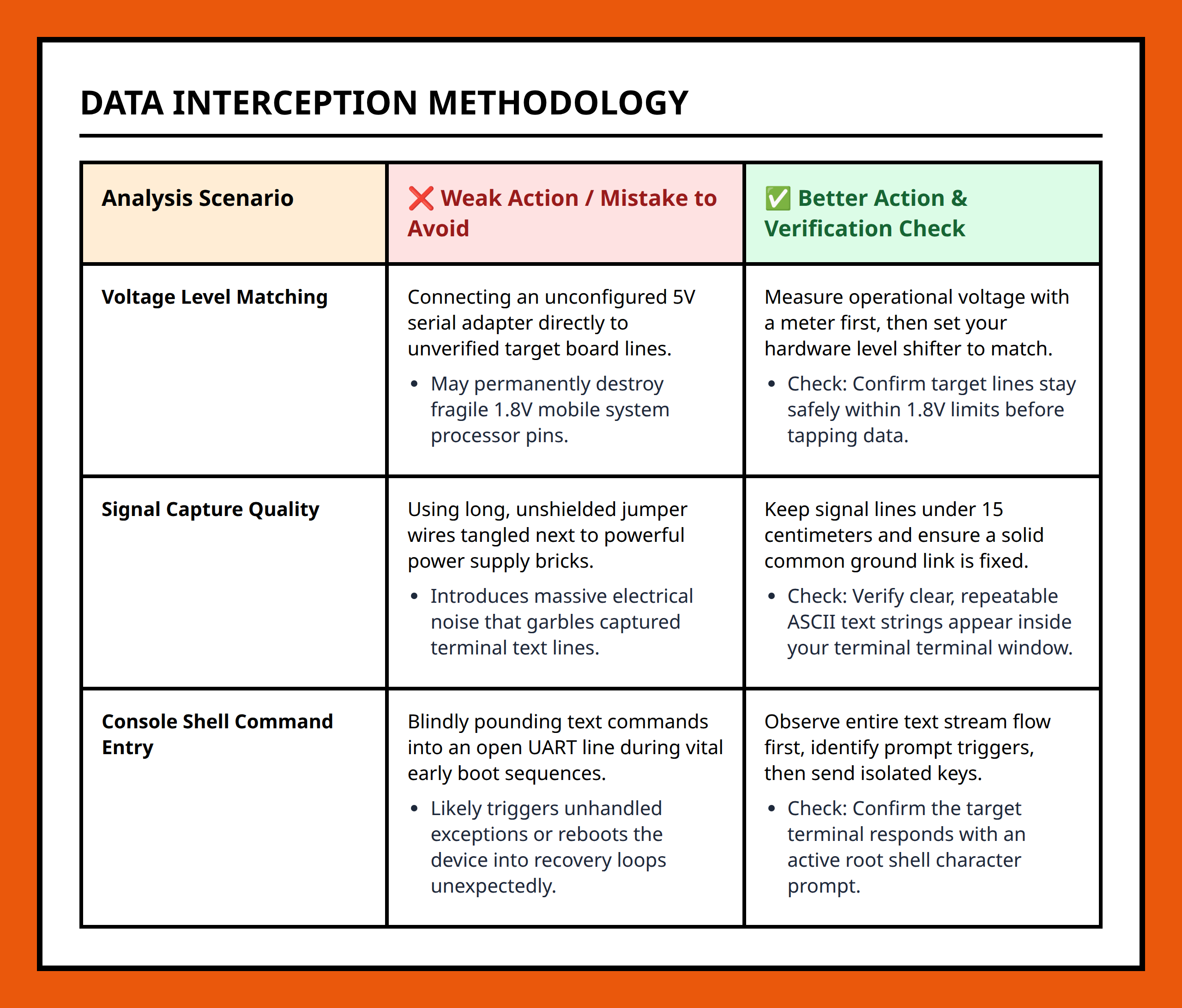
UART, short for Universal Asynchronous Receiver-Transmitter, is one of the most common low-level communication interfaces found in embedded systems and Android hardware.
UART connections frequently expose serial console output during boot processes, debugging operations, or system initialization.
That matters because boot logs and console interaction can reveal:
- Kernel messages
- Bootloader activity
- Crash information
- Hardware configuration details
- Authentication prompts
- Debugging access opportunities
I pay close attention to serial output because developers sometimes underestimate how much internal information appears during startup sequences.
A realistic situation might involve a researcher opening an old Android-based IoT device bought secondhand online. The software interface appears locked down completely. But once the hardware casing is opened and serial pins are connected, the device begins printing verbose boot information that reveals system behavior the software interface never exposed.
The operating system may still enforce permissions normally, but UART interaction can expose valuable insight before those protections fully initialize.
JTAG Changes the Level of Access Completely
JTAG interfaces are even more powerful from a security perspective because they are designed for deep hardware debugging and testing.
Unlike ordinary software-level interaction, JTAG may allow direct inspection or manipulation of processor state, memory, and execution flow.
This dramatically changes the security environment.
I think JTAG illustrates an important lesson about physical security:
Once hardware-level debugging becomes available, many software assumptions weaken immediately.
A secured Android lock screen, application sandbox, or restricted user account matters much less if an interface underneath the operating system exposes direct debugging access.
That does not mean every device leaves JTAG fully accessible. Many manufacturers disable or restrict debugging functionality in production hardware.
But security researchers continue searching for exposed or partially disabled debugging pathways because the access level can be extremely powerful.
Finding Debug Interfaces Is Often a Physical Investigation Problem
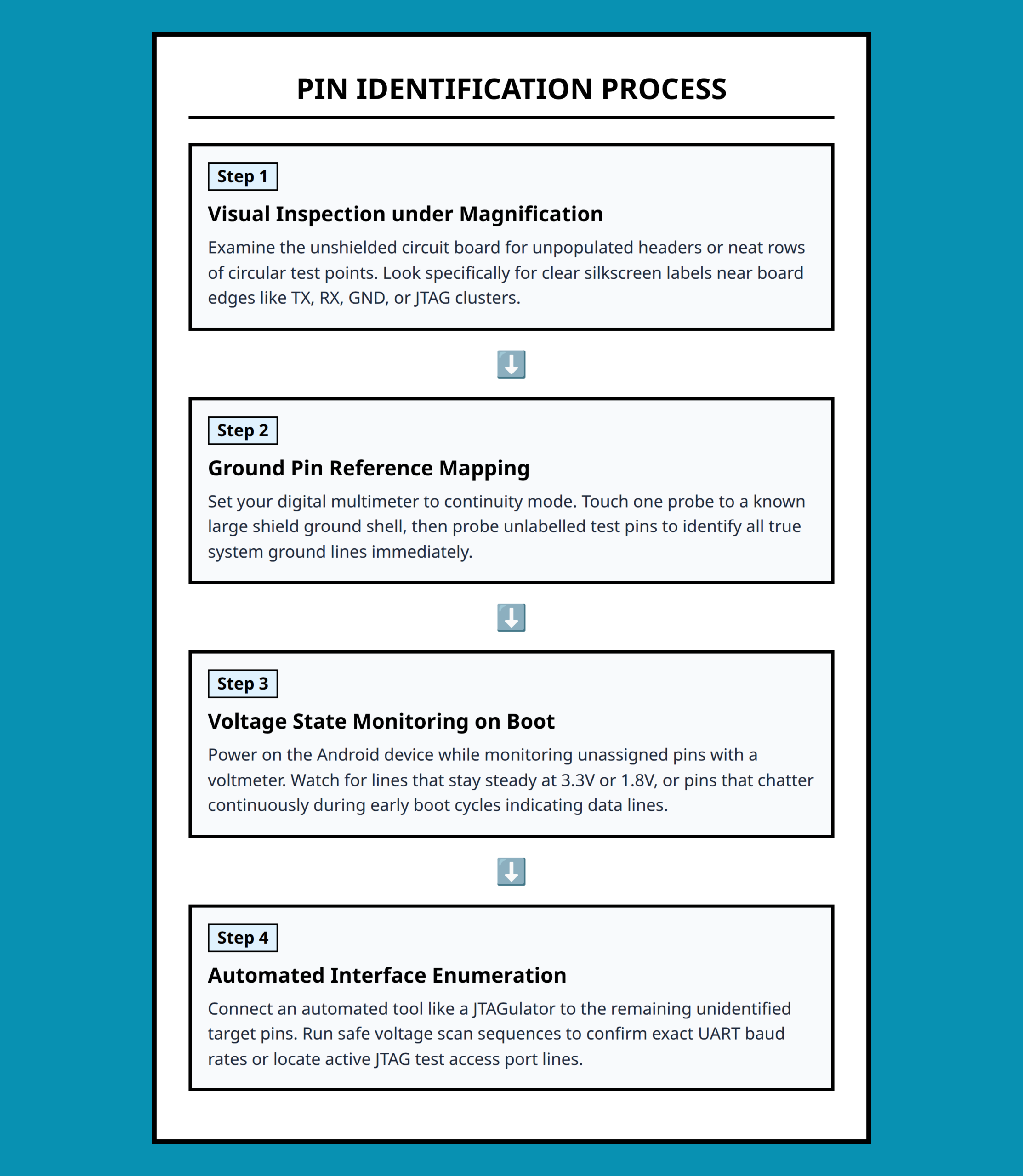
One thing that surprised me when studying hardware security is how much of the work involves identifying interfaces before interaction even begins.
Debugging connections are not always labeled clearly on consumer hardware.
Researchers often look for:
- Test pads on circuit boards
- Unpopulated connector headers
- Serial communication patterns
- Manufacturer debugging layouts
- Electrical signaling behavior
This turns hardware analysis into a mix of observation, electronics knowledge, and experimentation.
A small row of unlabeled pads on a board may appear meaningless to an ordinary user. To a hardware researcher, it may indicate a serial interface, debugging connection, or firmware access path.
I think this is one reason physical-device security feels very different from application security. Much of the investigation happens underneath the visible user interface entirely.
SPI Communication Can Expose Firmware and Stored Secrets
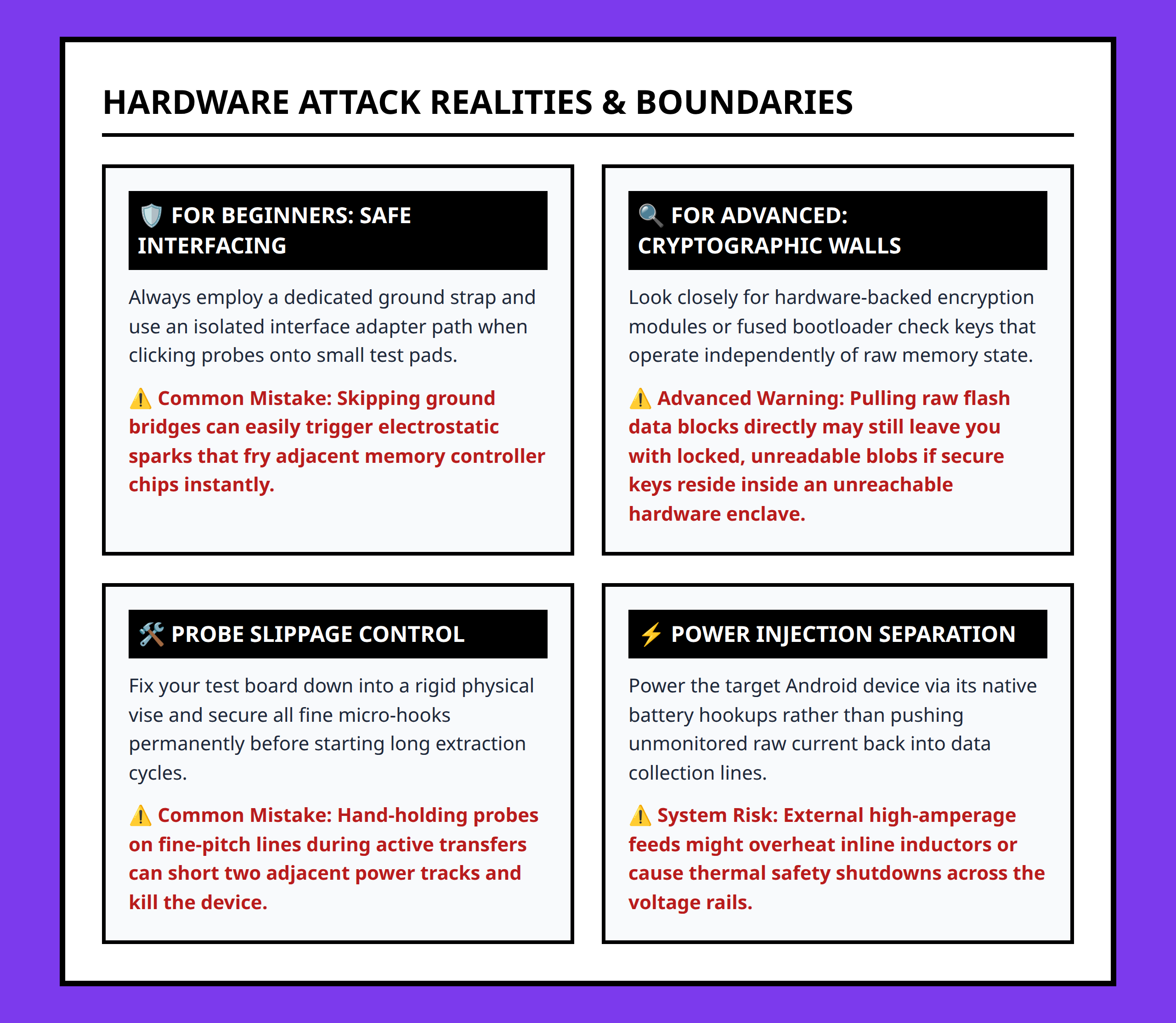
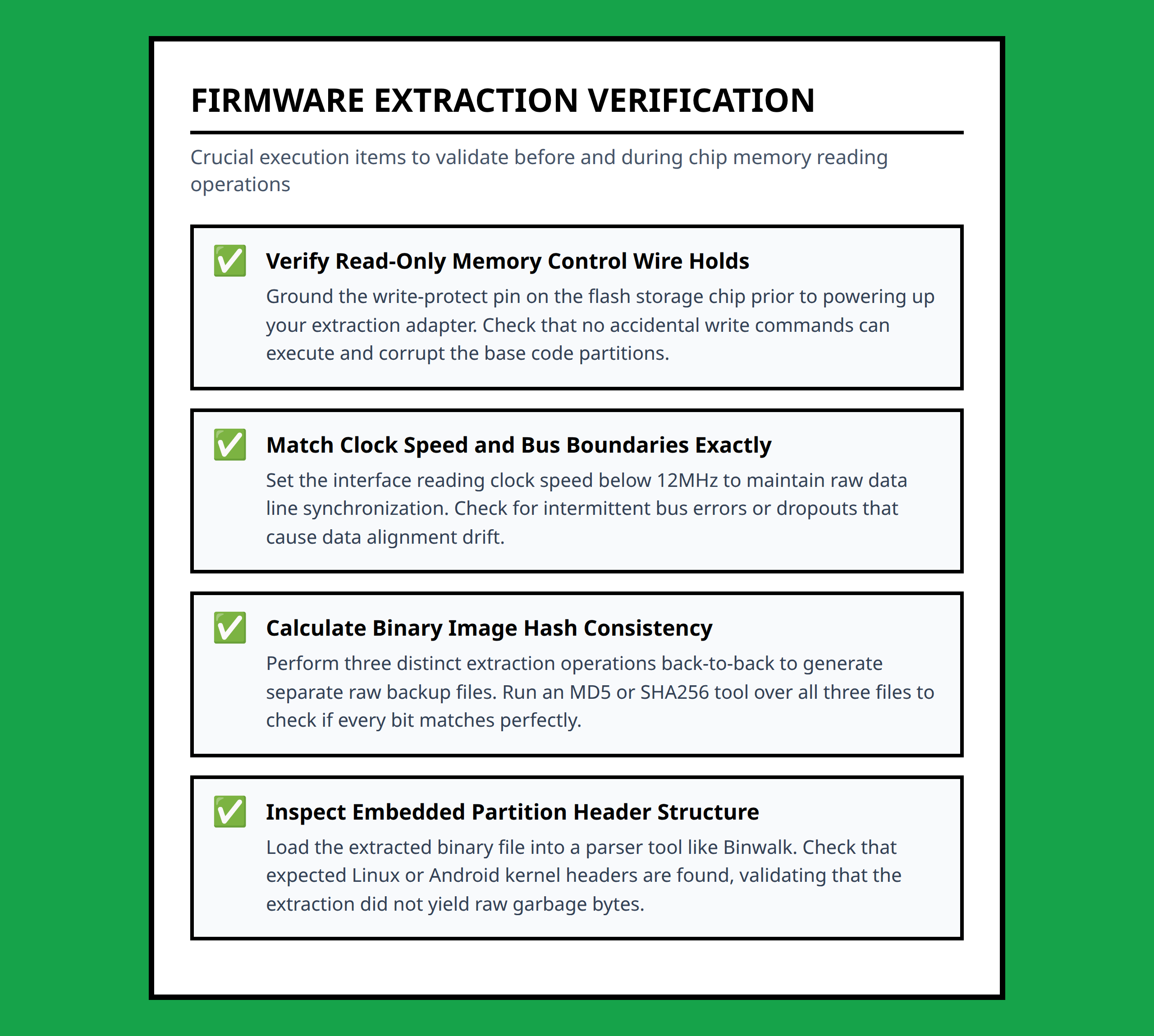
SPI, or Serial Peripheral Interface, is commonly used for communication between processors and storage components such as flash memory.
From a security perspective, SPI becomes important because firmware and stored data may travel across those communication pathways.
If attackers can monitor or interact with SPI communication successfully, they may gain access to:
- Firmware images
- Bootloader information
- Configuration data
- Stored secrets
- Device initialization behavior
I usually think of firmware extraction as one of the most operationally important parts of hardware analysis.
Once firmware becomes accessible, researchers can inspect system behavior offline instead of relying only on live interaction with the device.
That changes the pace of analysis completely.
A common example involves extracting firmware from embedded Android devices used in smart-home systems or industrial hardware. The visible application interface may reveal very little, but firmware analysis can expose hardcoded credentials, debugging features, insecure update mechanisms, or hidden services underneath.
USB Interfaces Blur the Line Between Convenience and Exposure

USB connectivity exists primarily for convenience: charging, file transfer, debugging, accessory support, and device management.
But USB also expands the attack surface significantly because devices often trust connected hardware more than users realize.
USB pathways may expose:
- Debugging modes
- Accessory communication
- ADB access
- Data transfer channels
- Driver interaction
I think USB security is interesting because the interaction feels normal and harmless to most users.
People connect phones to laptops, rental cars, charging stations, hotel TVs, and accessories constantly. Each connection potentially introduces communication paths the user never sees directly.
That does not mean every USB connection is dangerous. The more important point is that physical communication interfaces create trust assumptions very different from ordinary application-level interaction.
Physical Access Collapses Some Security Assumptions
Android security protections are strongest when attackers remain outside the device.
Physical possession changes that model.
Once someone can open hardware, attach probes, inspect connectors, manipulate boot states, or interact with low-level interfaces directly, additional attack opportunities appear that software-only threat models may not account for fully.
I usually view physical access as a multiplier rather than a guarantee of compromise.
Strong hardware protections still matter. Secure boot chains, encrypted storage, disabled debug interfaces, and hardware-backed security features can significantly reduce risk.
But hardware interfaces often exist below or beside the normal software trust boundaries users interact with daily.
That is why hardware debugging exposure matters so much operationally.
The Real Security Question Is Whether Debugging Access Still Exists in Production
I do not think the important question is whether debugging interfaces exist at all. Modern hardware development would be extremely difficult without them.
The more important question is:
How much privileged access remains reachable after the product leaves the factory?
Some devices lock debugging aggressively before shipping. Others leave partial access enabled for maintenance, manufacturing convenience, recovery workflows, or engineering oversight.
That difference changes the security posture dramatically.
Hardware security is often about reducing unnecessary low-level trust pathways before devices reach real-world environments where physical possession can no longer be controlled completely.
- UART (Universal Asynchronous Receiver-Transmitter): A serial communication interface commonly used for debugging and console access in embedded systems.
- JTAG: A hardware debugging interface that can allow low-level access to processors, memory, and execution state.
- SPI (Serial Peripheral Interface): A communication protocol often used between processors and storage or peripheral components.
- Firmware: Low-level software stored directly on hardware devices that controls system startup and core functionality.
- Bootloader: A low-level program responsible for initializing hardware and starting the operating system.
- ADB (Android Debug Bridge): A development and debugging interface used to communicate with Android devices over USB.
- Secure boot: A security process that verifies trusted software loads during device startup.
- Physical attack surface: Hardware-level pathways attackers may access when they physically handle a device.
References:
- https://www.mdpi.com/2079-9292/13/21/4269
- https://www.researchgate.net/publication/385443039_Cracking_the_Core_Hardware_Vulnerabilities_in_Android_Devices_Unveiled
- https://source.android.com/docs/security/overview/implement
- https://medium.com/@jignect/mobile-app-security-testing-explained-tools-techniques-and-real-world-insights-c6f140f9a641
- https://infosecwriteups.com/all-about-android-pentesting-f047b7c7e0f1
- https://appsec-labs.com/attack-and-tests/exposed-debugging-interfaces-security-testing-for-embedded-mobile-devices/
- https://build38.com/blog/threats-mobile-app-device/debugging-potential-security-risk/
- https://www.semanticscholar.org/paper/Exploring-USB-Connection-Vulnerabilities-on-Android-Amarante-Barros/4fd0e003e5311d895eeb1ca25a99c1f7b1d1f5a5
- https://arxiv.org/html/1904.05572v3
- https://www.kaspersky.com/resource-center/threats/android-mobile-threats
- https://pecb.com/en/article/the-weakest-link-in-information-security
- https://www.ncsc.gov.uk/collection/vulnerability-management/understanding-vulnerabilities
- https://medium.com/@kritstudy15/common-vulnerabilities-in-android-applications-8320bbc19613