Children build confidence by facing fears in manageable steps, not by avoiding anxiety completely or being pushed too far too fast. A gradual exposure approach helps fear lose its power while teaching children they can tolerate discomfort safely.
One of the hardest things for parents is watching a child panic over something that looks harmless from the outside. A classroom presentation, a barking dog, sleeping alone, ordering food at a restaurant — adults often see these situations as small. For an anxious child, they can feel enormous.
I think many parents get trapped between two instincts that both backfire. One is rescuing the child from every uncomfortable situation. The other is forcing them into situations before they are emotionally ready. Neither approach teaches the child how to handle fear. What actually helps is something slower, more deliberate, and far more practical: gradual exposure.
Why Avoidance Quietly Strengthens Anxiety
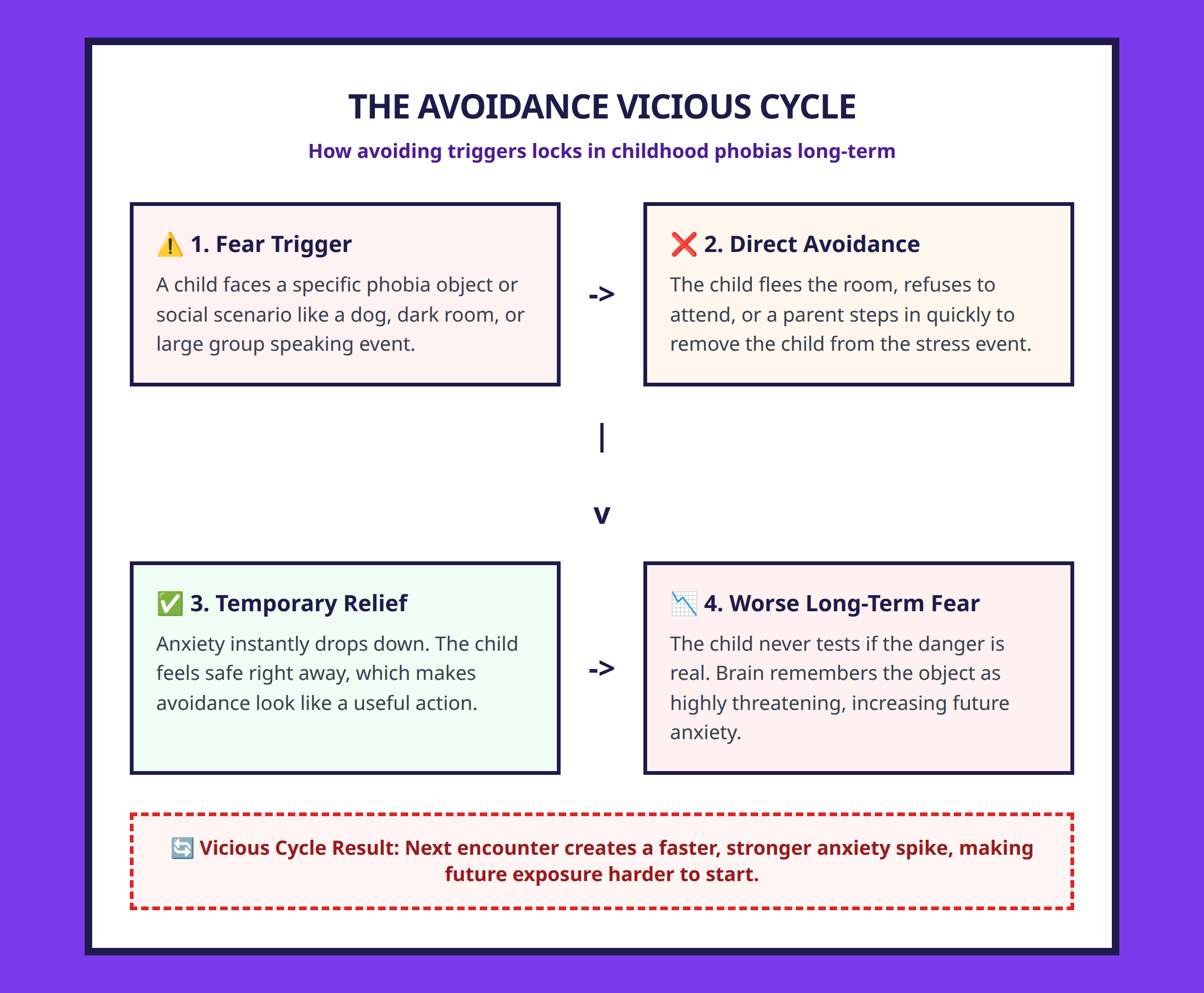
Avoidance feels helpful in the short term because it reduces distress immediately. A child afraid of speaking in class stays silent and feels temporary relief. A teenager nervous about social situations skips a birthday party and calms down once they stay home.
The problem is what the brain learns afterward.
Every avoided situation teaches the brain that the fear must have been dangerous in the first place. The relief becomes proof. Over time, the feared situation grows larger in the child’s mind because they never gather evidence that they could have handled it.
I would pay close attention to repeated patterns of escape because anxiety tends to expand quietly. A child who avoids one dog may soon avoid parks entirely. A child afraid of embarrassment may eventually stop answering questions in school, then stop participating socially at all.
The fear rarely stays contained.
The Goal Is Not Fearlessness
One mistake I see adults make is treating success as the complete disappearance of anxiety. That creates unrealistic expectations for both the parent and the child.
The real goal is helping children discover that discomfort is survivable.
A child can feel nervous and still succeed. That distinction matters enormously. Once children realize anxiety does not automatically mean danger, the fear starts losing some of its authority.
A child afraid of reading aloud may still feel shaky during the first few attempts. Their heart may race. Their voice may wobble slightly. But if they stay in the situation long enough to realize nothing catastrophic happens, the brain slowly updates its prediction.
That process is where confidence actually comes from.
What Graded Exposure Really Looks Like
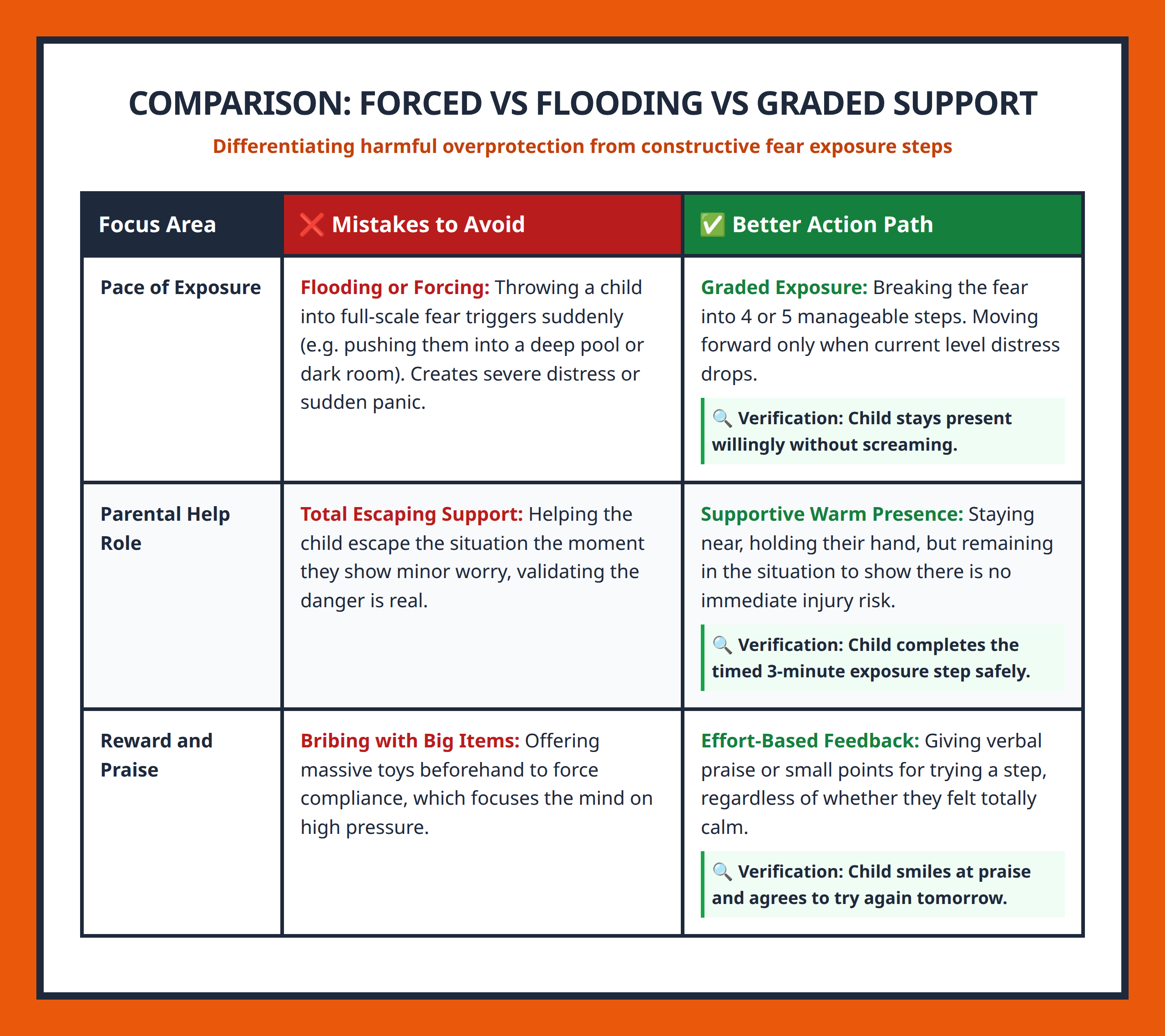
Graded exposure works because it breaks fear into manageable stages instead of treating anxiety as an all-or-nothing challenge.
I would never start with the biggest fear first. That often overwhelms the child and reinforces the anxiety instead of reducing it.
Instead, the process works best when the child gradually moves from mildly uncomfortable situations toward harder ones.
For example, a child with a fear of dogs might begin by:
- Looking at photos of calm dogs
- Watching dogs from across a park
- Standing closer while a dog remains on a leash
- Talking to a dog owner
- Briefly touching a calm dog
- Eventually spending time around dogs comfortably
Each stage gives the brain a new experience: “I felt anxious, but I stayed safe.”
That learning matters far more than verbal reassurance alone.
Why Small Wins Matter More Than Dramatic Breakthroughs
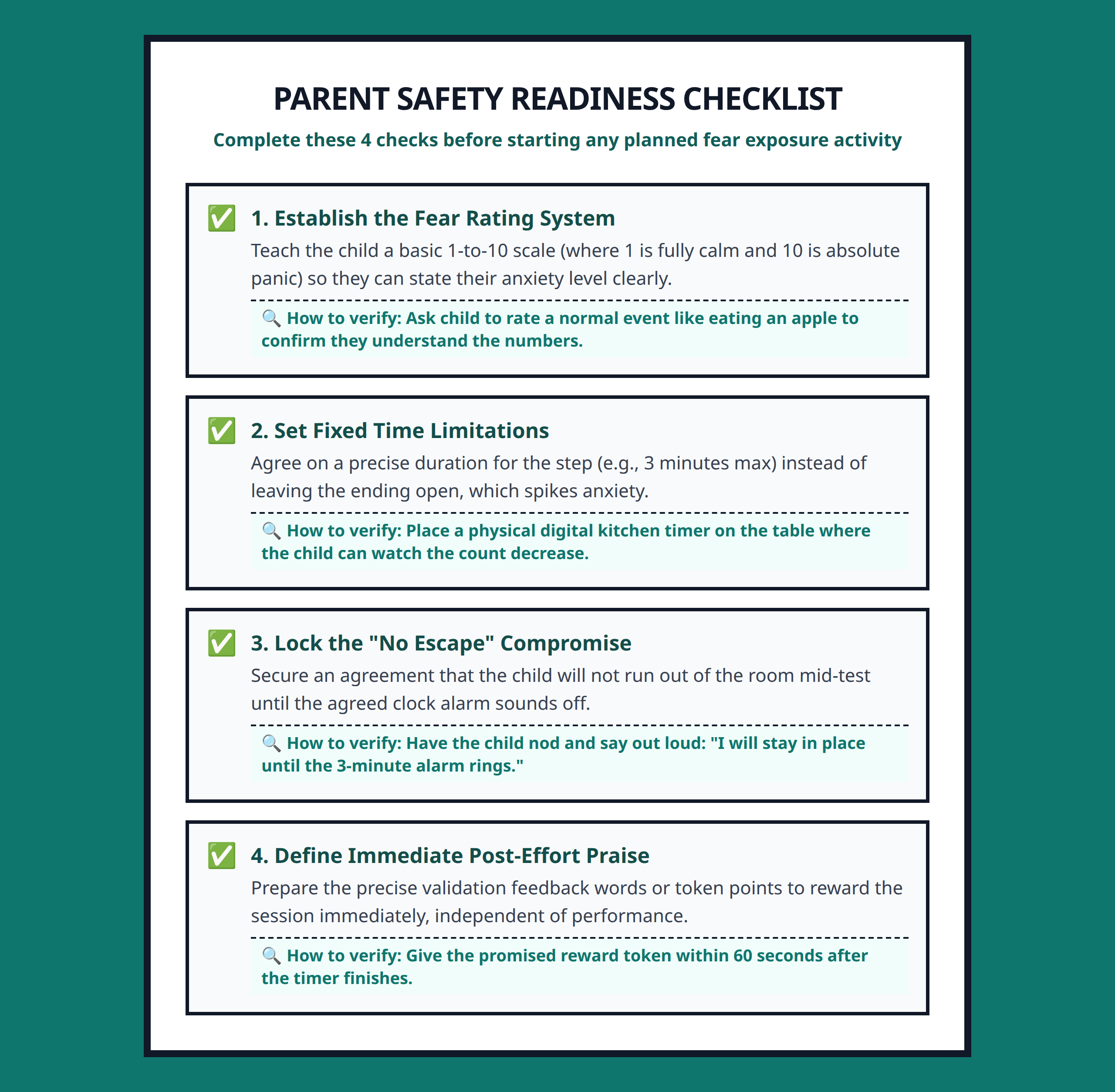
I think parents sometimes underestimate how meaningful tiny moments of progress are.
A child with social anxiety who makes eye contact with a cashier for two seconds is already interrupting an avoidance pattern. A child who stays at a birthday party for fifteen minutes instead of leaving immediately is already building resilience.
Those moments may look minor to adults, but they represent something important happening neurologically. The child is teaching their brain that anxiety can rise without forcing immediate escape.
Confidence usually grows quietly through repetition, not through one dramatic moment of bravery.
Helping Children Challenge Catastrophic Thinking
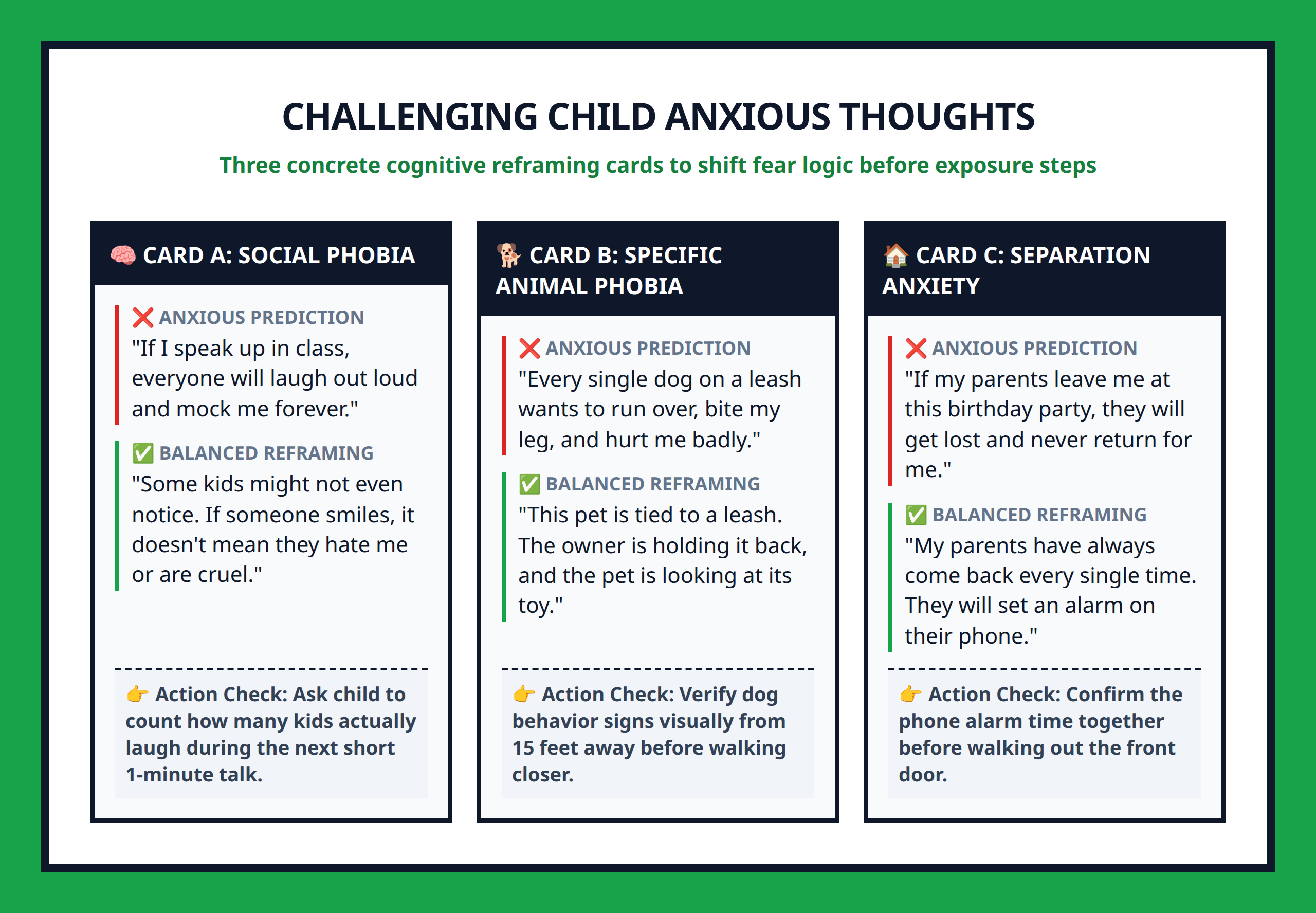
Exposure works best when children also learn to question the exaggerated predictions driving their anxiety.
Anxious children often assume the worst possible outcome will happen. A socially anxious child may believe, “Everyone will laugh at me if I say something awkward.” A child afraid of school presentations may think, “If I mess up once, everybody will remember forever.”
I would not try to argue aggressively against those thoughts because that can accidentally turn anxiety into a debate. Instead, it helps to guide children toward testing their predictions against reality.
Questions like these are often more useful:
- “What do you think might realistically happen?”
- “Has this happened every time before?”
- “What would you say to a friend worried about this?”
- “If the awkward moment happens, what could you do next?”
The goal is not perfect positive thinking. The goal is helping children develop a more balanced interpretation of risk.
Why Parents Need to Resist Over-Rescuing
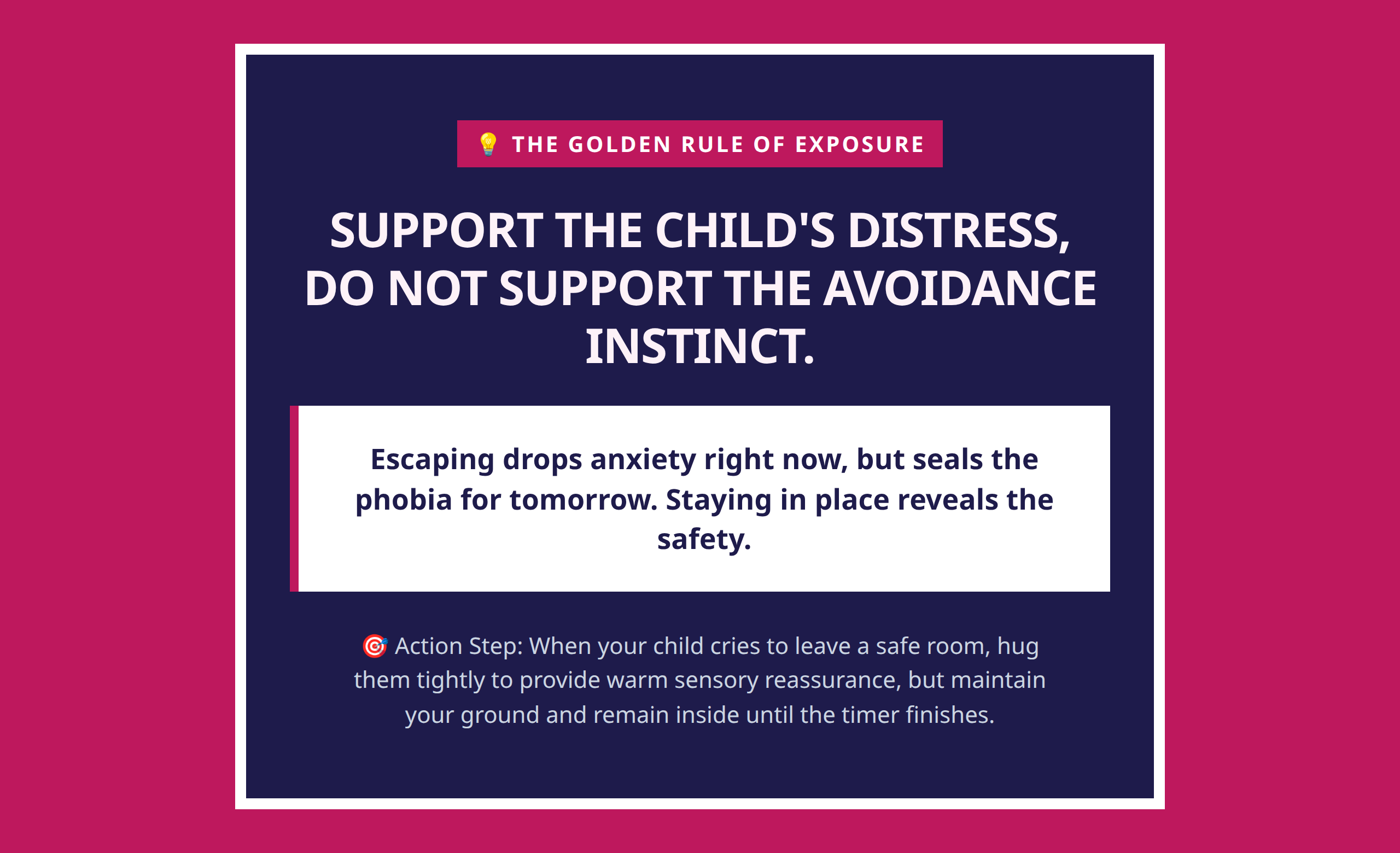
This may be the hardest part emotionally for adults.
When a child looks distressed, stepping in feels loving. Sometimes it is necessary. But constant rescue can accidentally communicate a dangerous message: “You cannot handle this without me.”
I would be especially cautious about offering reassurance repeatedly in the exact same situations. Endless reassurance can become another form of avoidance because the child learns they need external calming before they can function.
Support works better when it focuses on capability instead of escape.
That might sound like:
- “I know this feels hard.”
- “You handled something similar before.”
- “You don’t need to feel perfectly calm to try.”
- “Let’s take this one step at a time.”
Those responses acknowledge fear without strengthening helplessness.
Fear Shrinks When Children Collect New Evidence
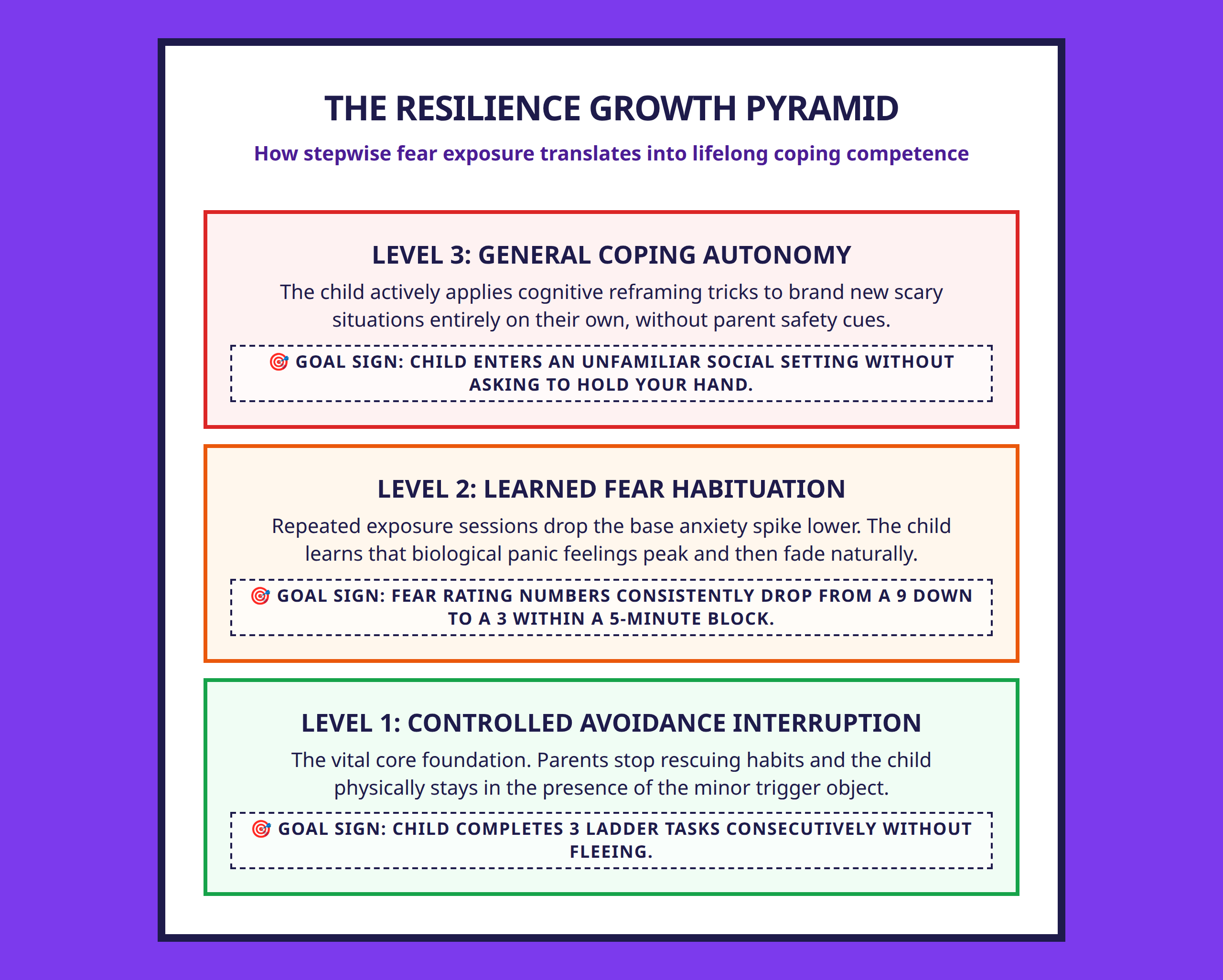
The most important shift happens when children stop relying only on what anxiety predicts and start trusting what experience teaches them.
Every successful exposure creates new evidence. Not evidence that fear disappears instantly, but evidence that fear can be tolerated without catastrophe.
That distinction changes how children see themselves. Instead of thinking, “I’m someone who cannot handle difficult situations,” they slowly begin thinking, “I can feel anxious and still move forward.”
That is usually the point where anxiety stops controlling every decision. Not because fear vanished completely, but because the child finally learned it does not have to make every choice for them.
References:
- https://raisingchildren.net.au/toddlers/health-daily-care/mental-health/anxiety-stepladder-approach
- https://childmind.org/article/help-children-manage-fears/
- https://www.childrens.health.qld.gov.au/__data/assets/pdf_file/0020/336314/coping-with-fear-and-avoidance.pdf
- https://www.oxfordhealth.nhs.uk/wp-content/uploads/sites/13/2020/03/Overcoming-your-Childs-Fears-and-Worries-Handout-with-referrence.pdf
- https://www.youtube.com/watch?v=xQiE_V9-5ac
- https://www.youtube.com/watch?v=wytxrXe5tUQ
- https://www.youtube.com/watch?v=-OM-LrIfxIc
- https://www.chop.edu/news/health-tip/tackling-irrational-fears-children-and-teens
- https://psychologyconsultants.com.au/simple-steps-to-solve-childhood-phobias/
- https://www.youngacademics.com.au/dealing-with-childrens-fears/
- https://happyfamilies.com.au/articles/helping-children-face-their-fears
- https://www.elft.nhs.uk/sites/default/files/2022-11/anxiety_step_ladder.pdf