Structured reflection can turn anxious moments into opportunities for children to understand their feelings, build resilience, and trust their own ability to cope without constant external reassurance.
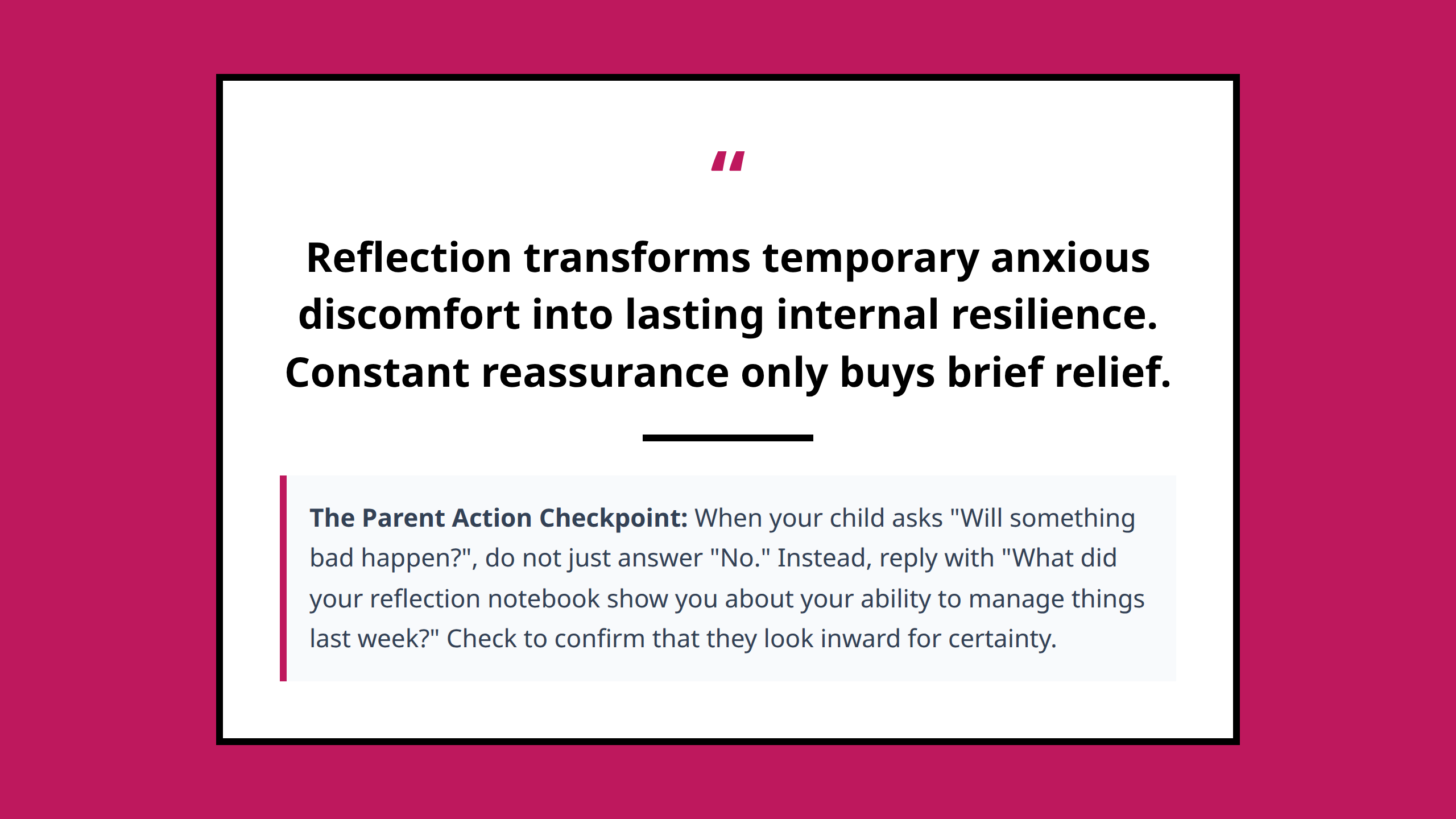
When I watch children navigate moments of worry, it’s clear that anxiety doesn’t vanish with reassurance alone. Instead, helping them pause and reflect on how they’ve handled past challenges is what truly builds confidence. Reflection gives kids tangible evidence that they can face discomfort and emerge stronger.
For parents, it’s easy to want to soothe or fix every anxious moment, but the real growth happens when children internalize their experiences. Recognizing that discomfort is temporary and manageable is a lesson they can carry forward into new challenges.
Using Past Experiences to Build Confidence
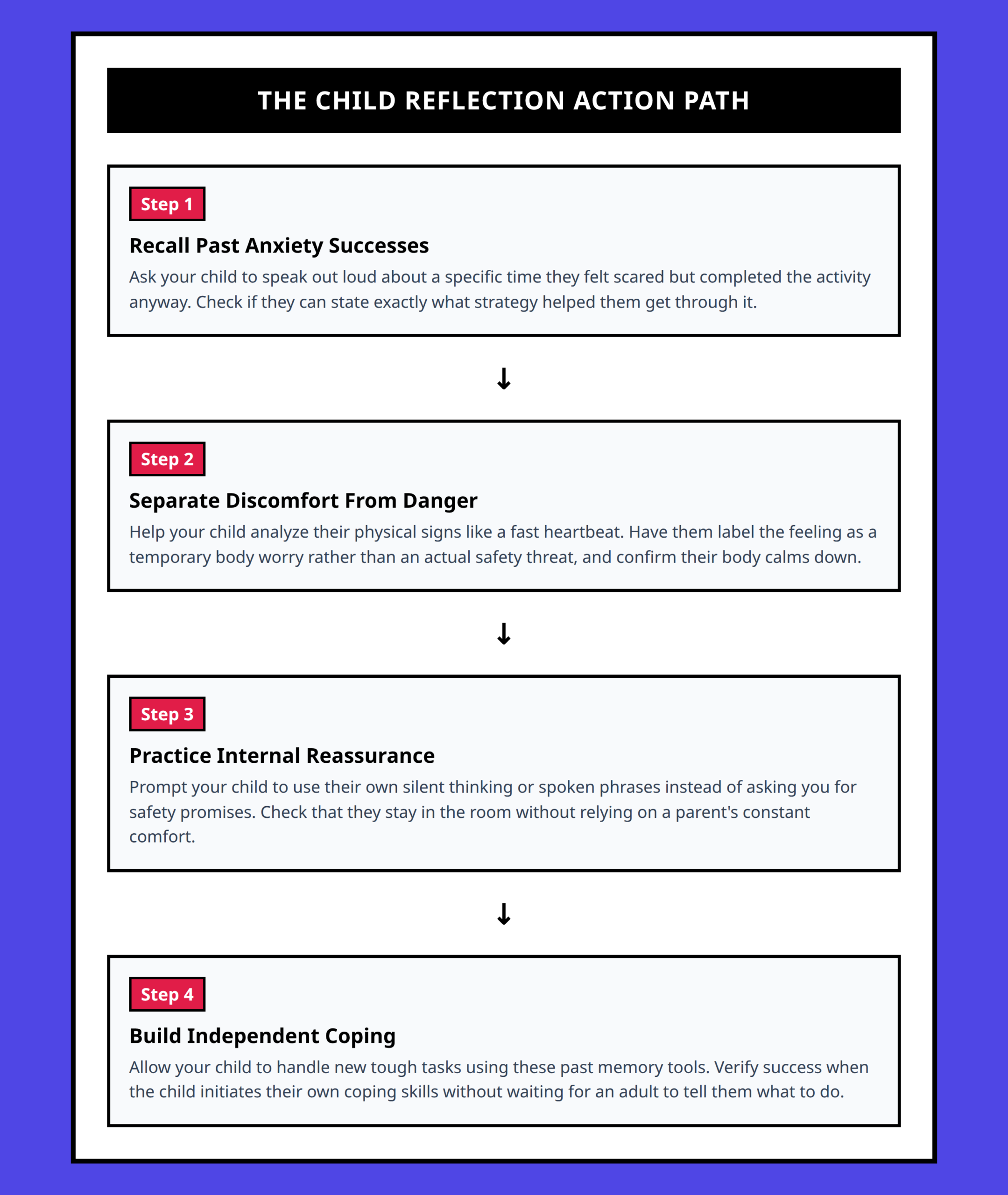
Children often underestimate their own ability to cope. I guide them to recall times they felt anxious but still completed tasks or faced fears, like presenting in class or trying a new activity. By reflecting on these successes, they begin to see that feeling nervous does not equate to failure, and that they have the skills to navigate similar situations in the future.
This process isn’t about perfection. Even small achievements—like staying calm longer than last time—reinforce that progress is possible. The more children acknowledge these wins, the more they start trusting their internal resources instead of relying solely on external reassurance.
Shifting Focus From Fear to Growth
How we frame reflection matters. Asking children questions like “What went well today?” or “What did you learn about yourself?” shifts their attention from fear to personal growth. It helps them see setbacks as opportunities to understand their own strengths, rather than as proof of inadequacy. This perspective nurtures a growth mindset, where progress is gradual and effort is celebrated.
Encouraging kids to give advice to a hypothetical friend facing the same situation can also be powerful. In that exercise, they often verbalize encouragement and strategies that they then internalize, boosting their confidence in handling their own anxieties.
Reflection as a Step Toward Independence
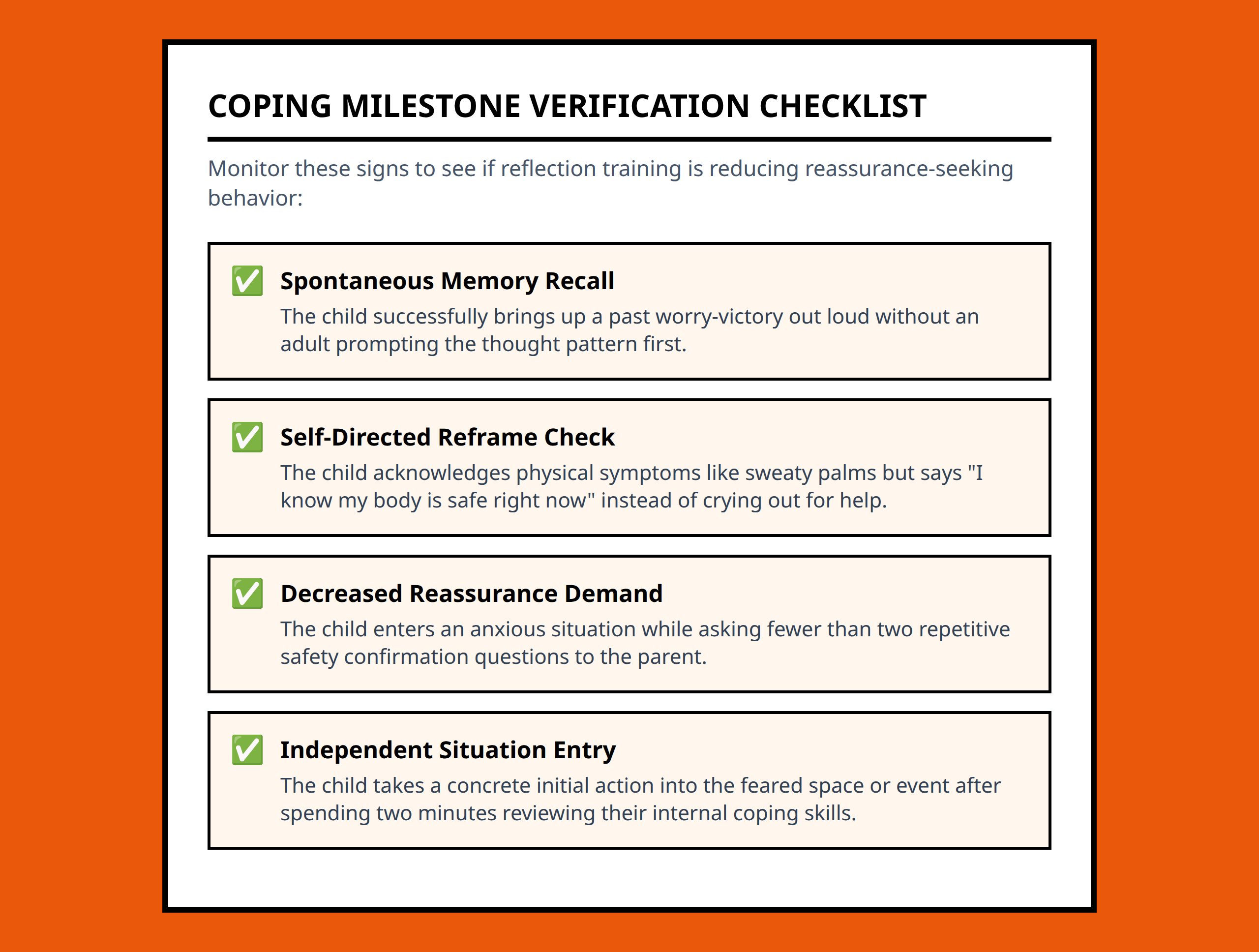
Ultimately, the goal is self-reliance. As children repeatedly reflect on their experiences, they start to internalize coping strategies. They realize that they can manage discomfort without needing constant reassurance from adults. This builds resilience and reduces the grip of anxiety, allowing them to approach new challenges with curiosity and courage.
Structured reflection becomes a cycle of noticing progress, learning from it, and applying it to future situations. Each step reinforces their belief that they can handle anxiety, creating a foundation for long-term emotional growth.
Practical Reflection Techniques
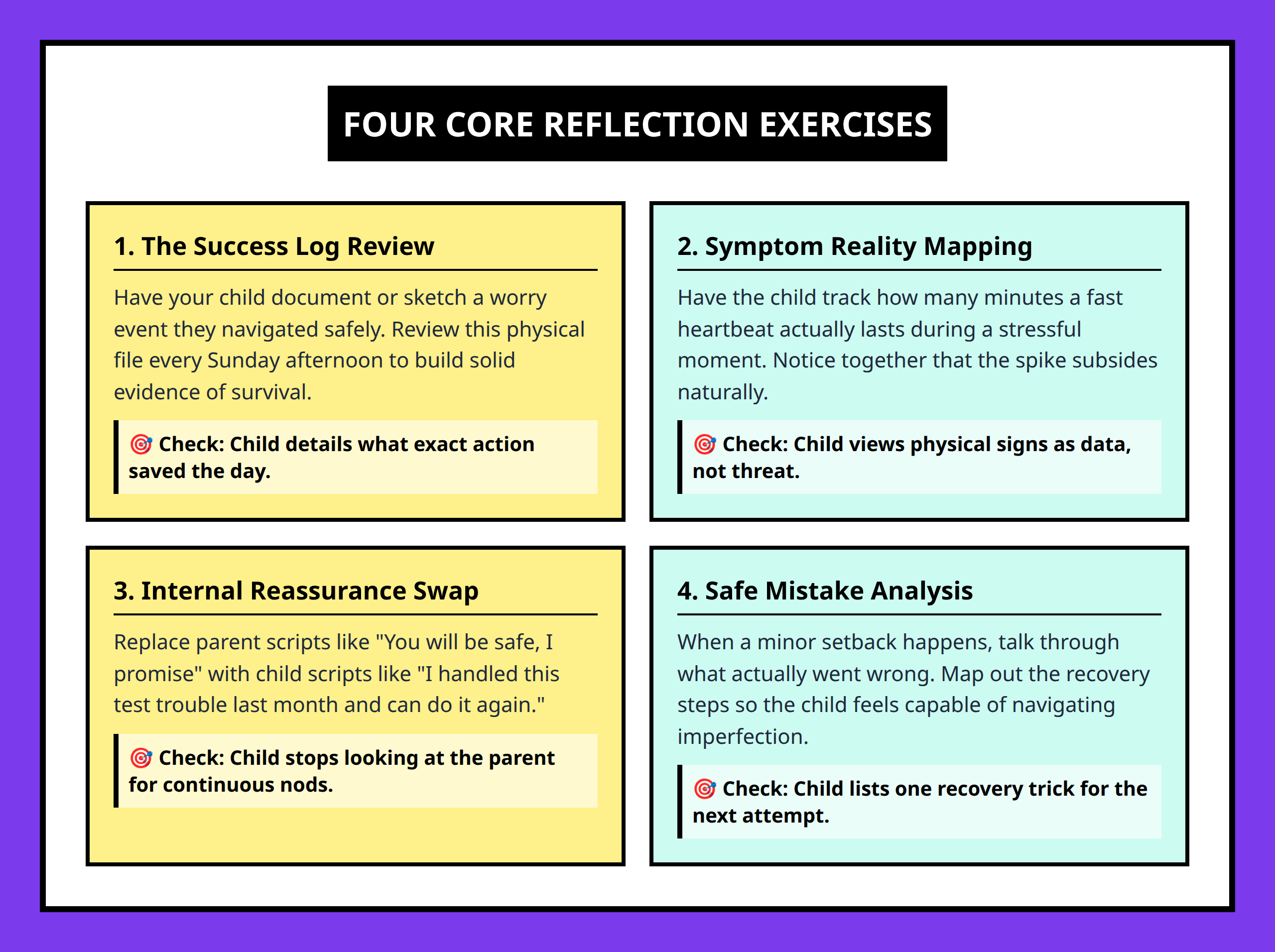
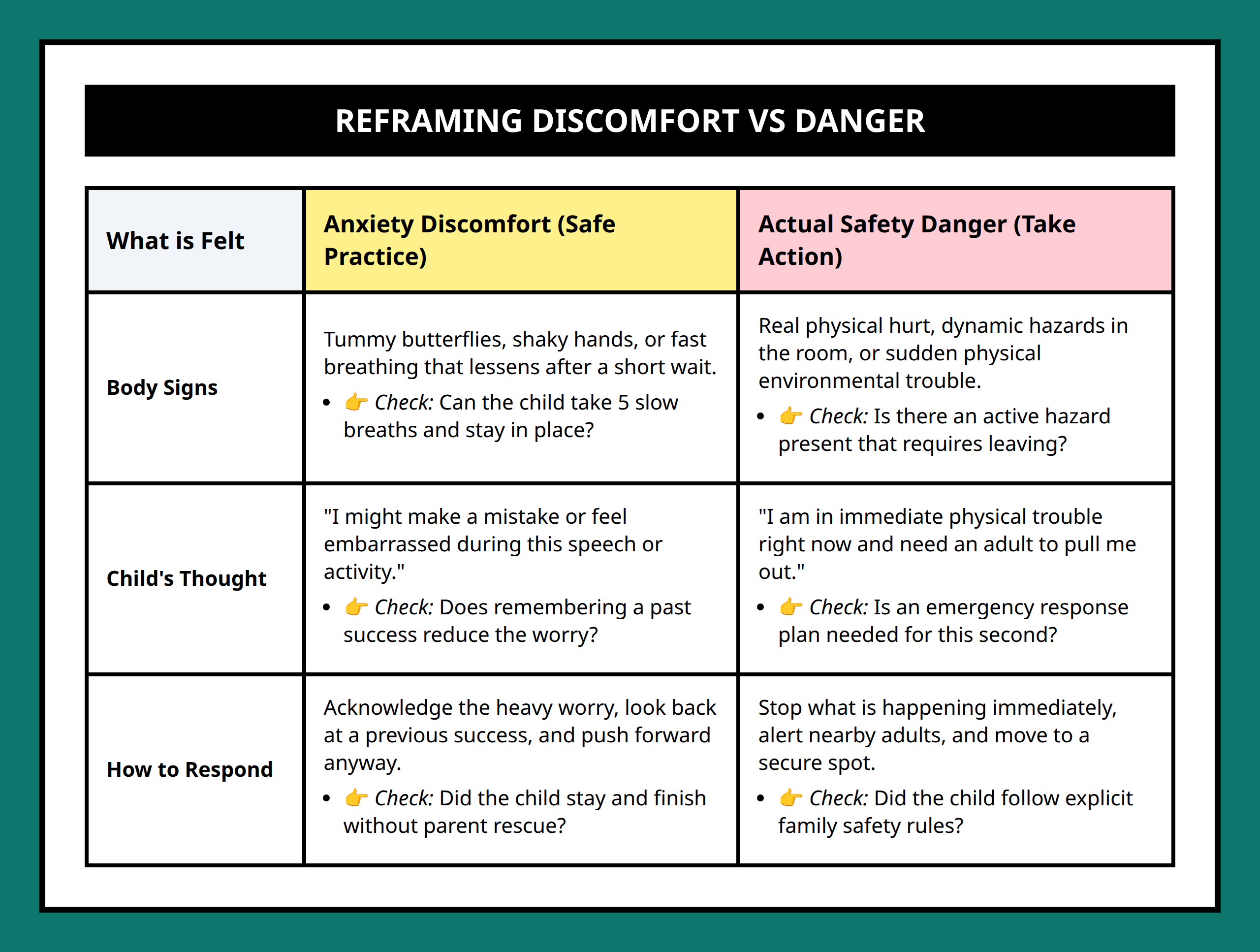
Parents can help by prompting children with specific, positive-focused questions after an anxiety-provoking experience. Encourage them to identify small successes, note improvements from previous experiences, and reflect on what strategies helped them cope. Reinforce that the goal is progress, not perfection, and that fear is a normal part of learning to manage life’s challenges.
Through these guided reflections, children develop a toolkit for understanding their feelings, evaluating their responses, and trusting themselves to act despite fear. This method transforms anxious moments into learning opportunities and gradually fosters resilient, self-assured individuals.
References:
- https://www.allforkids.org/news/blog/how-to-explain-anxiety-to-kids/
- https://www.narayanahealth.org/blog/recognising-anxiety-in-children-signs-and-support
- https://www.psychologytoday.com/sg/blog/babies/202205/understanding-anxiety-in-young-children
- https://www.anxietyandocdclinic.com/blog/guide-your-child-anxious-moments
- https://www.healthhub.sg/programmes/mindsg/caring-for-others/my-child-teen-managing-anxiety-disorder
- https://www.kit.org/supporting-anxious-children/
- https://mentalhealthcenterkids.com/blogs/articles/how-to-explain-anxiety-to-a-child
- https://www.mayoclinichealthsystem.org/hometown-health/speaking-of-health/9-tools-for-helping-your-child-manage-anxiety
- https://wellspringprevention.org/blog/identifying-managing-anxiety-children/
- https://parentingforwellness.hpb.gov.sg/Module-7/Topic-7A/Supporting-your-child-when-they-are-feeling-anxious
- https://www.mentalhealth.org.uk/our-work/public-engagement/mental-health-awareness-week/what-can-we-do-cope-feelings-anxiety