Turning personal loss into public creative work can be meaningful, but it requires careful ethical consideration to avoid exploiting tragedy or audience vulnerability.
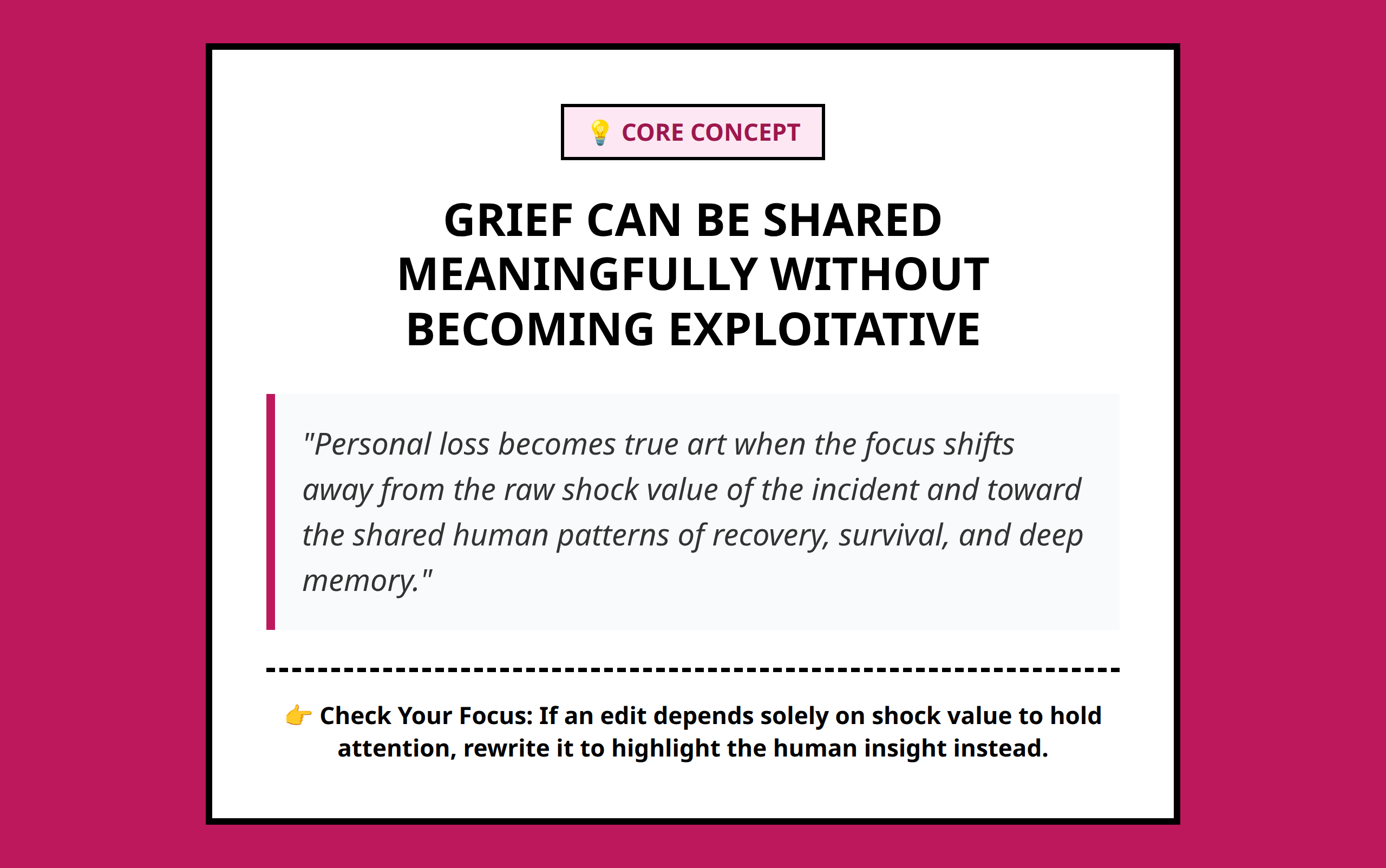
Creative work that draws on grief has the power to connect deeply with audiences. Yet it can also easily cross the line into commodifying pain. I found it striking how ethical tension emerges when personal emotion becomes public content, not because of intention, but because the act of sharing inherently exposes vulnerability.
It’s easy to underestimate the stakes. The process of transforming raw grief into a blog, book, or artwork demands both self-reflection and audience sensitivity. Without these, well-intentioned expression can unintentionally harm both creator and audience.
Using metaphor to translate personal grief responsibly
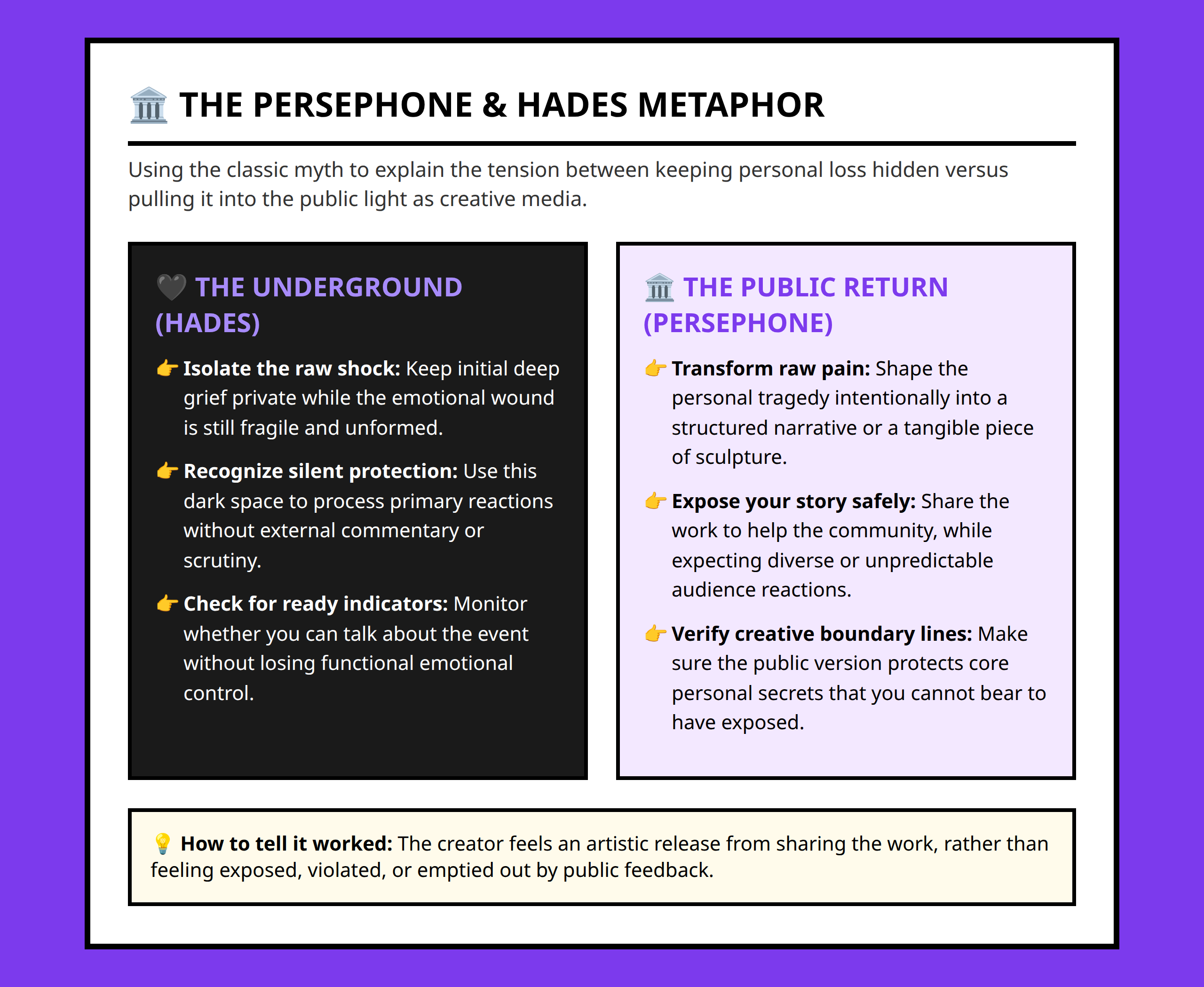
One of the strongest mechanisms is the use of metaphor to communicate private pain safely. For instance, the Persephone/Hades metaphor serves as a lens through which the protagonist explores grief. The metaphor allows emotional intensity to be shared without exposing every intimate detail directly.
Metaphor works as a protective layer: it communicates essence while respecting personal boundaries. I often remind myself that raw exposure is rarely necessary for connection; carefully chosen symbolic language can evoke empathy while maintaining dignity.
Navigating objections and ethical tension
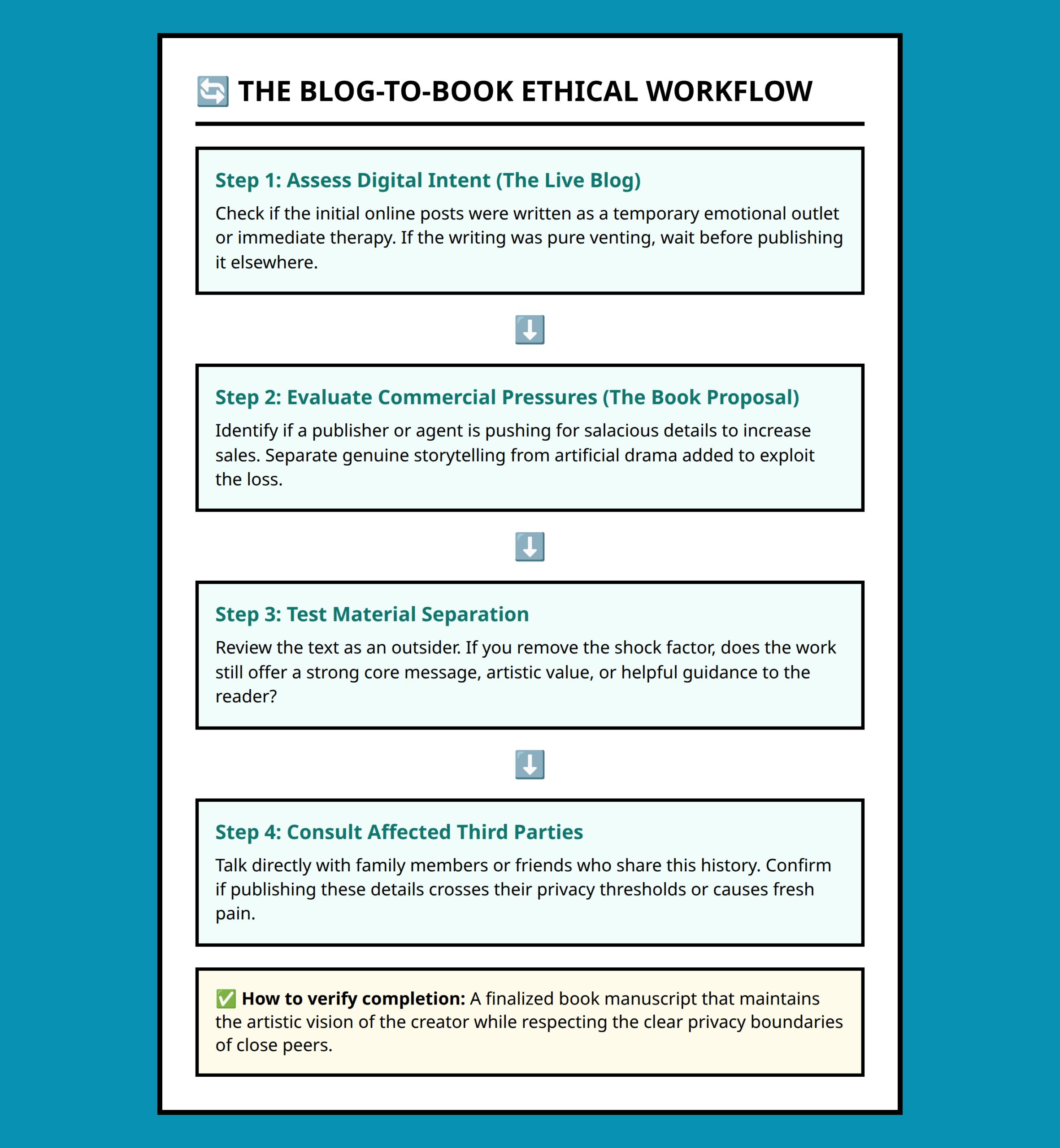
Conflicts arise when collaborators challenge the ethical choices of the creator. In the story, Florian objects to publishing material too closely tied to personal tragedy, highlighting potential audience harm. This introduces a critical reflection: creators must weigh personal catharsis against potential exploitation.
I find it useful to frame these objections as ethical checkpoints. They are not obstacles to artistic expression, but reminders to consider long-term effects on both the audience and oneself. Ethical tension becomes productive when it forces a creator to clarify intent and balance honesty with responsibility.
Creating content without exploiting grief
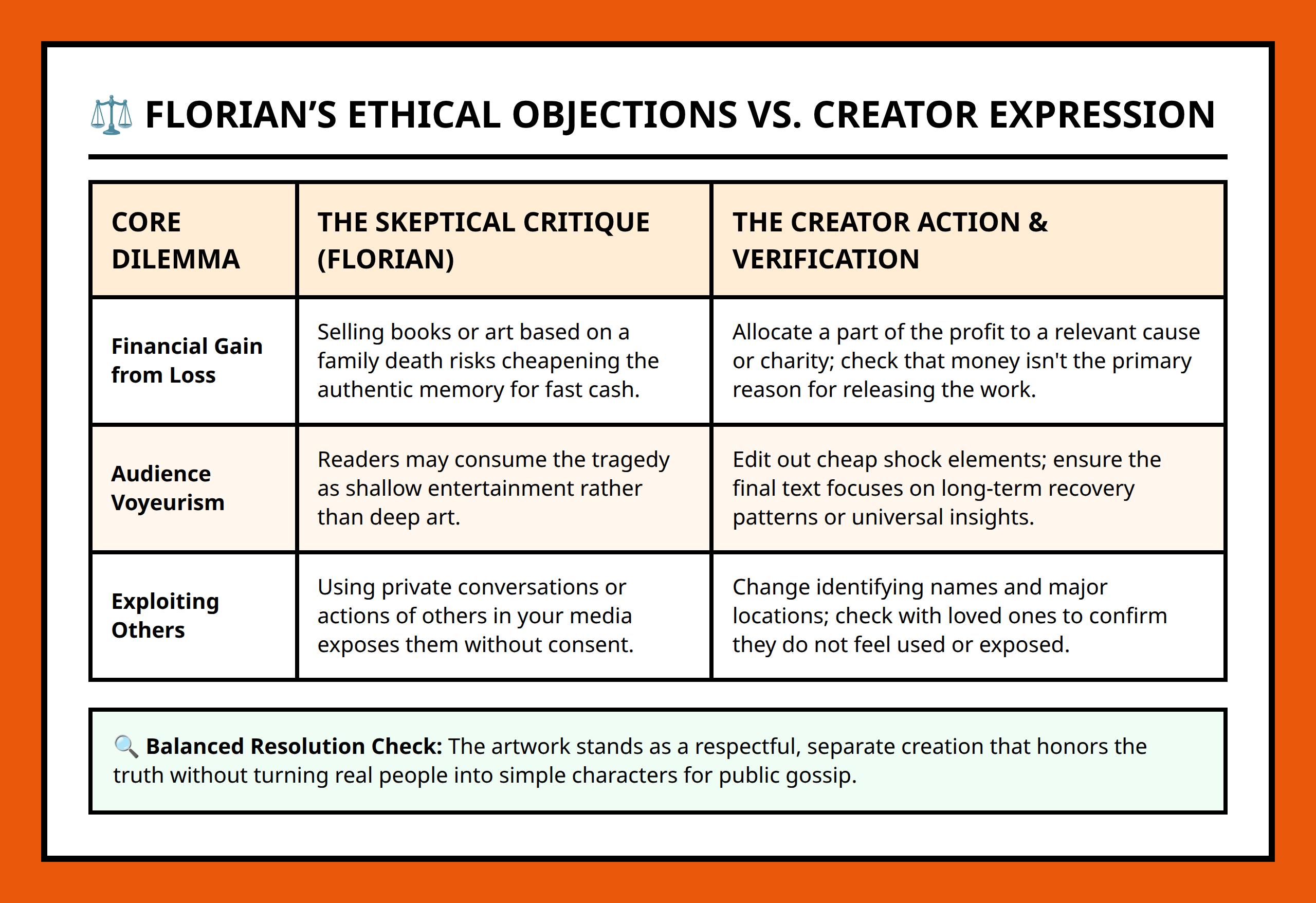
Another essential point is decision-making in the editorial process. The protagonist must decide which experiences to publish, how to frame them, and where to maintain privacy. Ethical sharing is not about self-censorship but about intentionality: deciding which parts of personal tragedy are meaningful to convey and which are too raw for public consumption.
In practice, this requires asking a few key questions before publishing:
- Am I sharing this to connect or to shock?
- Would revealing this detail help someone, or is it primarily satisfying curiosity?
- How does this content shape my relationship with the audience?
These considerations help maintain both ethical integrity and emotional clarity. They prevent grief from being reduced to content performance while still allowing honest storytelling.
Audience sensitivity is part of the creative process
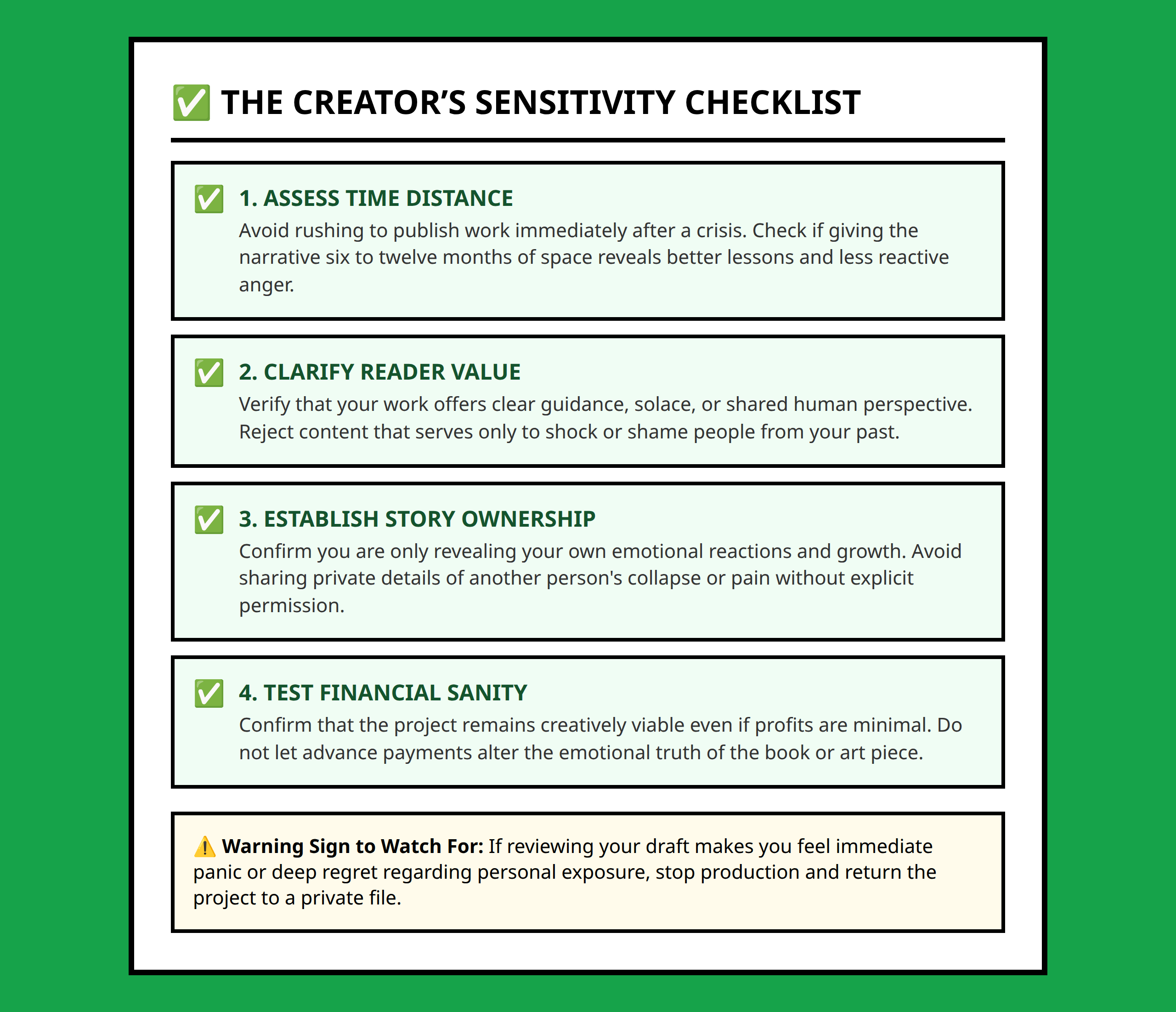
Sharing grief ethically also demands empathy toward readers. Every word, anecdote, or metaphor carries potential impact. I realize that the act of publishing is not neutral; it shapes how others understand both the creator’s experience and their own.
Respecting this involves deliberate pacing, framing, and contextualizing content. For example, a blog post about personal loss might include reflective commentary rather than a raw account of tragedy, signaling care for the audience’s emotional experience.
Decision frameworks guide responsible creative work
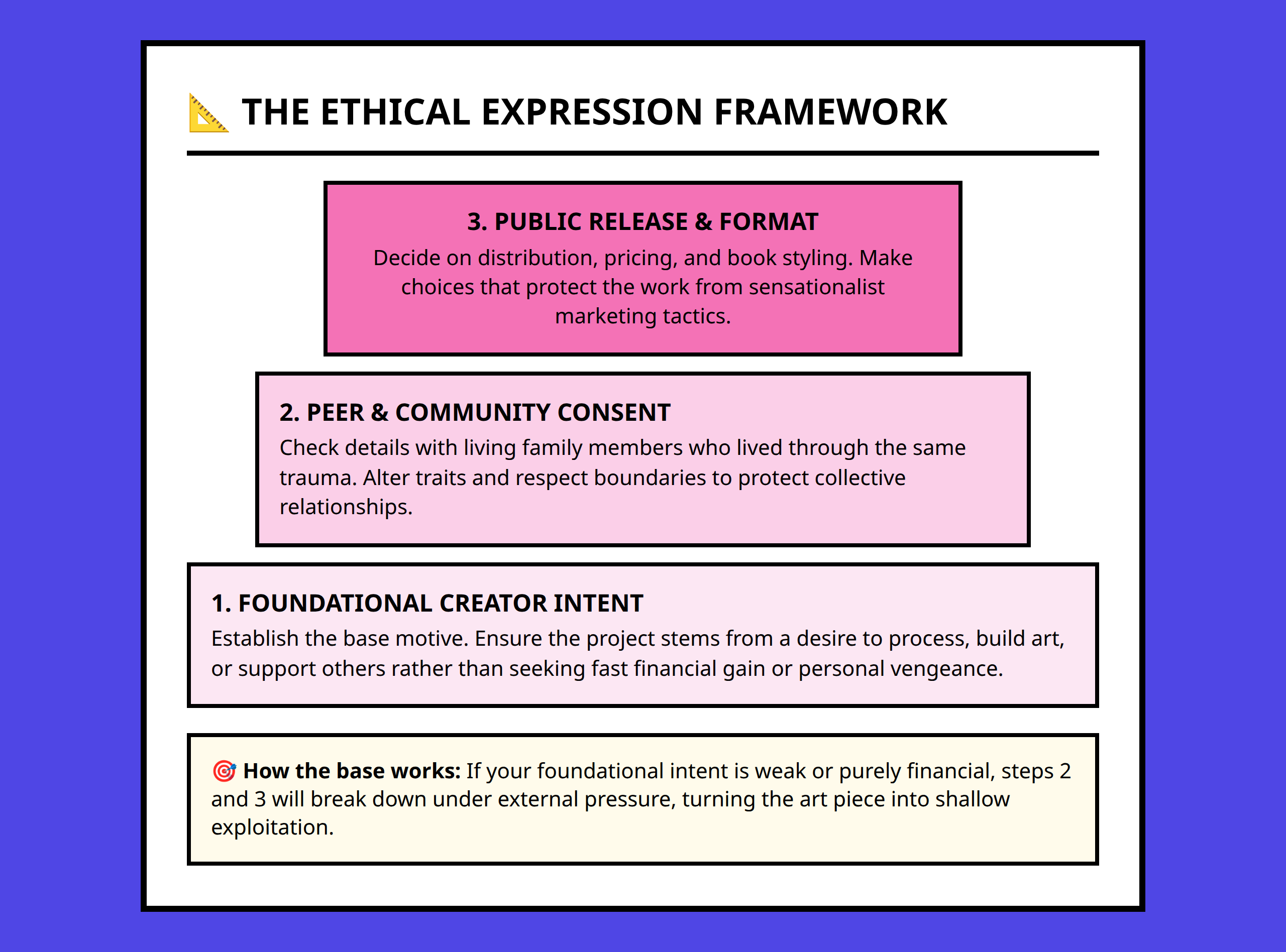
Ultimately, the strongest lesson is that ethical grief writing benefits from structured reflection. Rather than relying purely on instinct, creators can establish a framework: consider the metaphorical lens, weigh objections, evaluate audience impact, and decide what is essential to share.
For anyone navigating the intersection of personal grief and public creative work, the takeaway is clear: authenticity does not require exposure without ethics. Thoughtful translation of private pain into public expression preserves both the creator’s integrity and the audience’s trust, making the work resonant without being exploitative【42†source】.
References:
- https://www.theasburycollegian.com/2020/02/the-journalistic-ethics-of-tragedy/
- https://www.oca.ac.uk/weareoca/photography/the-ethics-of-death/
- https://medium.com/@eloisereddy/theatres-of-memory-memorials-in-the-contemporary-age-e8bead656c19
- https://www.bps.org.uk/psychologist/be-self-protective-about-media-exposure-tragedy
- https://www.ijassjournal.com/2023/V6I12/4146663679.pdf
- https://www.artsandhealth.ie/perspectives/working-with-stories-of-other-peoples-traumatic-experiences-questions-of-responsibility-as-an-artist/
- https://www.npr.org/2012/12/06/166666261/documenting-tragedy-the-ethics-of-photojournalism
- https://ethics.org.au/based-on-a-true-story-the-ethics-of-making-art-about-real-life-others/
- https://exposure.org.uk/young_peoples_work/the-ethics-of-suffering-in-the-media/
- https://lareviewofbooks.org/article/histories-of-violence-writing-tragedy-as-an-art-form
- https://cjf-fjc.ca/photojournalism-ethics/