Many anxious children struggle most before an event even begins. Thoughtful preparation, gradual exposure, and realistic thinking can reduce anticipatory stress and help children approach difficult situations with more confidence.
Some children are calm once they arrive at the dentist, walk into the classroom, or start the soccer game. The hardest part happens beforehand. Their anxiety builds during the hours or days leading up to the event.
I think anticipatory stress is easy for adults to underestimate because the feared situation has not happened yet. From the outside, it can look like the child is overreacting to imagination alone. But anticipatory anxiety feels real because the brain starts rehearsing danger long before reality arrives.
That rehearsal can become exhausting if children are left alone with catastrophic predictions and no practical way to challenge them.
Why Anticipatory Anxiety Feels So Intense
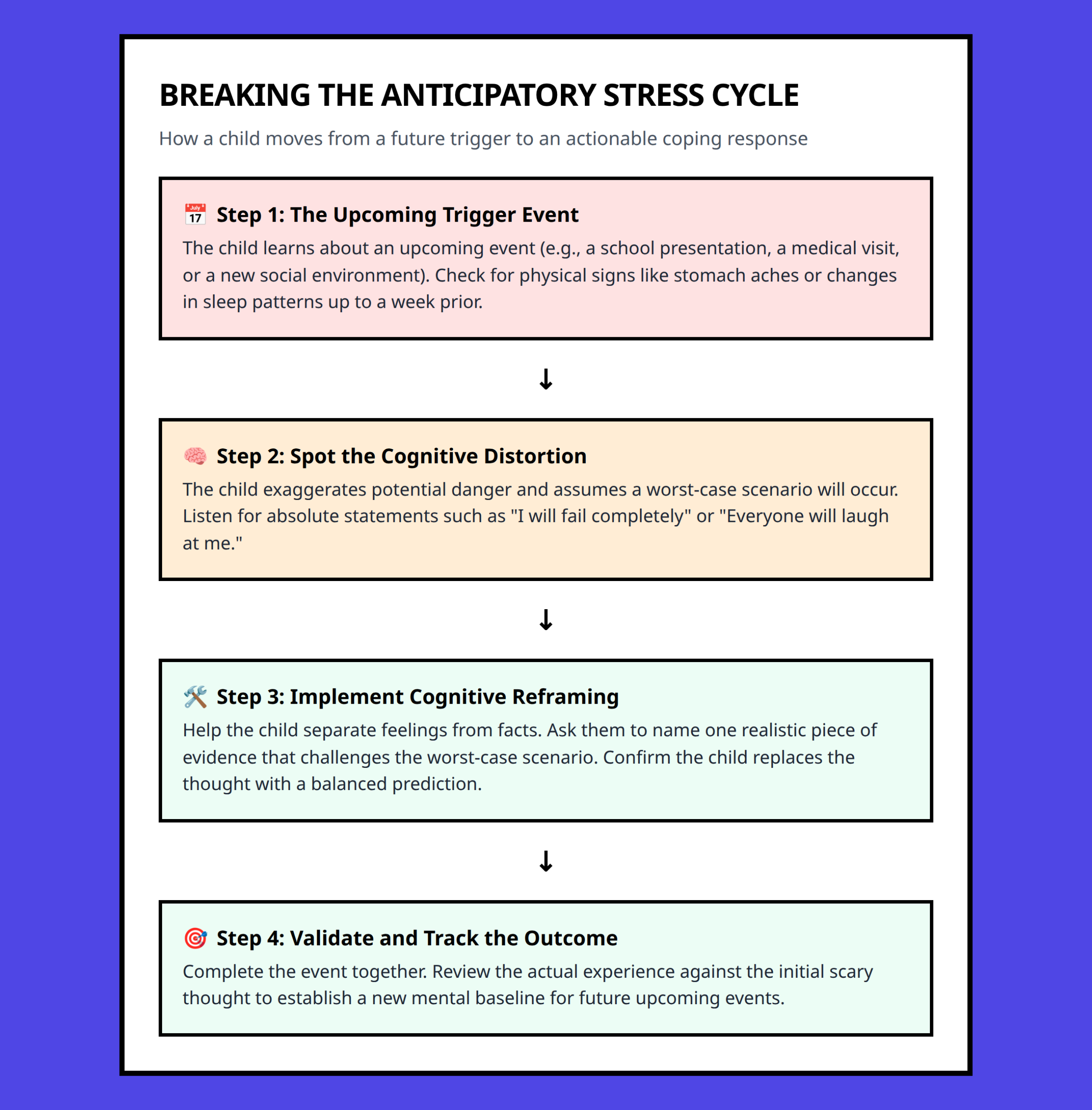
Children experiencing anticipatory stress often confuse possibility with probability. Once anxiety takes over, the brain starts treating worst-case scenarios as if they are likely outcomes instead of remote possibilities.
A child preparing for a school presentation may imagine forgetting every word, being laughed at by classmates, or freezing completely. Another child worried about a sleepover may picture being unable to sleep, getting embarrassed, or wanting to go home immediately.
I would pay attention to how certain anxious predictions sound. Children rarely say, “Something uncomfortable might happen.” They say things like:
- “It’s going to be terrible.”
- “I know I’ll mess up.”
- “Everyone will notice.”
- “I won’t be able to handle it.”
The brain treats those predictions as preparation, but they actually increase emotional distress and make the future event feel more threatening than it really is.
Why Reassurance Alone Usually Stops Working
Most adults naturally try to calm anxious children with reassurance. Sometimes that helps briefly, but repeated reassurance often fades quickly because the anxious brain keeps generating new “what if” scenarios.
I think this happens because reassurance does not teach children how to evaluate anxious thoughts independently. It temporarily reduces distress without changing the thinking pattern underneath.
A child worried about an upcoming test may hear, “You’ll do fine,” then immediately respond with, “But what if I forget everything?” The cycle keeps restarting because the child has not learned how to question the catastrophic prediction itself.
This is where cognitive reframing becomes much more useful than endless comforting.
Helping Children Challenge Their Predictions
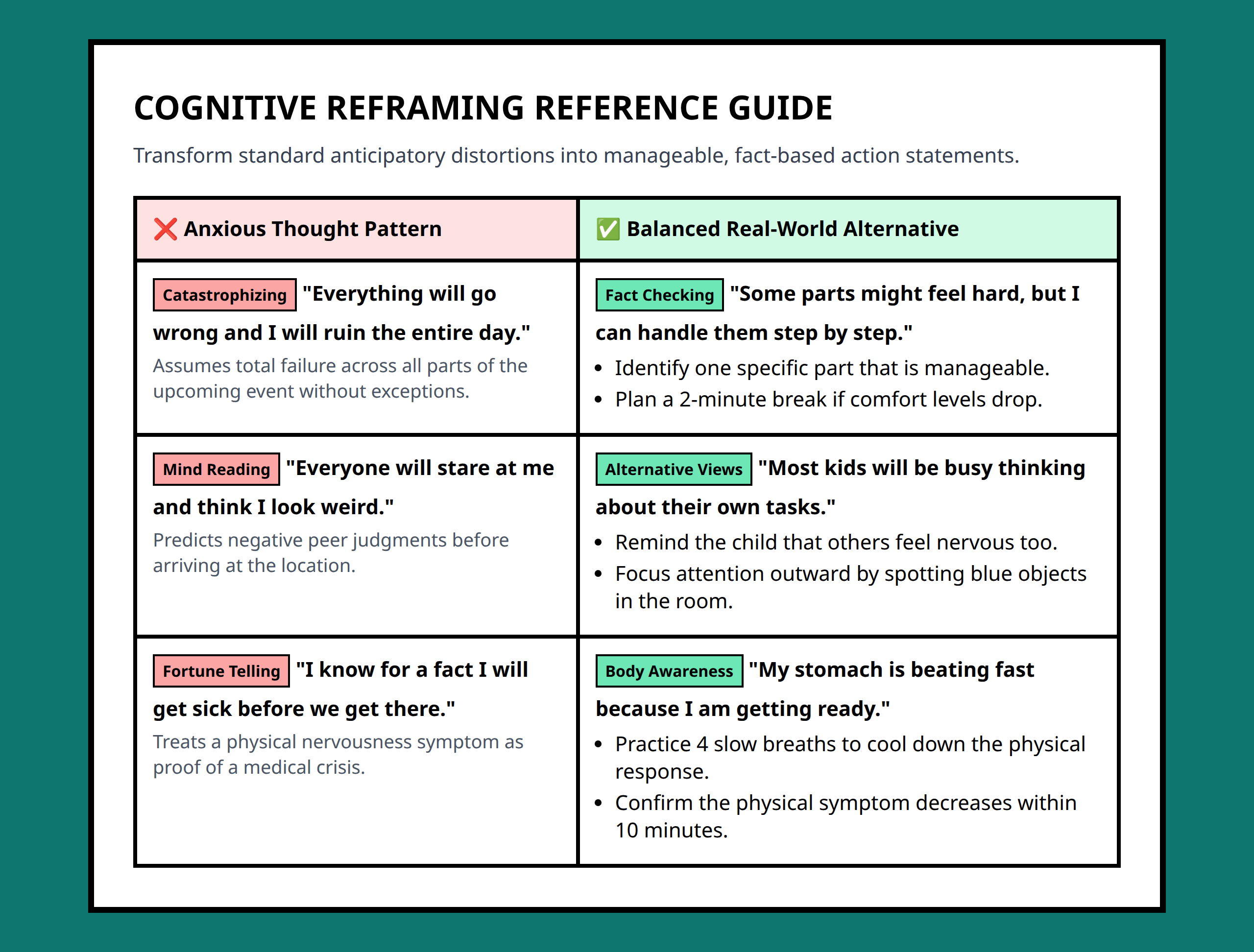
Cognitive reframing teaches children to examine anxious thoughts instead of automatically accepting them as facts.
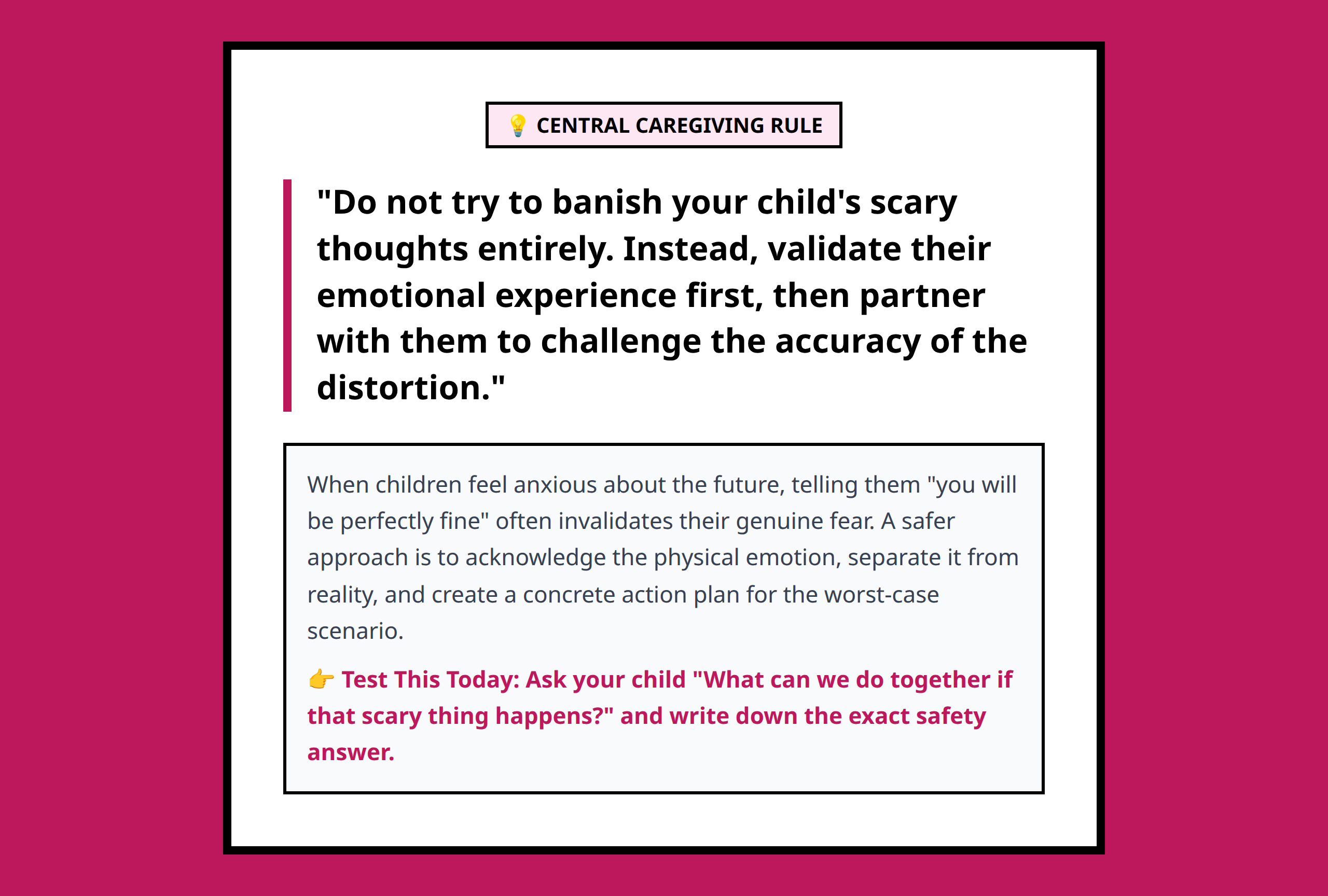
I would not approach this like a debate where the adult tries to “win” against the child’s fear. That often makes children feel misunderstood. The better approach is guiding them toward more balanced thinking.
Questions like these can help:
- “What do you think is most likely to happen?”
- “Has the worst-case scenario happened every time before?”
- “If something awkward happens, what could you do next?”
- “What would you tell a friend worried about the same thing?”
The goal is not replacing every anxious thought with forced positivity. The goal is helping children recognize that anxiety tends to exaggerate risk and underestimate coping ability.
That distinction matters because children often assume discomfort means failure. Reframing helps them understand they can feel nervous and still function effectively.
Why Rehearsal Reduces Fear
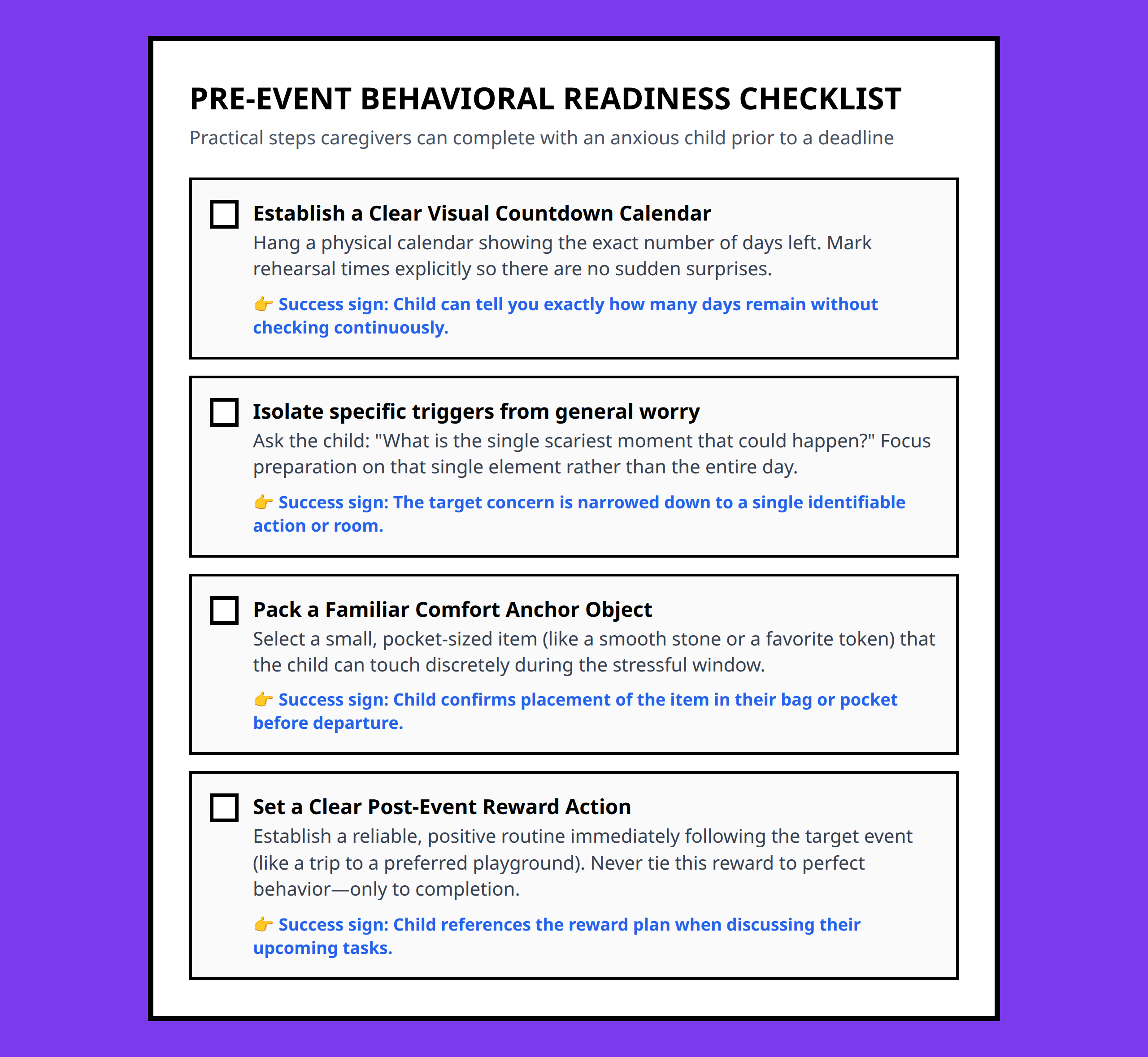
One of the most practical ways to reduce anticipatory stress is controlled rehearsal.
The brain reacts less intensely to situations that feel familiar. Rehearsal gives children a sense of predictability before the real event happens.
A socially anxious child worried about ordering food at a restaurant might practice speaking the order aloud at home first. A child nervous about a school presentation may rehearse in front of one supportive adult before presenting to a class.
I think rehearsal works best when it feels realistic but manageable. The purpose is not creating a perfect performance. The purpose is reducing uncertainty and helping the child experience small successes before the actual event.
Even visualizing the sequence of events calmly can lower anxiety because the situation stops feeling completely unknown.
Gradual Exposure Helps the Brain Update Its Expectations
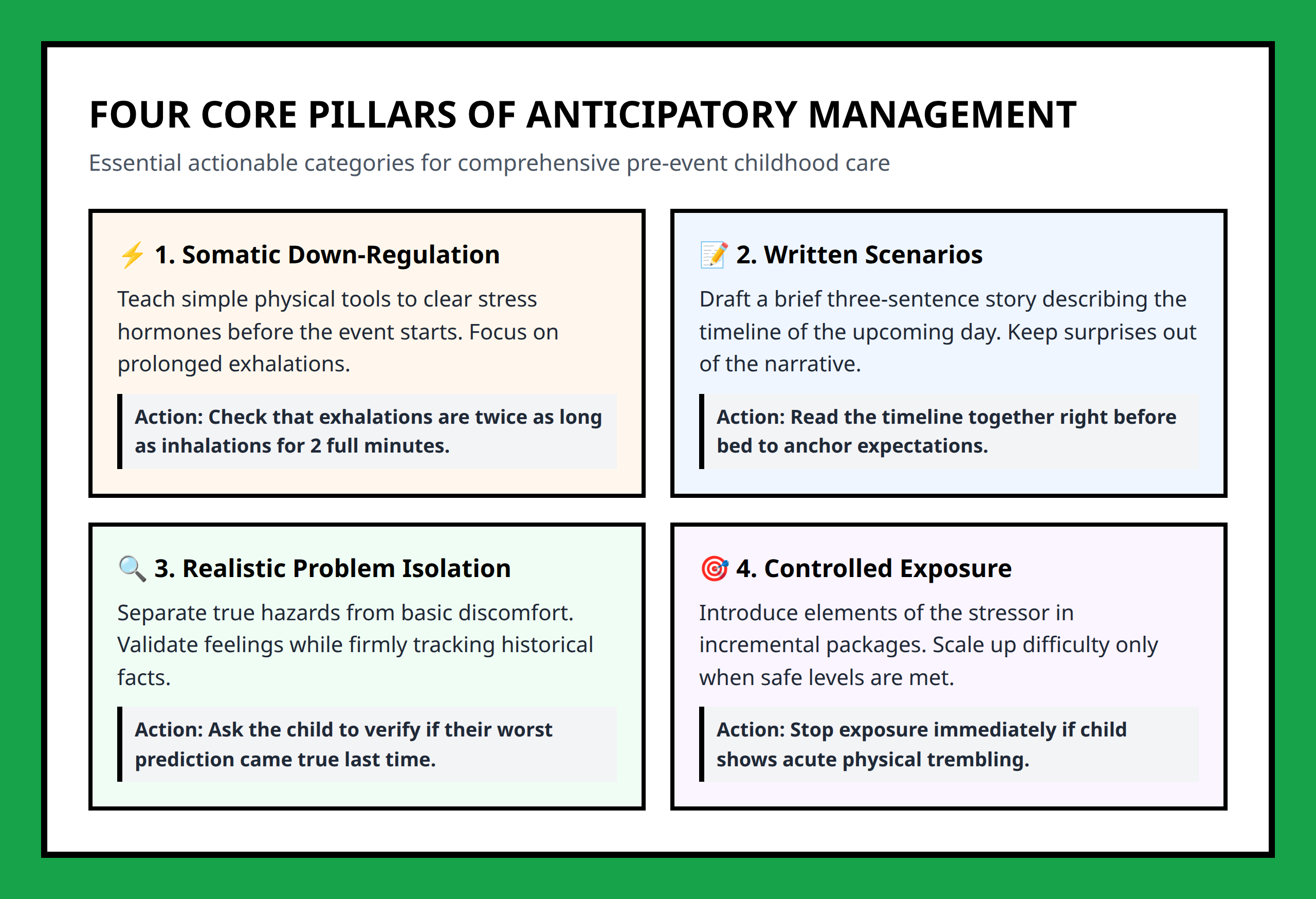
Anticipatory stress grows stronger when children avoid feared situations entirely. Avoidance prevents the brain from discovering that the event was survivable.
That is why gradual exposure matters so much.
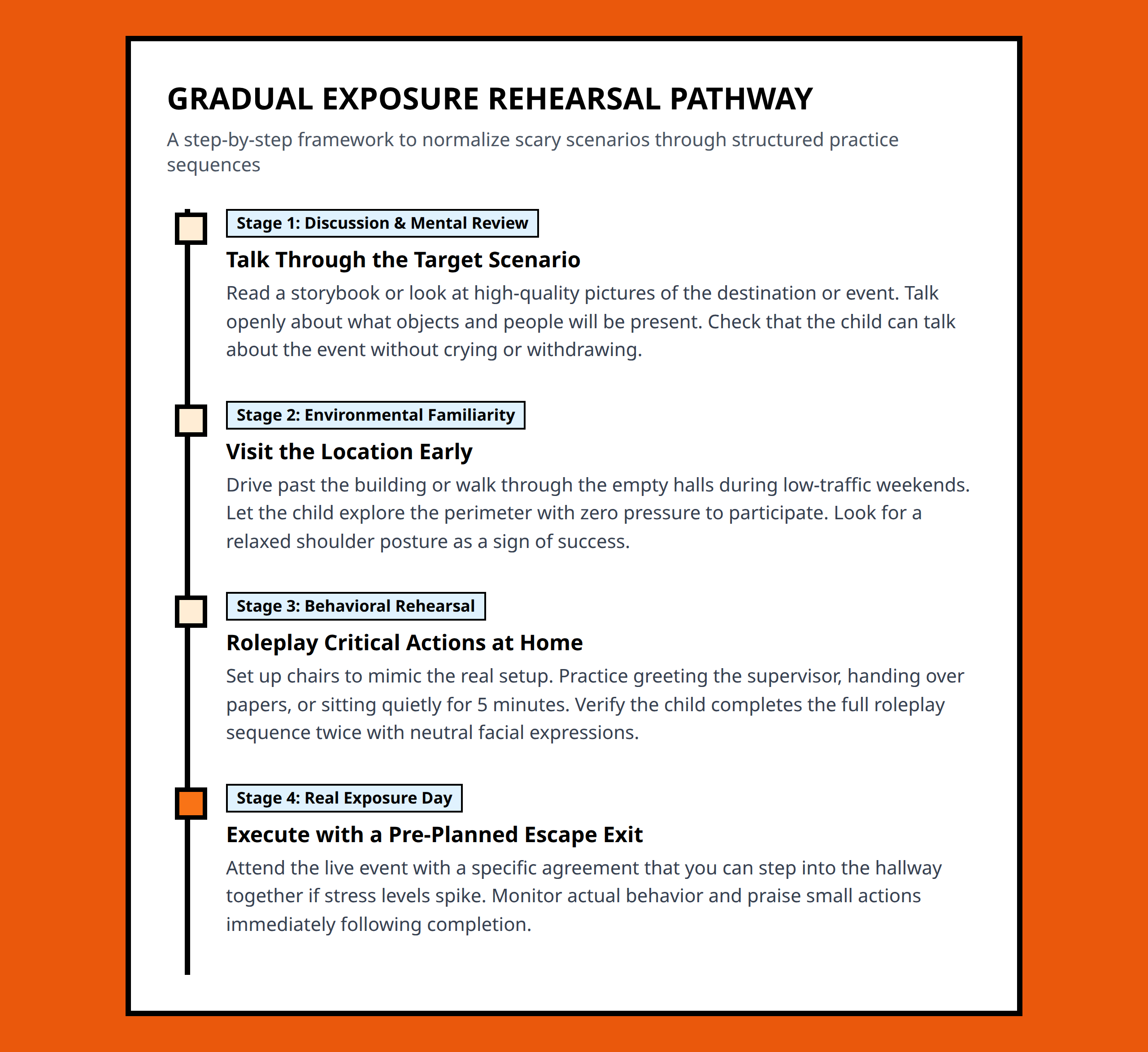
I would avoid throwing children directly into their biggest fear immediately. Overwhelming exposure can backfire and reinforce the anxiety. Instead, smaller, controlled steps allow children to build tolerance gradually.
A child terrified about attending a new group activity might:
- Visit the location briefly beforehand
- Watch another session first
- Speak to one participant individually
- Attend for a short period initially
- Gradually increase participation over time
Each successful step teaches the brain something important: anticipation was worse than the actual experience.
Planning Creates a Sense of Control
Children cope better when they know what to expect and believe they have some ability to respond if difficulties arise.
I think planning is often underrated because adults focus heavily on calming emotions instead of increasing preparedness.
Simple planning strategies can reduce anticipatory stress significantly:
- Walking through what the day will look like
- Discussing what to do if anxiety spikes
- Creating an exit or coping plan when appropriate
- Practicing calming techniques beforehand
- Breaking large tasks into smaller steps
A child anxious about a medical appointment may feel more capable after learning exactly what will happen, how long it will last, and what coping options are available during the visit.
The important part is that planning increases confidence without turning into another avoidance ritual.
Children Build Confidence by Surviving the Build-Up
One thing I find especially important about anticipatory anxiety is that the emotional suffering often happens before the event itself. Children may spend days imagining disaster over something that ends up manageable or even enjoyable.
That is why helping children tolerate anticipation matters just as much as helping them tolerate the event itself.
Over time, children begin collecting evidence that anxious predictions are not always accurate. They learn they can prepare thoughtfully, experience uncertainty, and still cope effectively.
The real shift happens when children stop asking, “How do I make sure nothing stressful happens?” and start understanding, “I can handle stress better than my anxiety predicts.”
References:
- https://www.handspringhealth.com/post/anticipatory-anxiety
- https://pmc.ncbi.nlm.nih.gov/articles/PMC6462114/
- https://rogersbh.org/blog/anticipatory-anxiety-4-ways-parents-can-support-students/
- https://resilient-mind.com/how-to-manage-overcoming-anticipatory-anxiety/
- https://childmind.org/article/behavioral-treatment-kids-anxiety/
- https://www.cureus.com/articles/472116-behavioral-and-cognitive-strategies-in-pediatric-dentistry-current-concepts-in-anxiety-and-fear-management
- https://www.philippevivier.com/en/strategies-to-help-your-child-better-manage-pre-back-to-school-stress.html
- https://pmc.ncbi.nlm.nih.gov/articles/PMC3299350/
- https://www.apa.org/monitor/2025/06/anticipatory-anxiety
- https://www.autismparentingmagazine.com/10-strategies-stress-anxiety/