Some relationship problems are not caused by lack of love. They are caused by hesitation, emotional avoidance, and the fear of admitting two conflicting truths at the same time.
What stayed with me most in this story was not the romance itself. It was how quickly guilt distorted everyone’s behavior once emotional honesty disappeared.
The relationships become painful long before anyone openly lies. The damage starts earlier, in quieter moments: delayed conversations, half-truths, emotional deflection, pretending feelings are simpler than they really are. That felt much more realistic to me than dramatic betrayal.
I do not think most people sabotage complicated relationships because they enjoy chaos. More often, they are trying to avoid hurting someone immediately, and in the process they create something much messier later.
The real problem was not attraction. It was emotional postponement.
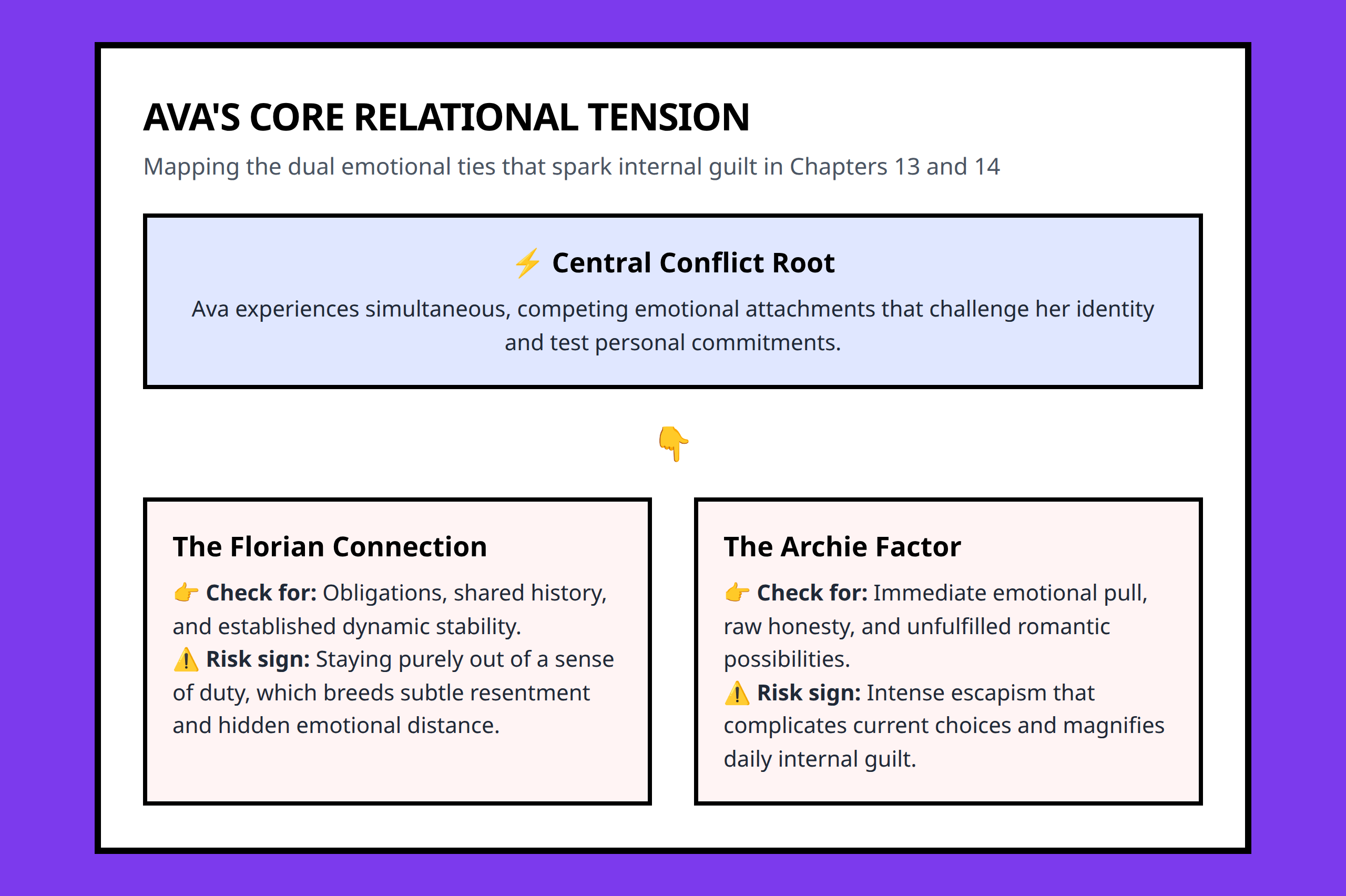
The emotional triangle at the center of the story becomes difficult because the protagonist keeps delaying clarity.
She knows her feelings are shifting long before she admits it openly. Instead of confronting that shift directly, she keeps trying to maintain emotional balance between two incompatible realities: the safety of her current relationship and the emotional intensity developing elsewhere.
That tension shows up everywhere in small behaviors.
- She minimizes certain conversations.
- She avoids direct explanations.
- She treats emotional confusion as temporary even when it clearly is not.
- She frames difficult choices as timing problems instead of emotional truths.
I think this is where many complicated relationships quietly become destructive. People often believe avoidance is protecting everyone involved, but avoidance usually increases emotional investment on all sides.
A realistic version of this happens constantly outside fiction. Someone continues texting a former partner because “nothing physical happened.” Someone keeps postponing an uncomfortable conversation because a birthday, vacation, or stressful work week makes the timing feel wrong. Meanwhile, emotional reality keeps moving forward anyway.
The story handles this progression carefully. The protagonist does not wake up one morning with complete certainty. Her emotional shift happens gradually, and that gradualness becomes part of the problem.
Guilt becomes dangerous when it replaces decision-making
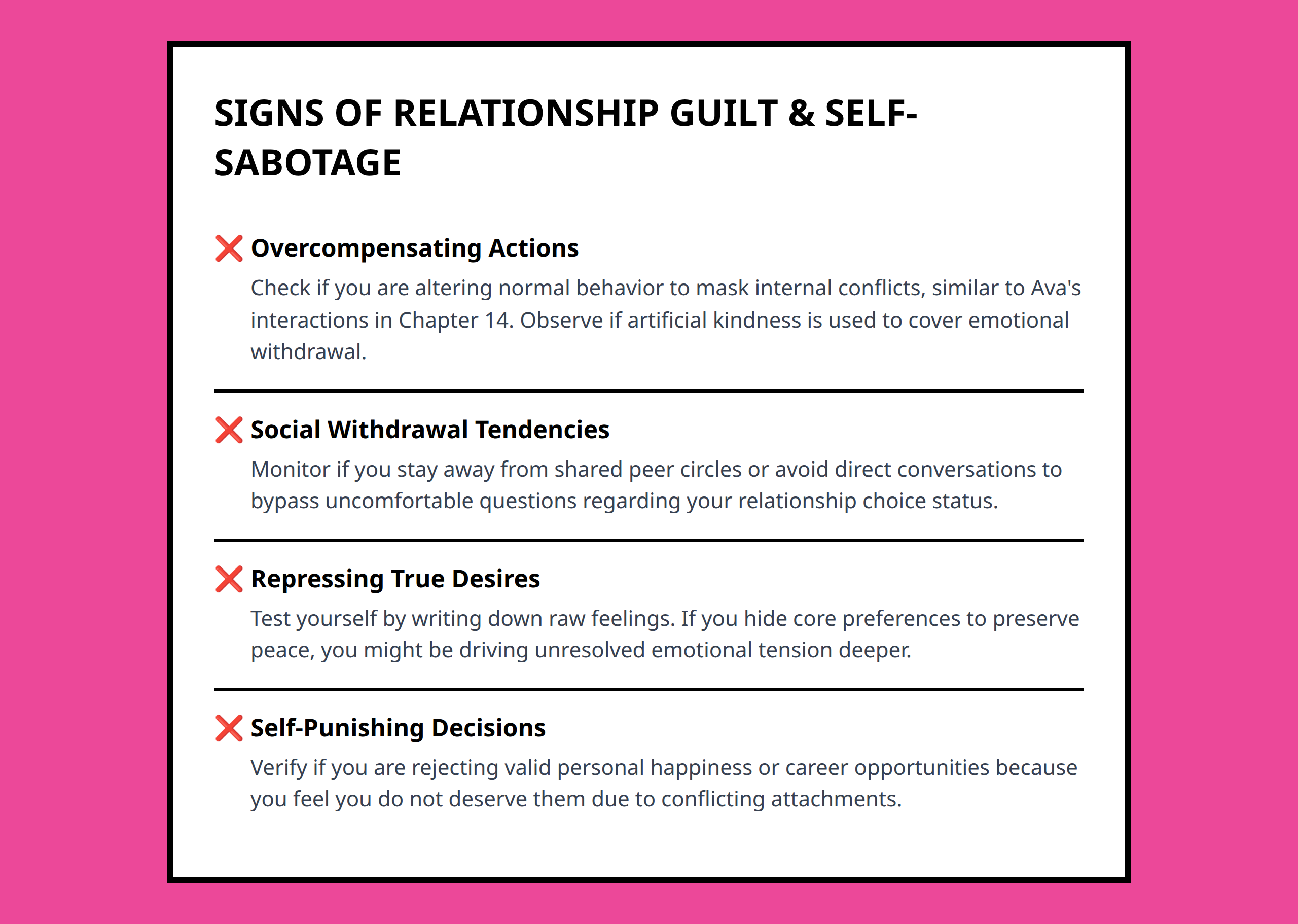
One thing I found especially believable was how guilt slowly starts controlling the protagonist’s choices.
She feels guilty about hurting Archie.
She feels guilty about wanting Florian.
She feels guilty because moving forward emotionally feels connected to betraying the memory of her late husband.
The important detail is that guilt never actually helps her make better decisions. It mostly keeps her emotionally frozen.
That distinction matters.
I tend to think guilt is useful only when it sharpens honesty. Once guilt becomes a substitute for action, it usually traps people in repetitive emotional loops.
The protagonist repeatedly tries to reduce guilt indirectly instead of addressing the underlying conflict directly. She asks for “space.” She avoids defining relationships clearly. She hopes distance or time will simplify things automatically.
But unresolved emotional situations rarely simplify themselves.
What I appreciated about the story is that it does not frame guilt as moral depth. Sometimes guilt simply reflects resistance to making a painful but necessary choice.
Emotional honesty usually arrives after emotional exposure
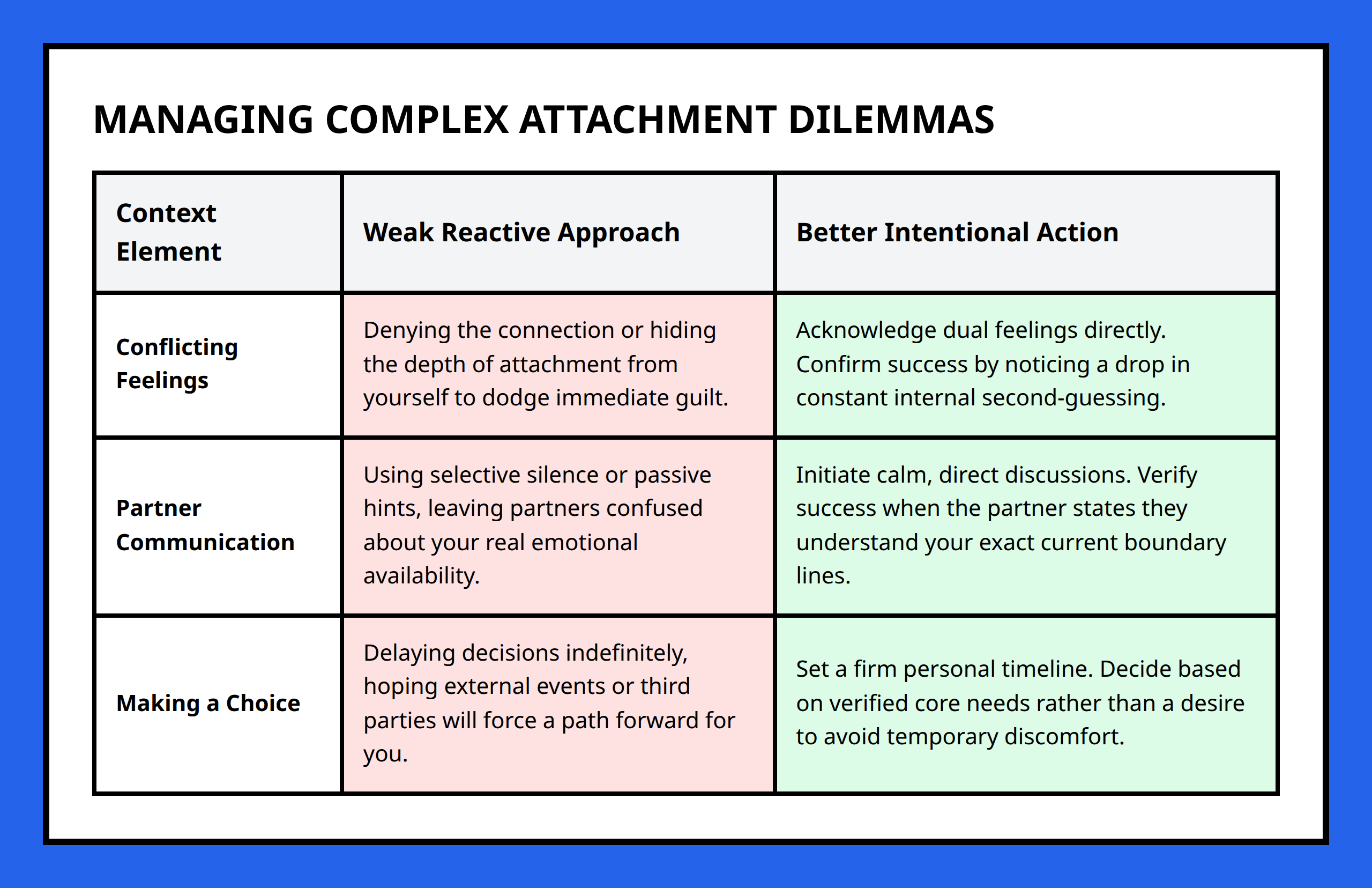
There is an uncomfortable sequence running through the story:
- The characters avoid direct emotional clarity.
- The tension escalates privately.
- The truth emerges publicly and messily.
- Only then do honest conversations finally happen.
That pattern feels painfully recognizable.
The protagonist repeatedly reaches moments where emotional honesty could have reduced harm earlier, but she hesitates because she fears consequences. Eventually, the truth surfaces anyway, except now everyone feels blindsided.
I do not read this as cruelty. I read it as emotional panic.
People often delay honesty because they believe certainty must come first. But one of the strongest ideas in the story is that emotional clarity sometimes appears only after difficult conversations begin.
The protagonist keeps waiting until she can fully explain her feelings neatly. That moment never really arrives.
Meanwhile, her silence starts making decisions on her behalf.
That is an important warning in emotionally layered relationships: avoidance is not neutral. It changes the situation even when nobody officially decides anything.
Conflicting attachments do not automatically make someone dishonest
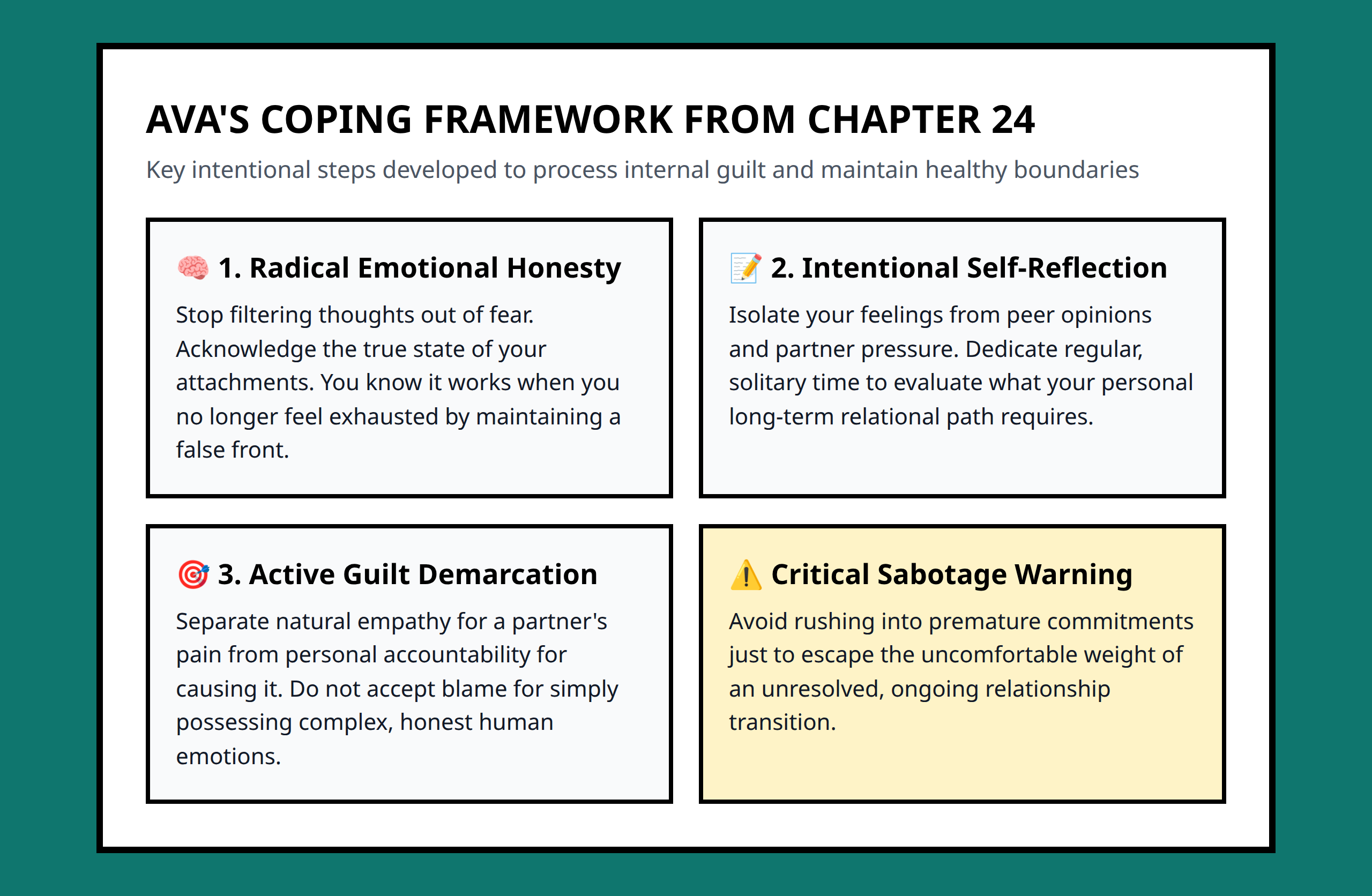
I think the story avoids a trap that many relationship discussions fall into online. It does not reduce emotional complexity into “good person versus bad person.”
The protagonist genuinely cares about multiple people at once. That is exactly why she struggles so much.
What matters is not the existence of conflicting attachment. What matters is how someone responds once they recognize it.
I would separate two very different situations:
- feeling emotionally conflicted
- using emotional conflict as permission to avoid responsibility indefinitely
The story keeps exploring this distinction through the protagonist’s internal reactions. She constantly questions herself, rewrites conversations mentally, revisits arguments, and searches for cleaner explanations than reality allows.
That self-interrogation becomes emotionally exhausting, but it also prevents the relationships from turning emotionally cartoonish.
I found that far more convincing than stories where people immediately understand exactly what they want.
The social pressure around grief quietly complicates romantic decisions
One of the more subtle layers in the story is how grief changes the emotional rules around relationships.
The protagonist is not simply navigating attraction. She is navigating identity.
Moving toward a new relationship feels emotionally loaded because part of her still measures loyalty through suffering. Happiness creates guilt. Desire creates guilt. Emotional movement creates guilt.
I think many readers will recognize this pressure even outside bereavement.
People often carry invisible emotional contracts into relationships:
- If I move on too quickly, what does that say about my past?
- If I choose differently now, was my earlier love less real?
- If I hurt someone good, does that automatically make me selfish?
The story never fully resolves these questions neatly, which honestly makes the emotional arc stronger.
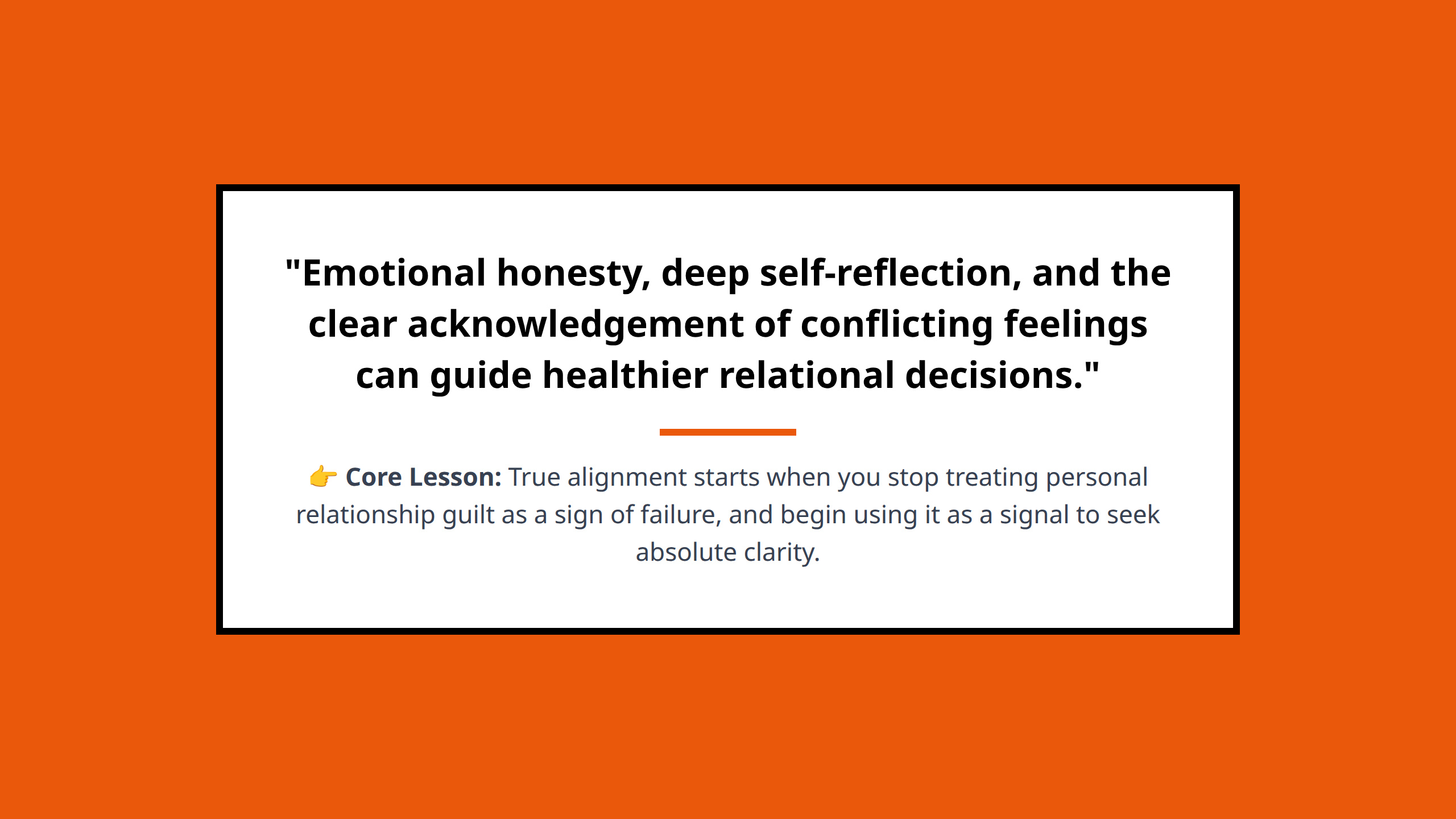
Sometimes healthier decisions begin when people stop trying to eliminate guilt completely and start asking a more useful question:
Am I avoiding this choice because it is wrong, or because it is painful?
Small moments often reveal the truth before major decisions do
The story repeatedly uses ordinary interactions to expose emotional reality long before dramatic confrontations happen.
A tense dinner.
A card game that suddenly feels hostile.
A car ride filled with silence.
A conversation that becomes emotionally intimate too quickly.
Those moments matter because relationships usually shift behaviorally before they shift officially.
I would pay attention to that in real life too. Emotional reality often appears in patterns long before people openly acknowledge it:
- who someone instinctively calls first
- whose approval suddenly matters more
- which conversations feel emotionally charged
- where guilt appears automatically
- which relationship starts requiring constant explanation
The protagonist notices many of these signs but keeps trying to intellectually manage them instead of emotionally confronting them.
That delay creates most of the damage.
Healthier decisions began once the protagonist stopped simplifying herself
The emotional turning point in the story does not come from sudden certainty. It comes from the protagonist finally admitting that her emotions are contradictory, uncomfortable, and impossible to organize into a morally perfect narrative.
I think that matters because many people approach difficult relationships like legal cases. They want a completely defensible emotional position before acting.
But complicated attachment rarely works that way.
Sometimes emotional maturity looks less like certainty and more like willingness to face consequences honestly.
The story keeps returning to one painful reality: trying to preserve every relationship perfectly usually damages all of them eventually.
Once guilt stops acting as camouflage, the characters can finally start making decisions based on emotional truth instead of emotional delay. That does not remove pain, but it does make the pain cleaner, clearer, and far less destructive.
References:
- https://www.bookey.app/book/after-ever-after
- https://www.bookey.app/book/after-ever-after/quote
- https://www.laurafroyen.com/podcast-internal/071
- https://nerdybookclub.wordpress.com/2015/02/27/books-that-make-us-cry-part-one-collected-by-donalyn-miller/
- https://www.melleragency.com/uploaded/documents/randleeditorial-literaryconsultancy-rightsguide-frankfurt2025.pdf