
The strongest memoirs and personal blogs rarely begin as polished writing. They usually begin as scattered notes, emotional fragments, and private observations recorded before the writer fully understands what the experience means.
I used to think good personal writing started with insight. The more I pay attention to how emotionally honest memoirs are built, the more I think they actually begin with accumulation.
A sentence written at midnight. A strange detail from a conversation. A paragraph typed quickly after an argument. A memory captured before it fades. Those fragments may not look important at first, but over time they become something much more valuable than memory alone: a reliable emotional archive.
That archive becomes especially important once someone starts shaping personal experiences into public writing. Without it, memoirs and blogs often end up sounding emotionally cleaned-up or reconstructed after the fact.
The diary worked because it captured emotion before interpretation
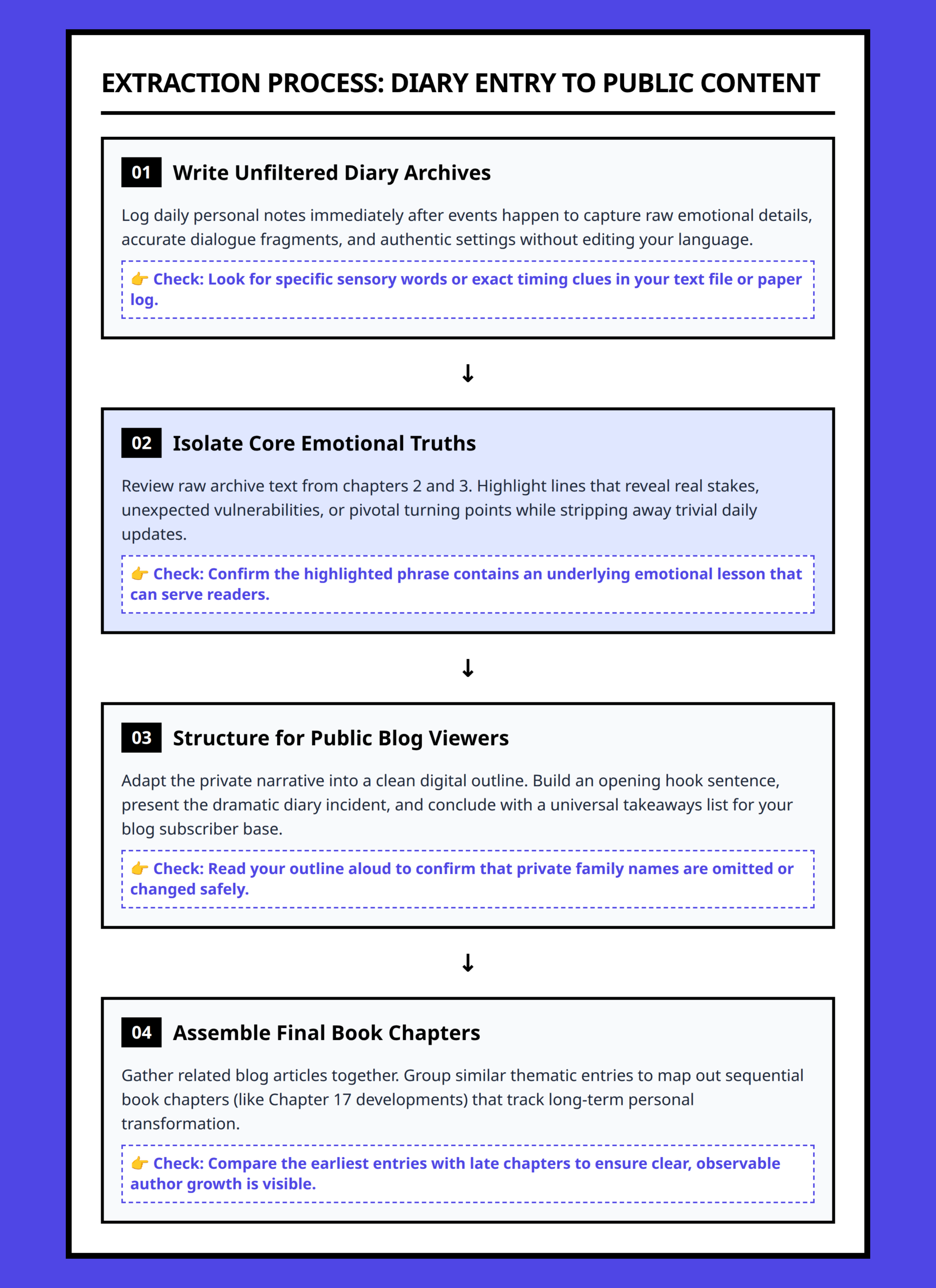
One of the most useful mechanics in the story is how the diary begins almost accidentally. The protagonist starts writing privately after loss because she is afraid details will disappear. At first, the writing is inconsistent, emotional, repetitive, and unstructured.
That lack of polish is exactly what makes it valuable later.
The diary records reactions before reflection reshapes them. It preserves emotional timing: what felt unbearable immediately, what felt confusing, what emotions arrived late, and which memories kept returning repeatedly.
I think this is where many memoir projects quietly fail. People often try to write retrospectively from conclusions instead of writing from proximity.
Retrospective writing tends to smooth emotional contradictions too early. The diary preserves them.
A realistic version of this might look ordinary. Someone writes short notes into their phone while sitting in a parking lot after visiting a hospital. Months later, they barely remember the exact conversation, but the note preserves the emotional atmosphere: the fluorescent lights, the silence in the elevator, the strange guilt about buying coffee afterward.
Those details are difficult to invent honestly later because they come from emotional immediacy, not storytelling instinct.
Personal notes create continuity when memory becomes unreliable
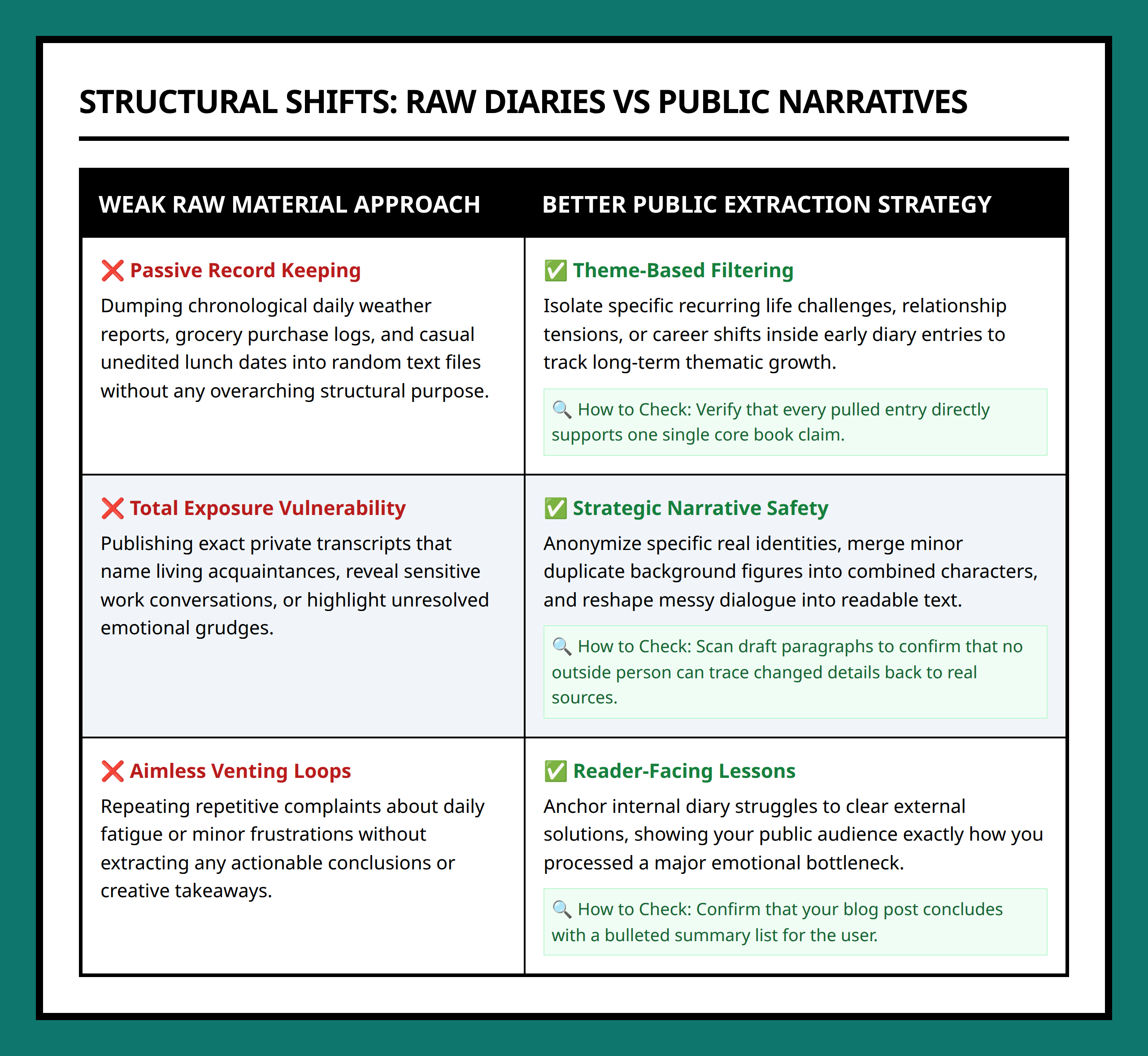
The story repeatedly shows the protagonist returning to old entries because grief distorts time and memory. Days blur together. Conversations become fragmented. Certain moments grow emotionally larger while others disappear entirely.
The diary becomes a stabilizing tool because it preserves sequence.
That practical function matters more than many writers realize.
I would not treat personal notes simply as emotional release. I would treat them as structural material. Over time, they reveal patterns that memory alone tends to hide:
- which emotions repeat most often
- which relationships shift gradually
- which moments triggered major changes
- which fears stayed consistent
- which details remained emotionally alive months later
The protagonist eventually notices that some experiences she thought were central barely appear in her notes, while small everyday moments appear constantly. That changes how she understands her own story.
I found that especially important because memoir writing often becomes distorted by dramatic hindsight. Diaries interrupt that distortion.
Private writing and public writing serve different purposes
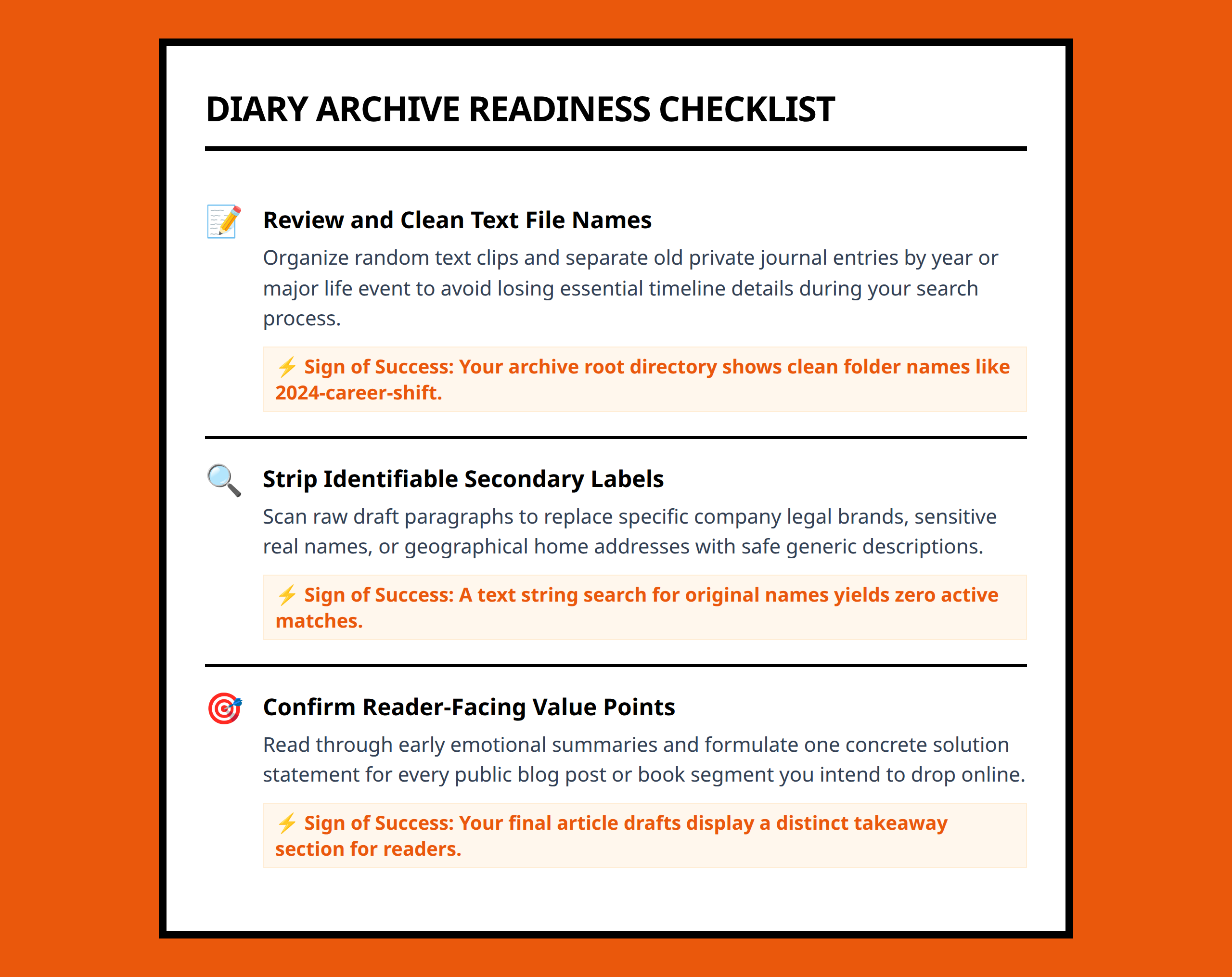
A major turning point comes when the protagonist begins adapting diary material into blog posts.
The shift immediately changes the writing.
Private entries exist to capture emotional truth. Public posts must also consider readability, structure, pacing, and audience experience. The protagonist starts recognizing that not every emotionally honest detail belongs in public form.
That distinction is essential.
I think many writers confuse authenticity with complete exposure. But the story shows something more nuanced: authentic public writing still requires selection.
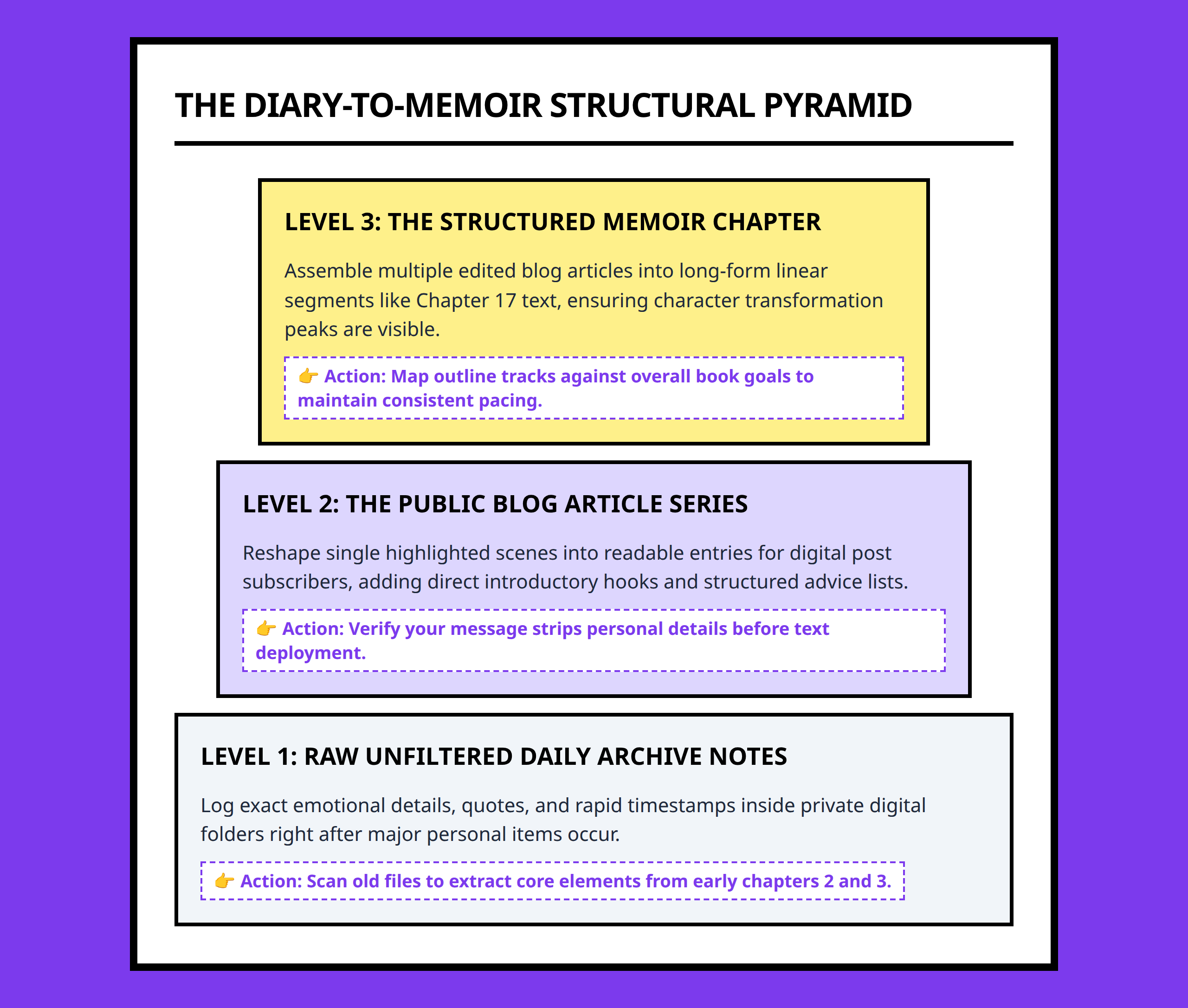
The diary acts as the raw source material. The blog becomes the translated version.
That translation process includes:
- removing repetition
- finding narrative shape
- clarifying emotional movement
- protecting certain private details
- deciding what serves the reader emotionally
Without the original notes, however, the public writing risks becoming emotionally flattened.
The interesting thing is that the protagonist’s blog becomes stronger not when she becomes more polished, but when she learns how to preserve the emotional specificity of the diary while still shaping it into coherent writing.
Small recurring details often become the emotional spine of the memoir
One thing I kept noticing is how often ordinary details return across the diary entries.
A particular room.
A favorite sweatshirt.
Certain songs.
The ritual of making tea.
Scrolling social media late at night.
At first these details seem insignificant. Later they become emotionally connective tissue inside the larger narrative.
I would pay close attention to recurring details if I were building a memoir from journals. Repetition usually signals emotional importance even when the writer does not consciously realize it yet.
The protagonist’s later writing becomes more emotionally convincing because it includes these grounded physical details instead of relying only on abstract reflection.
Readers often connect more deeply to concrete repetition than dramatic summary.
A sentence about someone continuing to set two coffee mugs on the counter out of habit can carry more emotional weight than several paragraphs explaining loneliness.
The blog forced the protagonist to organize emotional chaos into narrative movement

The diary captures emotional reality, but the blog forces interpretation.
That pressure changes the protagonist’s relationship with her own experiences. Once readers begin following her writing, she can no longer simply document emotions randomly. She has to recognize transitions, emotional shifts, and unresolved tensions.
I do not think this automatically makes the writing less honest. In some ways, it makes the writer more accountable to clarity.
Still, the story also shows the danger of shaping experience too aggressively for audience expectations. The protagonist occasionally worries that she is beginning to perform grief rather than examine it.
That tension becomes one of the most valuable lessons in the entire process.
Good memoir writing seems to require two conflicting abilities at once:
- staying emotionally close to the original experience
- stepping back enough to shape the experience meaningfully
The diary supports the first task. The blog demands the second.
Daily notes become useful only when the writer stops treating them like future content
I think this may be the most practical takeaway.
The protagonist’s diary works because it was not originally designed as a product. The writing stays emotionally alive because it exists first as private processing rather than audience-facing performance.
Once people begin journaling mainly to produce future content, the emotional tone often changes immediately. Entries become cleaner, more self-aware, more narratively convenient.
I would probably judge a diary’s usefulness less by literary quality and more by emotional honesty.
Messy notes can later become excellent material.
Performative notes usually stay performative.
The strongest memoirs often emerge from writers who first allowed themselves to write badly, privately, inconsistently, and without immediate meaning. The structure comes later. The emotional truth has to arrive first【38†source】.
References:
- https://www.writersdigest.com/write-better-nonfiction/using-old-diary-entries-to-piece-together-a-memoir
- https://www.geniusmemoirwriting.com/blog/dont-structure-your-memoir-like-a-diary
- https://louisadeasey.com/how-to-turn-journals-into-book/
- https://www.writersandartists.co.uk/advice/how-structure-memoir
- https://www.linkedin.com/pulse/your-memoir-should-read-like-diary-basics-structure-wendy-dale
- https://janefriedman.com/2-methods-for-structuring-your-memoir/
- https://medium.com/@leeromanosequeira/write-your-memoir-20-quick-and-easy-tips-86c01f92a647
- https://www.sararoahen.com/new-blog-1/life-lines-whats-the-best-way-to-use-journal-entries-in-a-memoir
- https://esmewang.com/journal-keeping-memoir
- https://nationalcentreforwriting.org.uk/writing-hub/crafting-your-memoir-a-guide-to-storytelling-reflection-and-connection/
- https://www.palmettopublishing.com/resources/the-complete-guide-to-writing-a-memoir
- https://etheleemiller.com/wp-content/uploads/sites/9/2013/02/5-Elements-of-Memoir.pdf
- https://www.creative-writing-now.com/how-to-write-a-blog.html