Children often react to fear before logic has a chance to catch up. Understanding how the “upstairs” and “downstairs” brain work together can make anxious behavior feel less confusing and much more manageable.
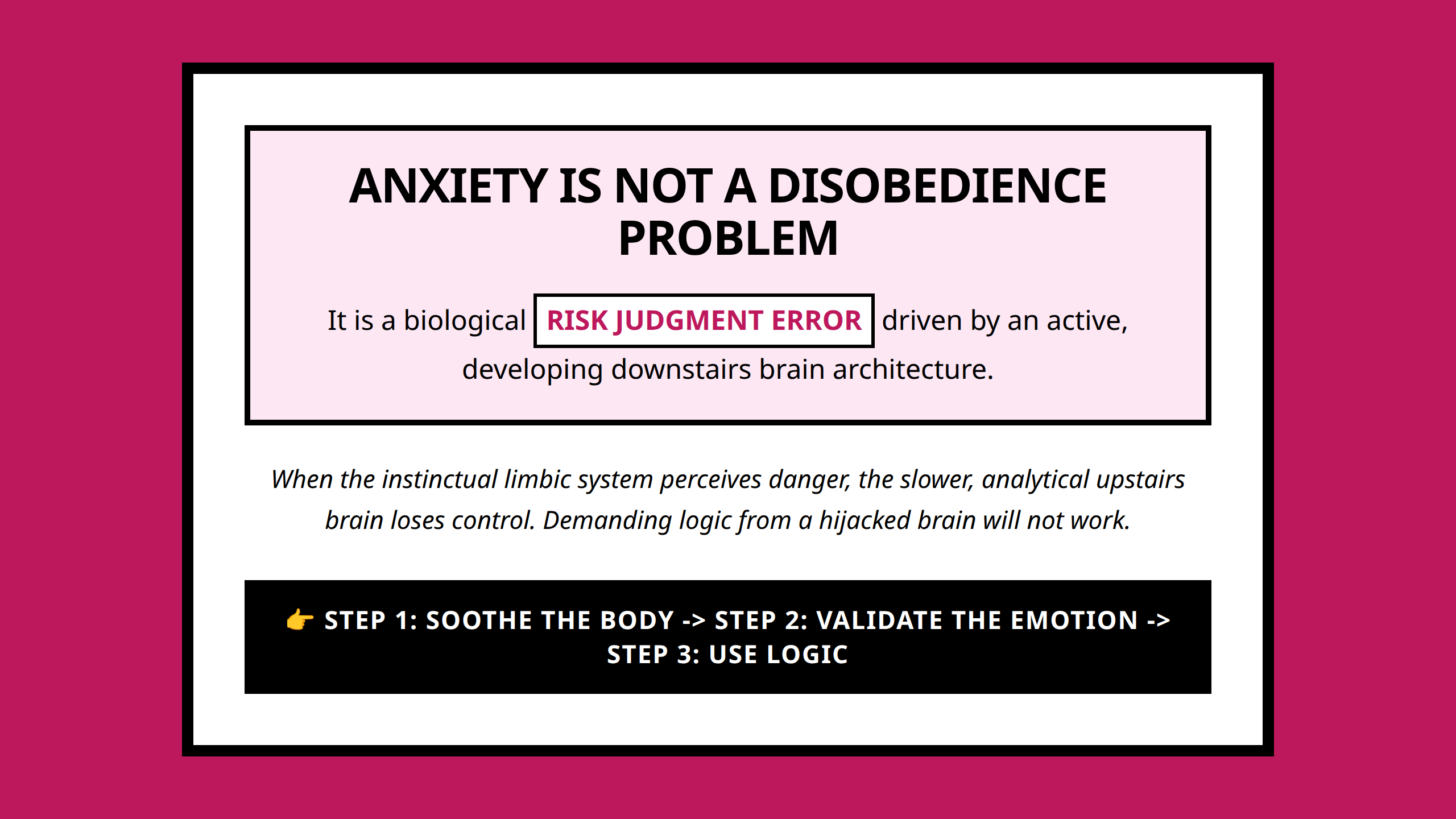
I’ve noticed that many adults expect anxious children to calm down once they hear a reasonable explanation. A parent says, “There’s nothing to worry about,” but the child’s fear barely changes. That disconnect makes much more sense once you understand that fear and reasoning are not handled by the same part of the brain.
Children do not experience risk the way adults do. Their brains are still developing, especially the systems responsible for judgment, perspective, and impulse control. When anxiety appears, the instinctive brain often takes over long before the thinking brain can evaluate whether the danger is real.
The Difference Between the Upstairs and Downstairs Brain
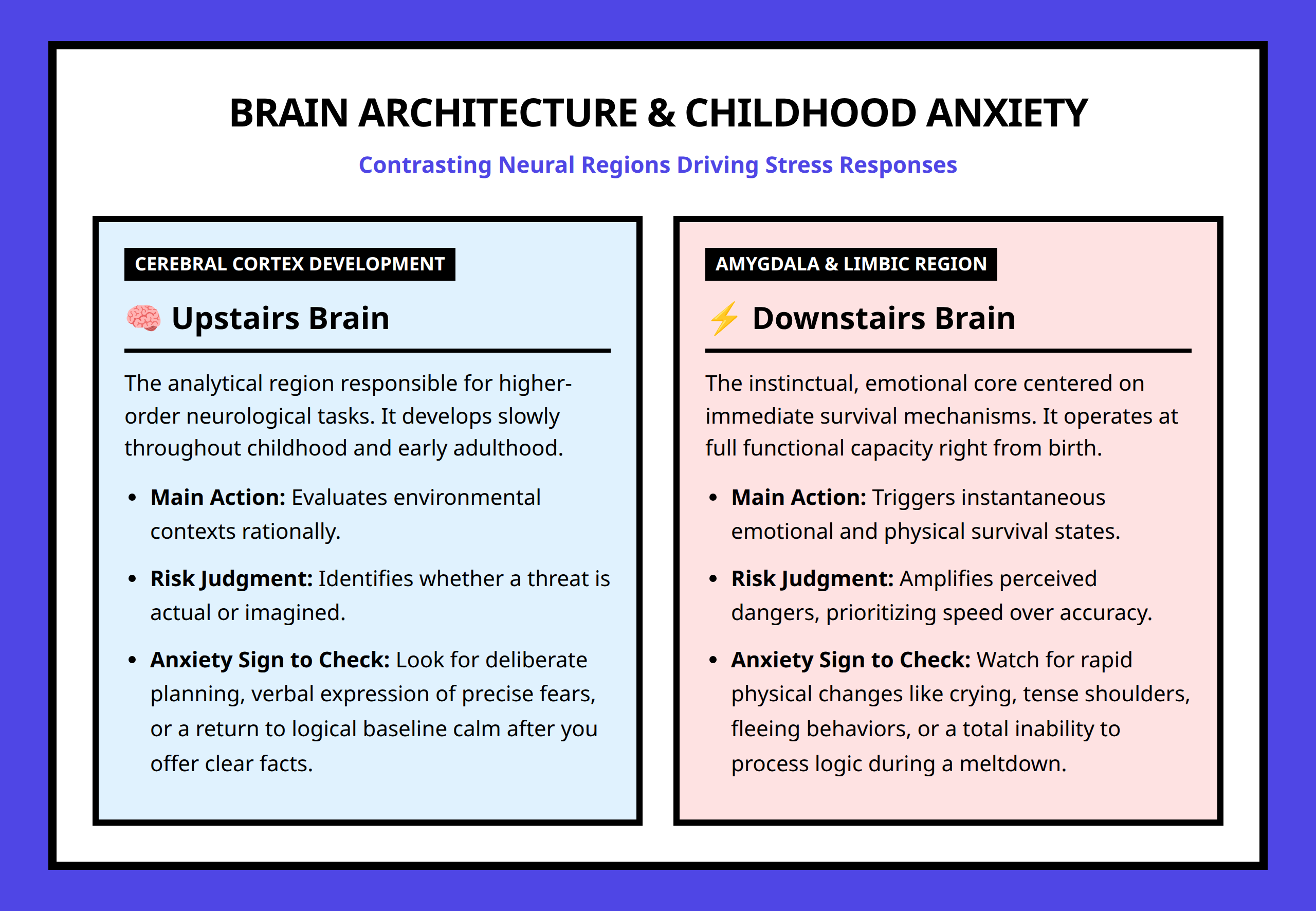
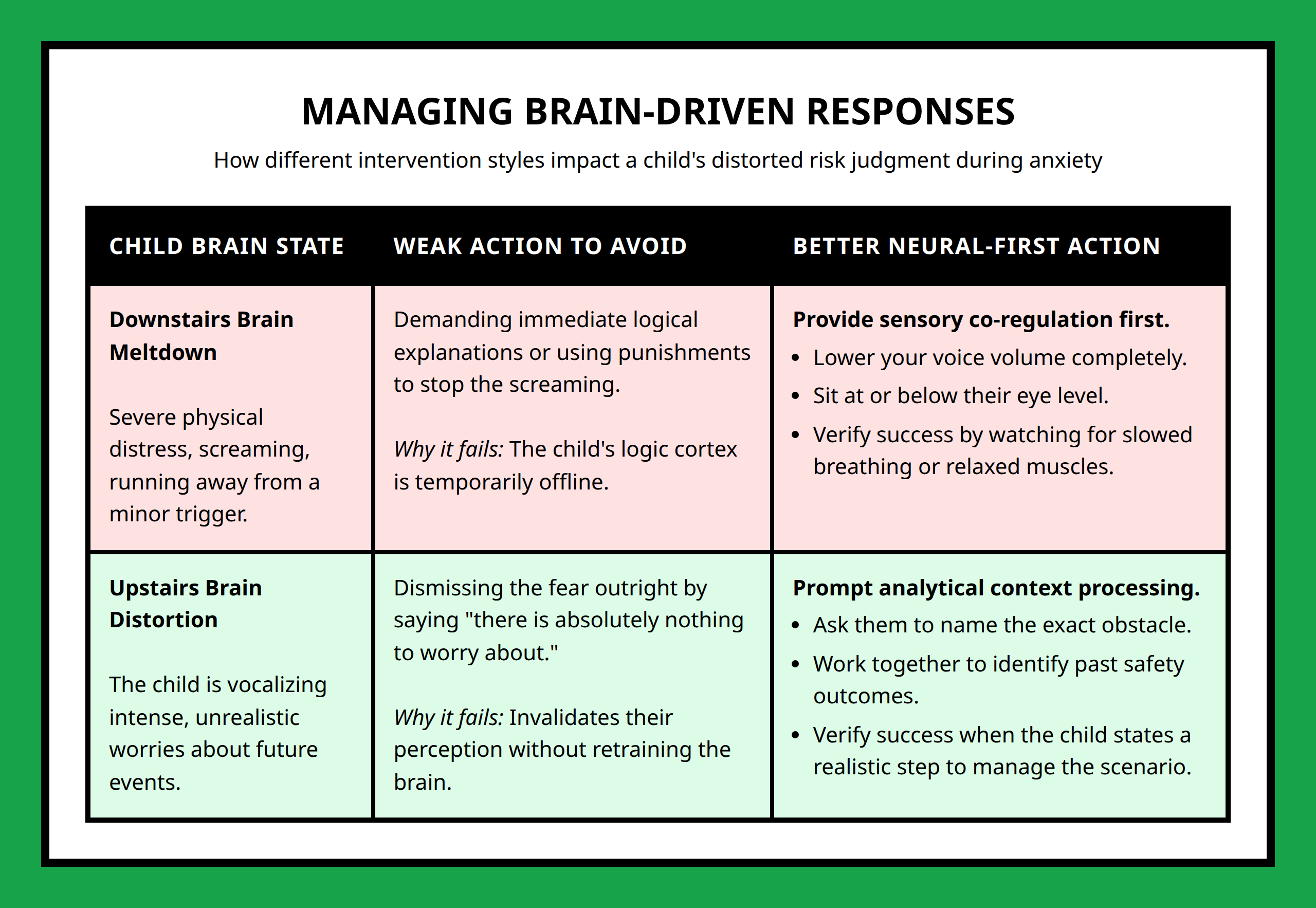
The “downstairs brain” is the fast, instinctive part connected to survival. It reacts automatically to possible threats. This includes structures involved in fear responses, especially the amygdala. The “upstairs brain,” by contrast, is slower and more analytical. It helps children reason, assess risk, and regulate emotional reactions.
One of the most useful things I take from this distinction is that children are not simply being irrational when they panic. Their brains are prioritizing survival before logic. That changes how I would approach an anxious child completely.
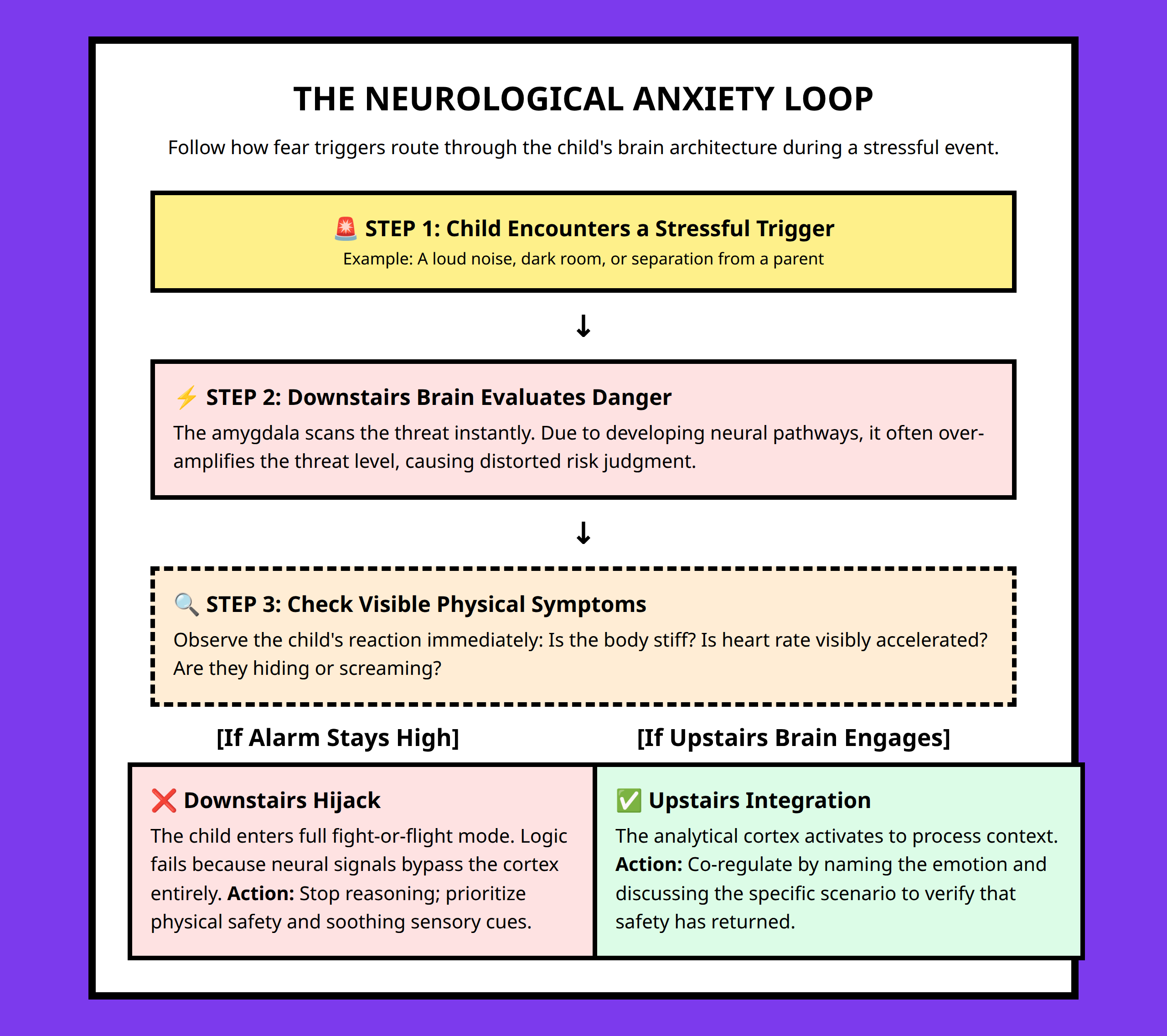
A child afraid of the dark is a simple but powerful example. Even when they intellectually know nothing dangerous is hiding in the hallway, the downstairs brain still interprets darkness as threatening. The reasoning brain may understand reality, but the fear system reacts first.
This is why reassurance alone often fails. Logic is arriving late to a conversation that fear already started.
Why Children Often Get Risk Wrong
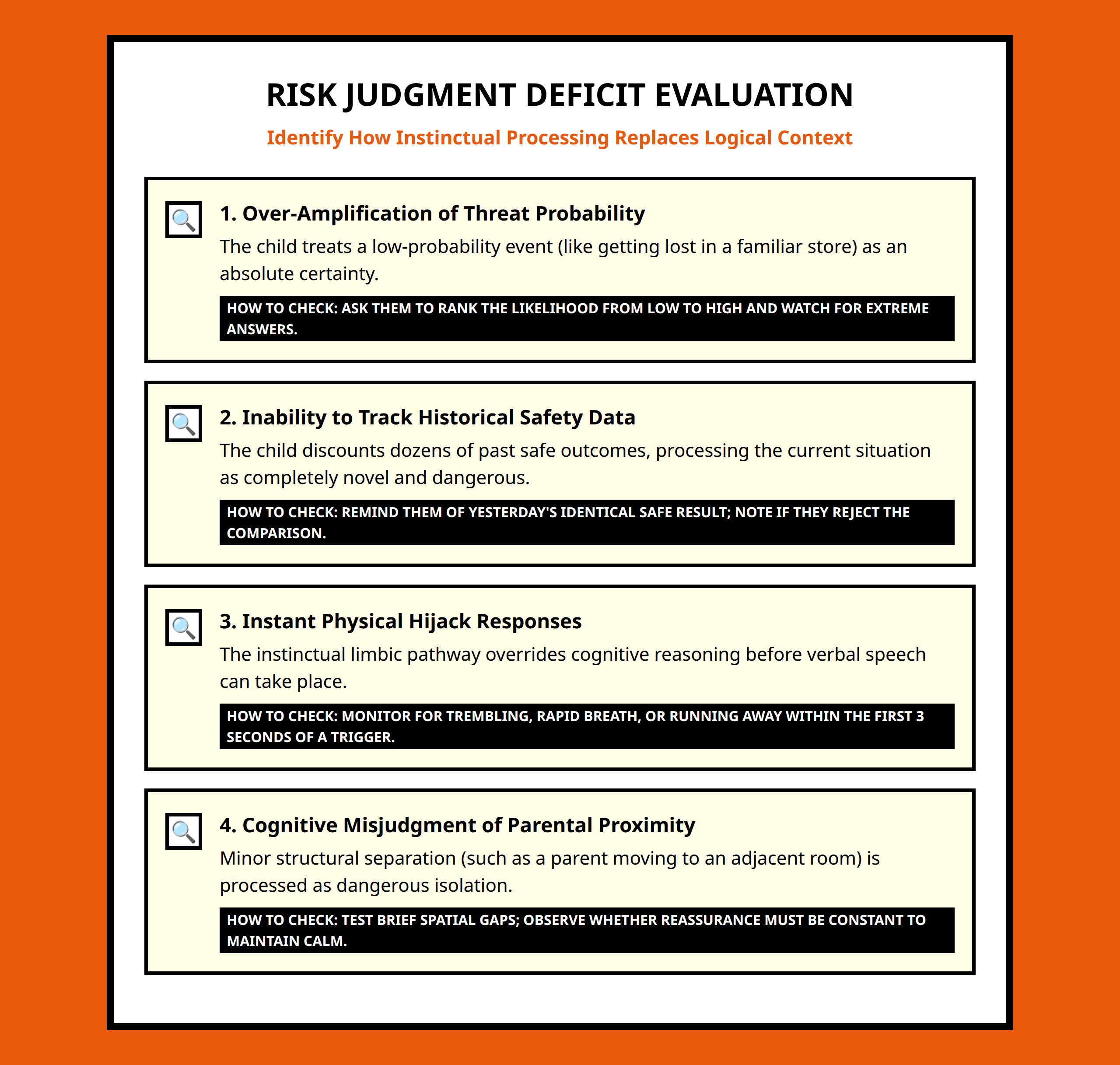
Adults misjudge risk too, but children do it more often because the analytical parts of the brain are still immature. That developmental gap affects how they process uncertainty, danger, and social situations.
I find it useful to think of this less as “bad behavior” and more as incomplete risk-processing capacity. A child climbing dangerously high in a tree may genuinely struggle to balance excitement against physical risk. A teenager crossing the street while texting may understand the rule intellectually but fail to fully process the immediate danger in real time.
The instinctive brain also relies on mental shortcuts called heuristics. These shortcuts help humans make quick decisions, but they distort risk perception in predictable ways.
Old Fears Still Feel Bigger Than Modern Risks
Some fears feel disproportionately powerful because the brain is wired to respond strongly to ancient threats. Snakes, darkness, heights, and isolation trigger instinctive reactions that developed over thousands of years.
That helps explain why a child may panic over a harmless spider but show little concern about something statistically more dangerous, like crossing a busy parking lot without paying attention.
I think this is an important distinction for parents because it prevents a common mistake: assuming children choose their fears logically. Most fears are emotional before they are rational.
A seven-year-old who refuses to sleep after seeing shadows on the wall is not performing anxiety for attention. Their nervous system is reacting to something that still feels biologically threatening.
The Illusion of Control Changes Anxiety
Children usually feel safer when they believe they have some control over a situation. That perception can dramatically change how intense anxiety feels.
A child might tolerate riding a bicycle down a steep hill but panic during a medical procedure. The difference is not always objective danger. It is often perceived control.
I would pay close attention to this when helping an anxious child. Sometimes the goal is not removing the stressful situation entirely but restoring a sense of predictability or participation.
Even small choices can matter. Letting a child decide which arm gets a vaccine first or allowing them to rehearse a school presentation beforehand gives the upstairs brain more involvement. That can reduce the feeling of helplessness that amplifies fear.
Why Social Anxiety Feels So Real to Children
The developing brain is especially sensitive to social threat. Once children begin worrying about embarrassment, rejection, or judgment, the downstairs brain can interpret ordinary situations as emotionally dangerous.
A child raising their hand in class may experience a genuine fight-or-flight response over the possibility of getting an answer wrong. Adults often underestimate how physically intense these moments feel.
One detail I find especially important is that the brain starts scanning constantly for signs of rejection once anxiety takes hold. Neutral reactions suddenly appear threatening. A classmate looking away during conversation can become “proof” that nobody likes them.
That distorted interpretation is not stubbornness or drama. It is a brain attempting to detect danger everywhere.
Why Avoidance Quietly Strengthens Fear
Avoidance gives immediate relief, which is exactly why it becomes so powerful. When a child escapes a stressful situation, the downstairs brain learns that avoidance worked.
The problem is that the brain also learns the situation must have been dangerous in the first place.
I think many well-meaning adults accidentally reinforce this cycle. A child becomes anxious about ordering food at a restaurant, so the parent orders for them. Everyone feels temporary relief, but the brain quietly records a damaging lesson: “I could not handle that situation myself.”
Over time, the fear grows larger because the child never collects evidence that they are capable of coping.
The Goal Is Integration, Not Eliminating Fear
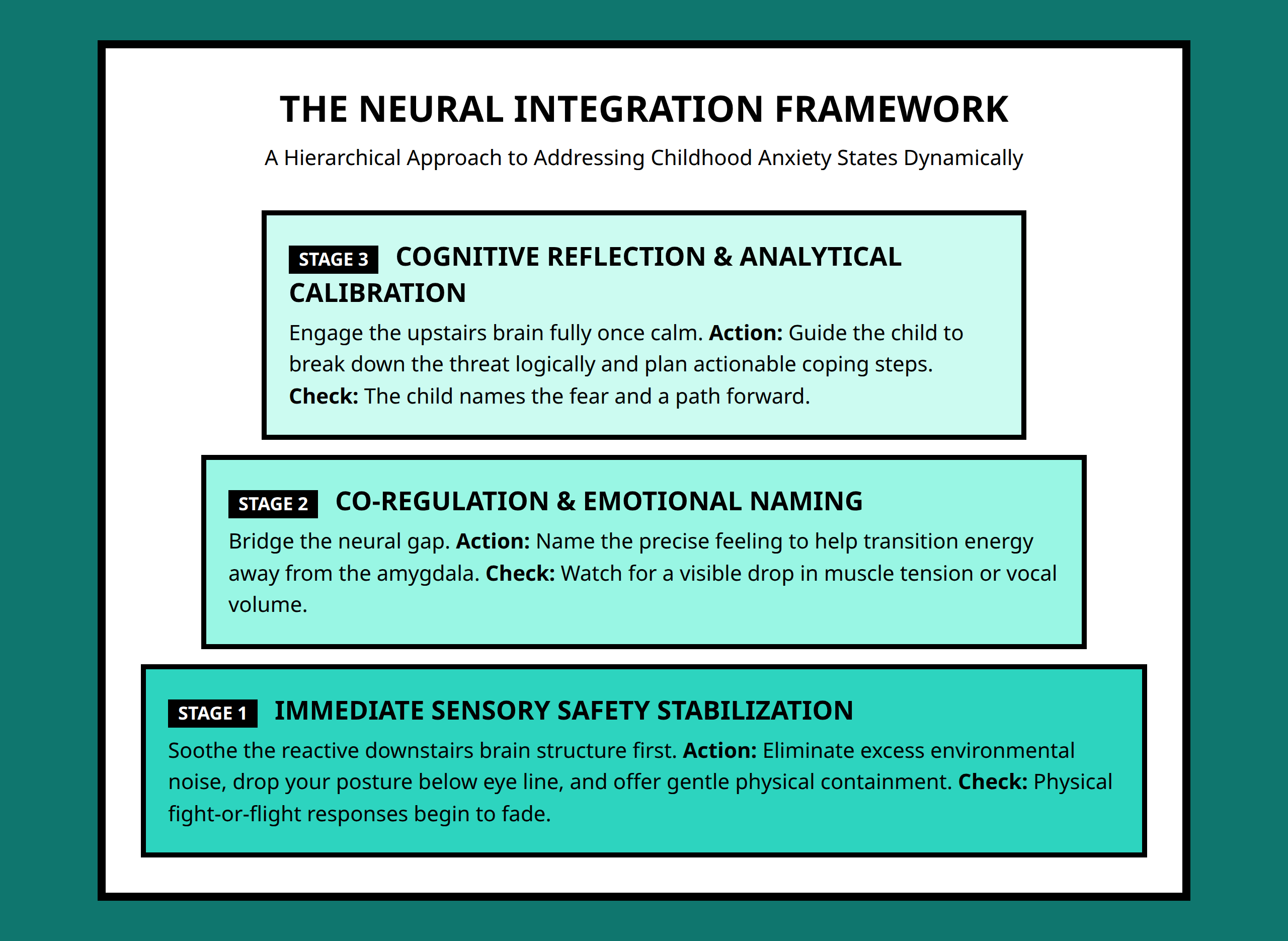
The most useful way I’ve found to think about childhood anxiety is not as something to erase but as something to regulate. Fear itself is not the enemy. The real challenge is helping the upstairs brain stay engaged long enough to evaluate what the downstairs brain is reacting to.
Children do not suddenly become calm because someone explains a situation logically once. Their brains need repeated experiences where they feel discomfort, remain safe, and gradually realize they can tolerate uncertainty without escaping from it.
That is why understanding brain mechanics matters so much. When adults recognize that anxiety is tied to development, instinct, and distorted risk perception, the response becomes less about demanding calmness and more about helping children build the ability to think clearly while fear is present.
References:
- https://www.youtube.com/watch?v=9Y0dcpFAAP8
- https://www.youtube.com/watch?v=dk1Nt-xnSGI
- https://www.youtube.com/watch?v=CIPqxkdhfl4
- https://www.ecda.gov.sg/beanstalk/educators-portal/ask-the-experts/shaping-emotional-development-in-children–a-neuroscience-perspective
- https://www.canr.msu.edu/news/understanding_the_upstairs_and_downstairs_brain
- https://www.nurseryworld.co.uk/content/features/neuroscience-understand-the-upstairs-and-downstairs-brain
- https://drdansiegel.com/whole-brain-child-handouts/
- https://kidsthatgo.com/upstairs-and-downstairs-brain-part-one/
- https://www.thesparkts.com.au/post/understanding-the-brain-and-behaviour
- https://yourmindmatters.net.au/the-upstairs-downstairs-brain-why-kids-have-a-hard-time-managing-feelings-and-emotions/
- https://www.psychologytoday.com/sg/blog/moral-landscapes/202112/raising-your-childs-whole-brain