Children become more resilient when they learn that mistakes, discomfort, and setbacks are part of growth instead of evidence that something is wrong with them. A growth mindset changes how anxious children interpret difficult experiences.
One thing I keep noticing about anxious children is that many of them are not only afraid of difficult situations. They are afraid of what those situations might say about them. A poor grade, an awkward social moment, or a failed attempt quickly becomes personal evidence of inadequacy.
That interpretation changes everything. Once children believe mistakes define them, anxiety becomes much harder to manage because every challenge starts feeling like a threat to identity rather than a normal part of learning.
A growth mindset interrupts that pattern by changing the meaning children attach to failure.
Why Anxious Children Often Fear Mistakes So Deeply
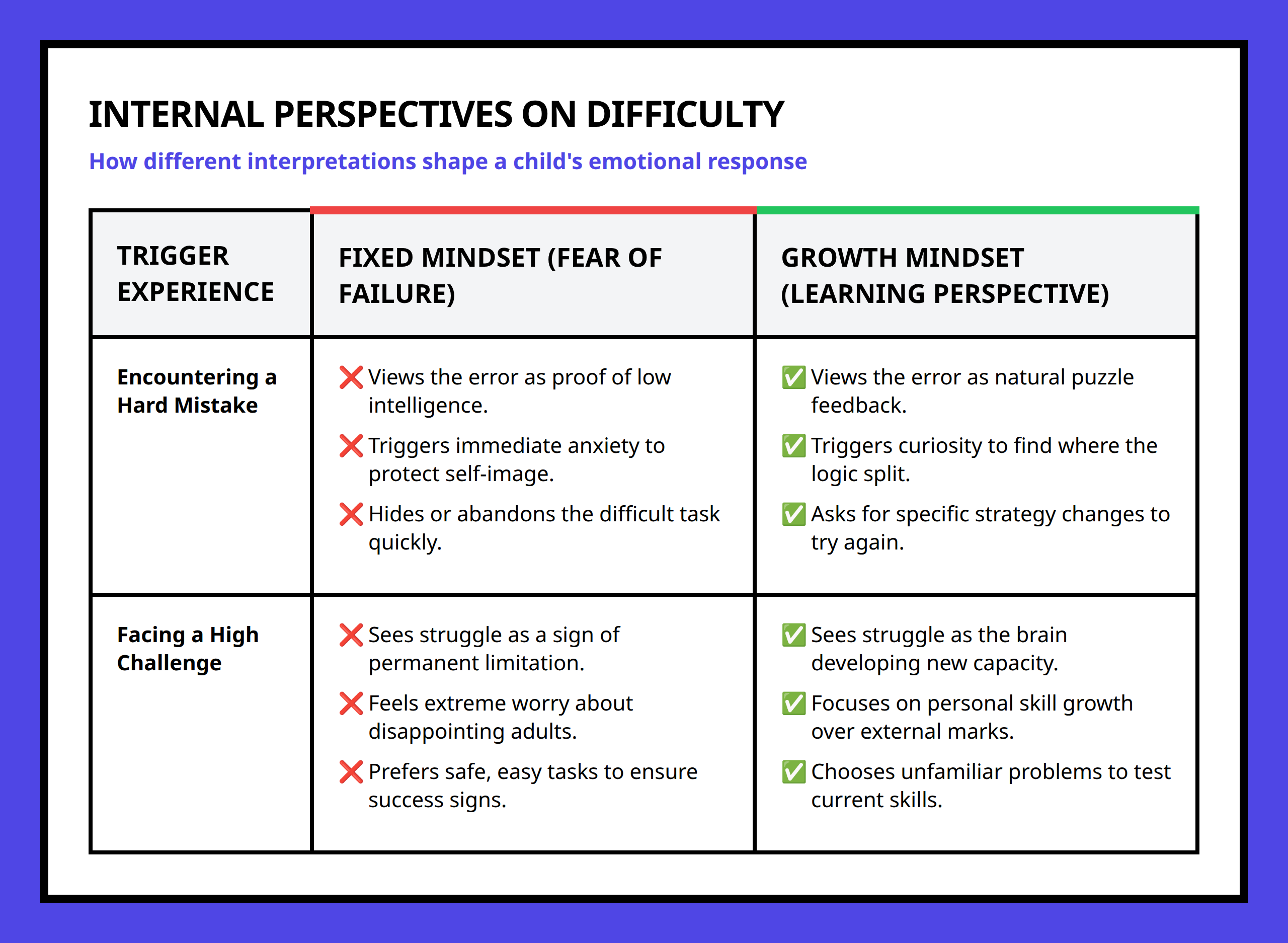
Anxious children tend to overestimate the importance of getting things right immediately. They may believe successful people perform naturally without struggle, while mistakes signal weakness or embarrassment.
I think adults sometimes accidentally reinforce this without realizing it. When praise focuses mainly on outcomes — being smart, talented, gifted, or naturally good at something — children can begin protecting those labels instead of developing resilience.
A child praised constantly for being “the smart one” may panic when schoolwork becomes harder. Suddenly, effort feels dangerous because struggling might threaten the identity they have built around success.
That fear creates avoidance. Some children stop trying difficult tasks altogether. Others become perfectionistic and emotionally overwhelmed by ordinary setbacks.
In both cases, anxiety grows because mistakes stop feeling temporary and start feeling permanent.
The Difference Between a Fixed Mindset and a Growth Mindset
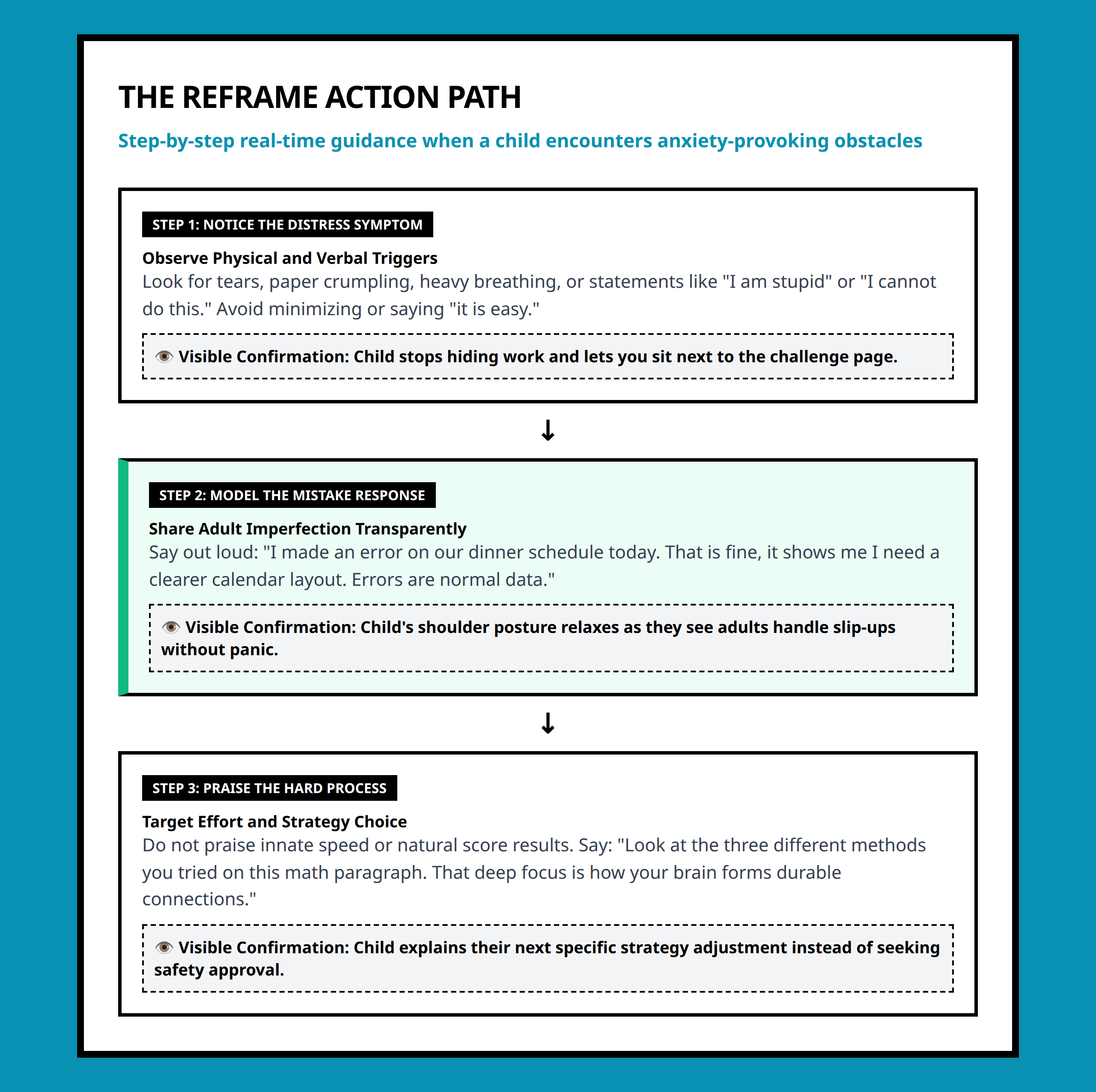
A fixed mindset treats ability as static. Success means proving competence, while failure becomes proof of limitation.
A growth mindset treats ability as something that develops through effort, strategy, persistence, and learning.
This distinction sounds simple, but it changes how children emotionally process anxiety-provoking situations.
A child with a fixed mindset may think:
- “I failed the test because I’m bad at math.”
- “Nobody talked to me at lunch because I’m awkward.”
- “I got nervous during the presentation, so I’m not confident.”
A child learning a growth mindset starts interpreting the same situations differently:
- “I need a better way to study this.”
- “Social situations get easier with practice.”
- “I was nervous, but I still got through it.”
I would not expect this shift to happen instantly. Children repeat old interpretations automatically, especially when anxiety is already high. But repeated reframing slowly changes the emotional meaning attached to setbacks.
Why Effort-Based Praise Matters More Than Outcome-Based Praise
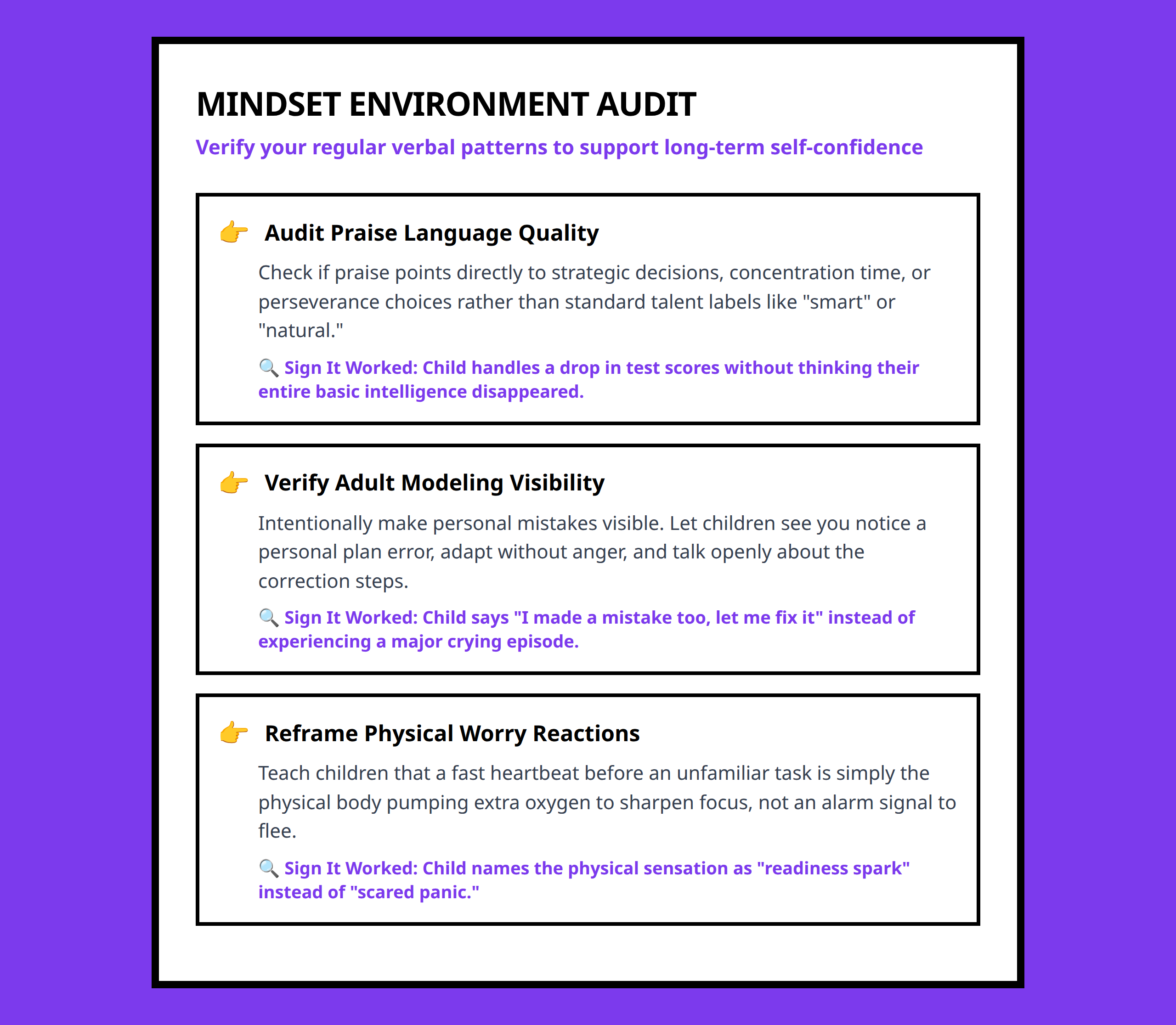
One practical change that matters enormously is how adults respond after children struggle.
I try to pay attention to whether praise focuses only on results or on the process behind improvement. Children need encouragement, but the type of encouragement shapes how they interpret difficulty.
Outcome-focused praise sounds like:
- “You’re so smart.”
- “You’re naturally good at this.”
- “You’re the best reader in your class.”
Growth-oriented praise sounds different:
- “You kept working even when it got frustrating.”
- “I noticed how you tried a new strategy.”
- “That looked uncomfortable, but you stayed with it.”
The second approach reinforces adaptability instead of perfection.
This becomes especially important for anxious children because they often monitor themselves constantly for signs of failure. Process-focused feedback teaches them to value persistence and recovery, not just flawless performance.
Children Learn More From Adult Reactions Than Adult Advice
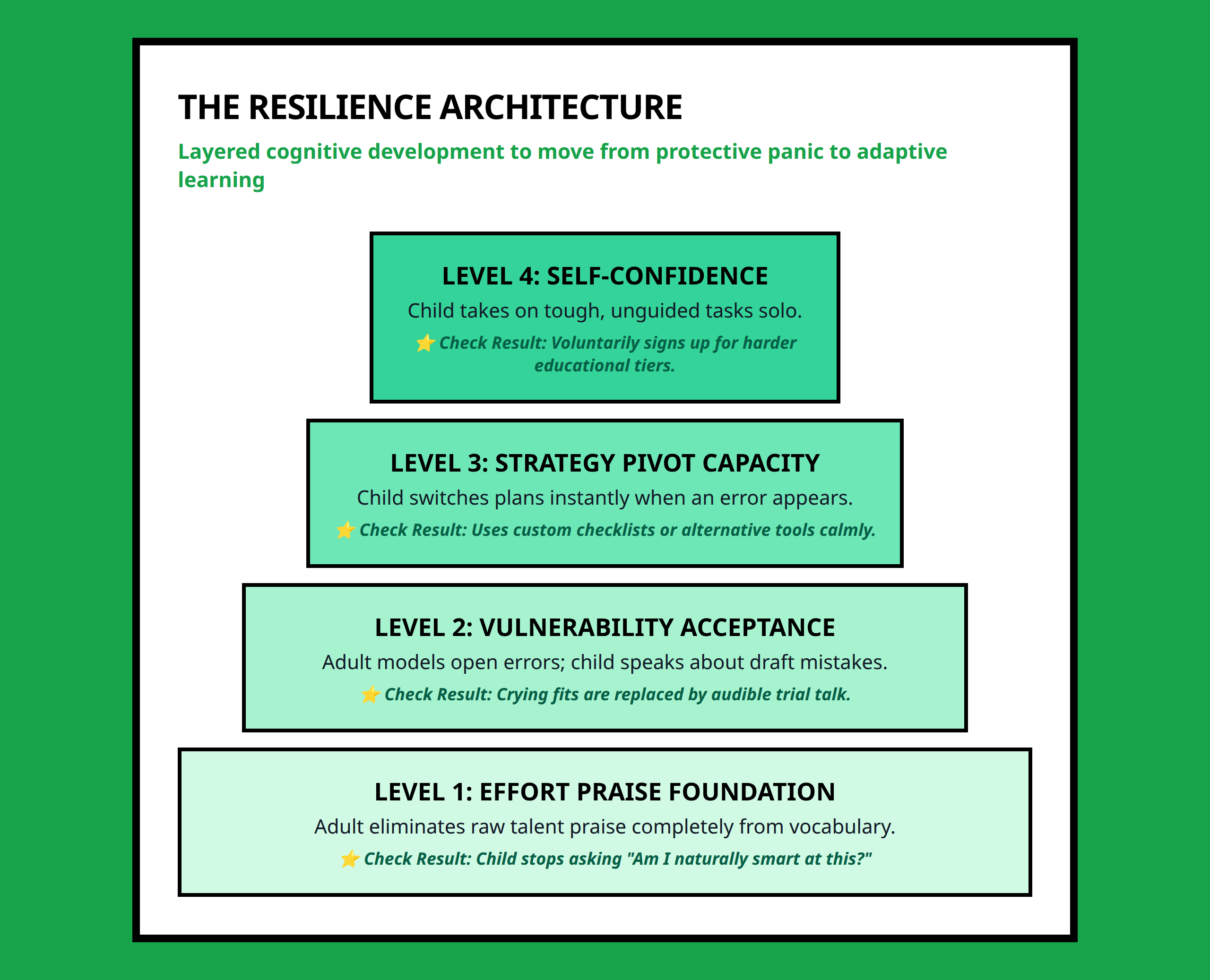
I think one of the easiest mistakes adults make is expecting children to tolerate mistakes calmly while reacting harshly to their own setbacks.
Children pay close attention to how adults handle frustration, embarrassment, and imperfection. A parent who becomes intensely self-critical after small mistakes may unintentionally teach children that errors are emotionally dangerous.
On the other hand, adults who model recovery show children something different.
A teacher calmly correcting a mistake during class without shame teaches resilience in real time. A parent saying, “That didn’t go how I wanted, but I can adjust,” teaches flexibility more effectively than a long lecture about confidence.
I would treat these ordinary moments seriously because children absorb emotional patterns constantly.
Why Anxiety Shrinks When Failure Stops Feeling Final
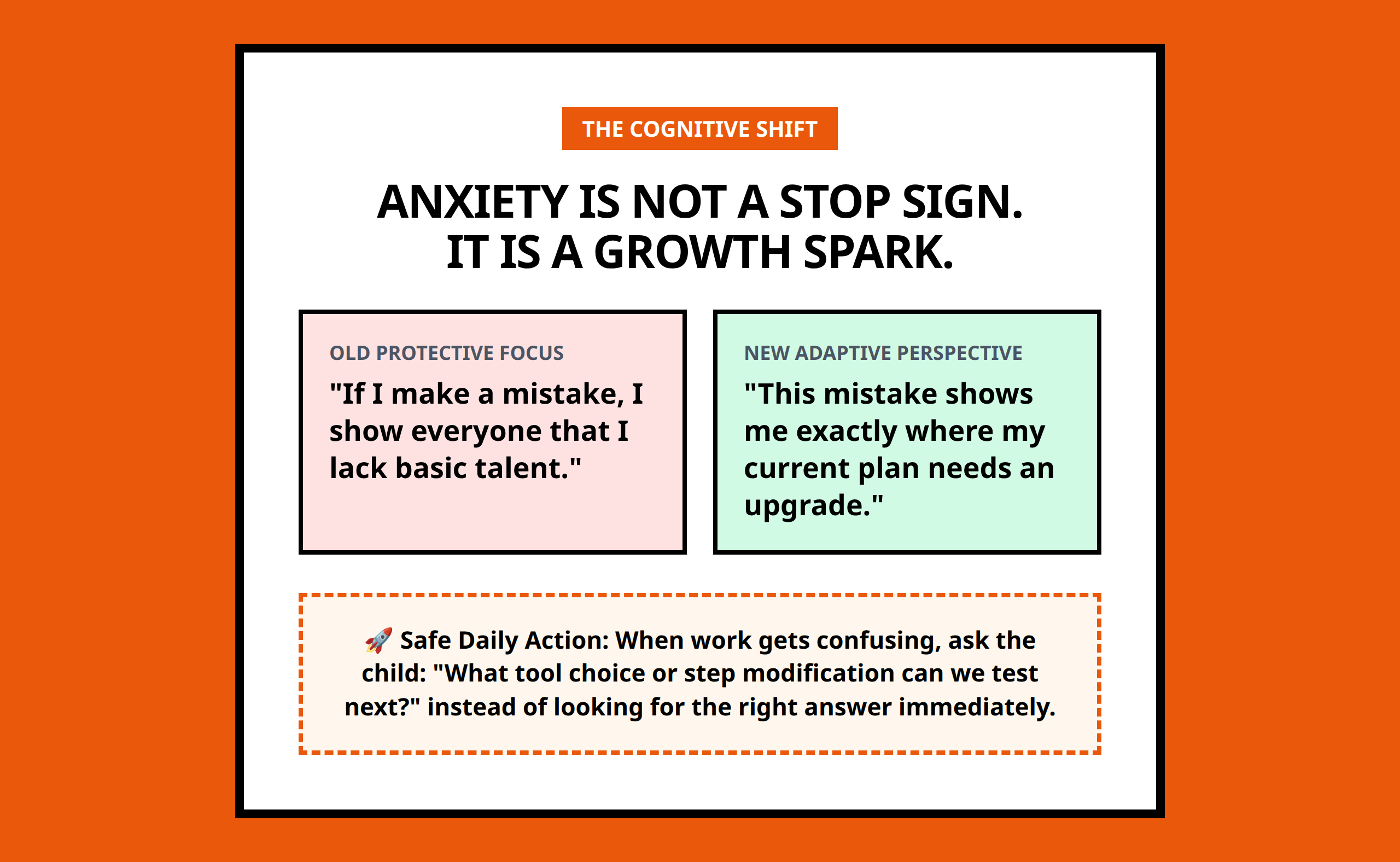
Growth mindset principles help anxious children because they weaken catastrophic thinking.
Without that shift, children often treat setbacks as permanent verdicts. One awkward interaction becomes “Nobody likes me.” One disappointing performance becomes “I’ll never be good at this.”
A growth mindset introduces a different interpretation: this is part of learning, not the end of the story.
That perspective lowers emotional pressure. Children become more willing to attempt difficult things because mistakes stop carrying the same emotional threat.
A middle-school student who once avoided raising her hand in class may eventually participate more after realizing that occasional wrong answers are normal rather than humiliating. The anxiety does not disappear instantly, but the fear loses some of its authority.
Resilience Comes From Recovery, Not Constant Success
I think this may be the most important distinction of all.
Many adults unintentionally try to build confidence by protecting children from struggle. But resilience usually develops through manageable difficulty, reflection, and recovery.
Children become emotionally stronger when they experience setbacks and discover they can continue anyway.
That does not mean dismissing anxiety or forcing children into overwhelming situations. It means helping them reinterpret discomfort as evidence of growth instead of evidence of incapability.
Once children stop seeing mistakes as identity-threatening events, anxiety begins losing one of its strongest fuel sources. The goal is not raising children who never fail. It is raising children who understand failure does not define what they are capable of becoming.
References:
- https://biglifejournal.com/blogs/blog/teach-growth-mindset-kids-activities
- https://www.soundvision.com/article/using-growth-mindset-to-help-anxious-children-cope
- https://www.grovepsychology.com.au/post/2018/06/28/how-a-growth-mindset-can-help-anxious-children
- https://www.shichida.com.au/blog/cultivating-a-growth-mindset/
- https://greatergood.berkeley.edu/article/item/tips_for_helping_kids_adopt_a_growth_mindset
- https://empoweredkidsot.com.au/growth-mindset/
- https://www.childdevelopmentclinic.com.au/growth-mindset.html
- https://schoolimpactawards.com/growth-mindset-transitions
- https://medium.com/mama-write/how-can-a-growth-mindset-help-my-anxious-child-997000c813be
- https://nowtestprep.com/from-i-cant-to-i-got-this-how-to-reframe-your-childs-mindset-during-test-season/
- https://www.linkedin.com/pulse/braving-unknown-how-growth-mindset-curiosity-can-ludmila-20gnc