Framing bias changes decisions by changing interpretation, not information. The facts may stay identical, but wording, emotional context, and presentation can quietly push people toward very different conclusions.
I think one of the most unsettling things about human judgment is how easily context changes perception. Most people like to believe they evaluate situations objectively. In practice, small changes in presentation often reshape decisions before careful reasoning even begins.
This happens constantly in marketing, negotiation, politics, investing, and everyday conversations. A situation feels safer, riskier, cheaper, more urgent, or more attractive depending on how it is framed.
The important part is that the underlying facts do not necessarily change. What changes is the mental story surrounding those facts.
Takeaways
- Framing bias changes interpretation without changing core information.
- People react more strongly to emotional presentation than raw data.
- The brain naturally prefers stories and context over statistics alone.
- Reframing a situation can expose hidden assumptions and distorted reactions.
What Framing Bias Actually Is
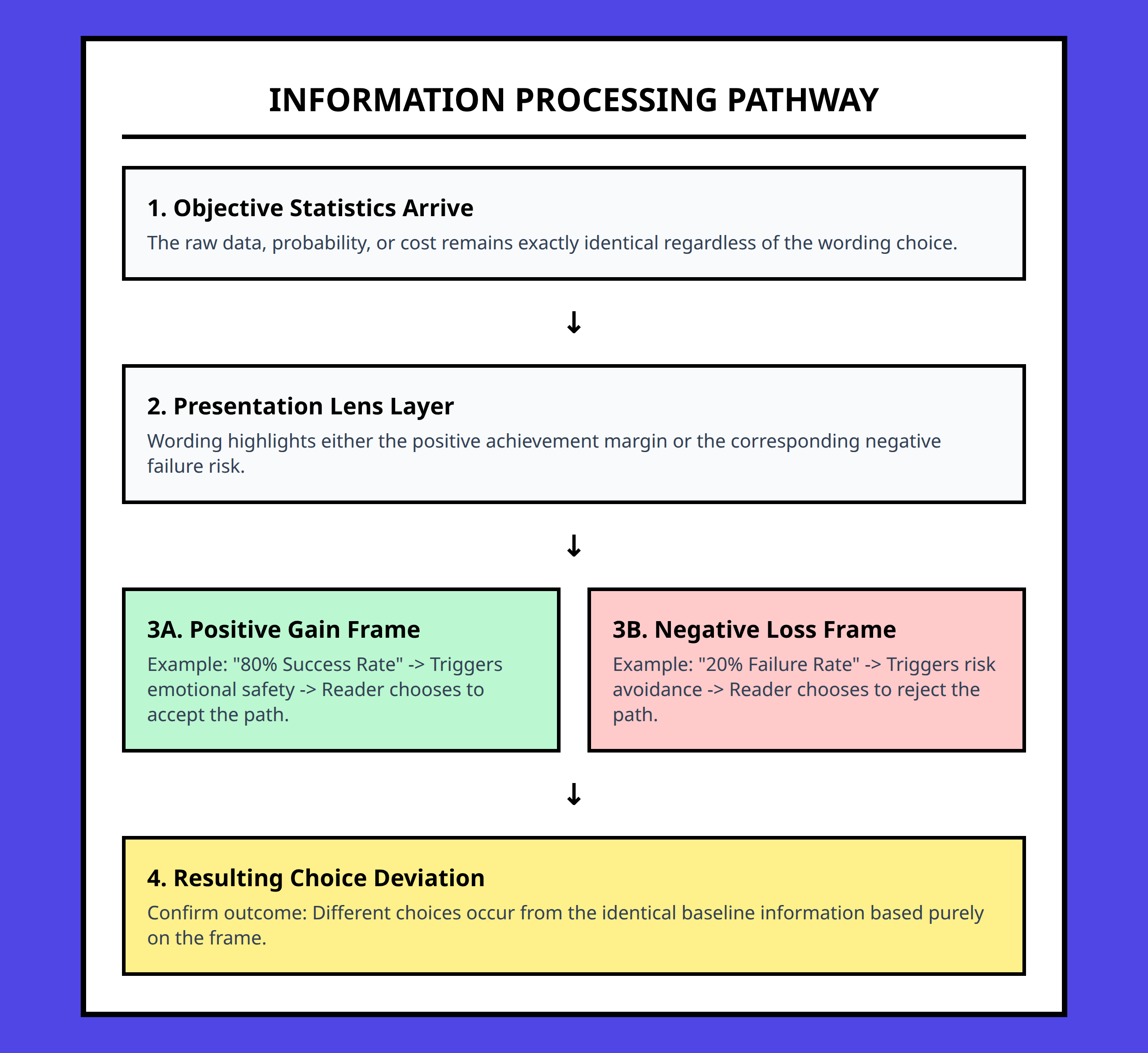
Framing bias happens when the presentation of information changes how people interpret or respond to it.
The same situation can produce different decisions depending on wording, emphasis, emotional tone, or surrounding context.
I think many people assume persuasion mainly works by changing facts. Often it works by changing perspective instead.
A simple example appears in health communication.
Imagine a medical treatment described in two different ways:
- “This treatment has a 90% survival rate.”
- “This treatment has a 10% mortality rate.”
The statistical reality is identical. Yet many people emotionally respond to those statements very differently.
The first frame emphasizes survival. The second emphasizes death.
That emotional shift matters because humans rarely process information as detached analysts. Interpretation arrives mixed together with emotion, memory, expectation, and narrative instinct.
The Brain Understands Stories Faster Than Statistics
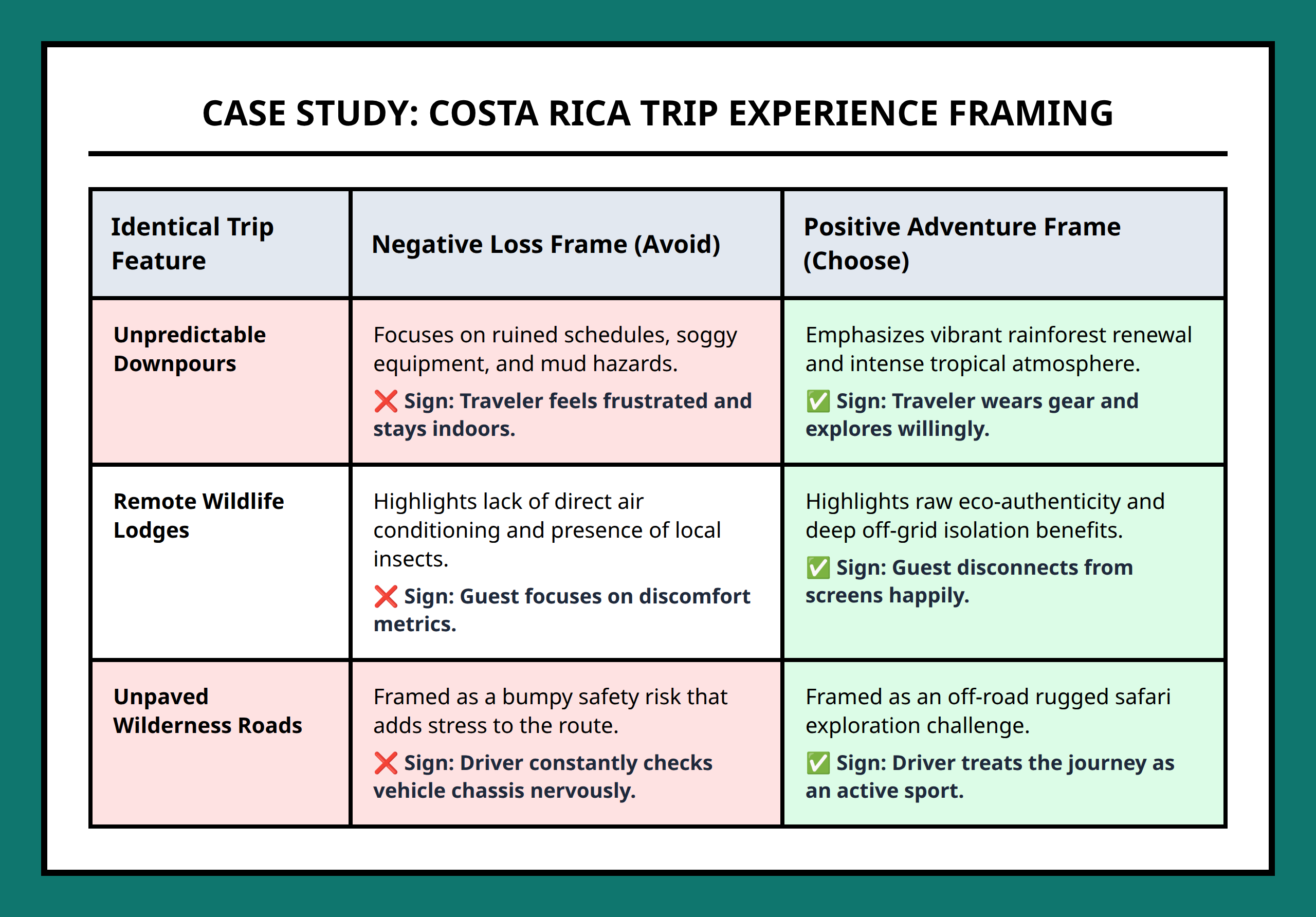
Framing becomes powerful because the brain naturally prefers stories over raw probabilities.
Statistics require interpretation. Stories already feel meaningful.
I notice this whenever people explain complicated events with extreme confidence. A clean narrative usually spreads faster than a nuanced explanation filled with uncertainty.
Suppose two friends are discussing a vacation in Costa Rica.
One person describes it as:
“An amazing place with beautiful beaches, wildlife, and great weather.”
The other frames it differently:
“A risky place where tourists sometimes get robbed.”
Both statements could technically contain truth. But each frame activates a different emotional interpretation of the same destination.
The listener is not simply processing neutral travel information anymore. They are reacting to the story surrounding the information.
That is why framing often works better than direct argument. It changes the emotional lens before logical evaluation fully begins.
Framing Quietly Changes Risk Perception
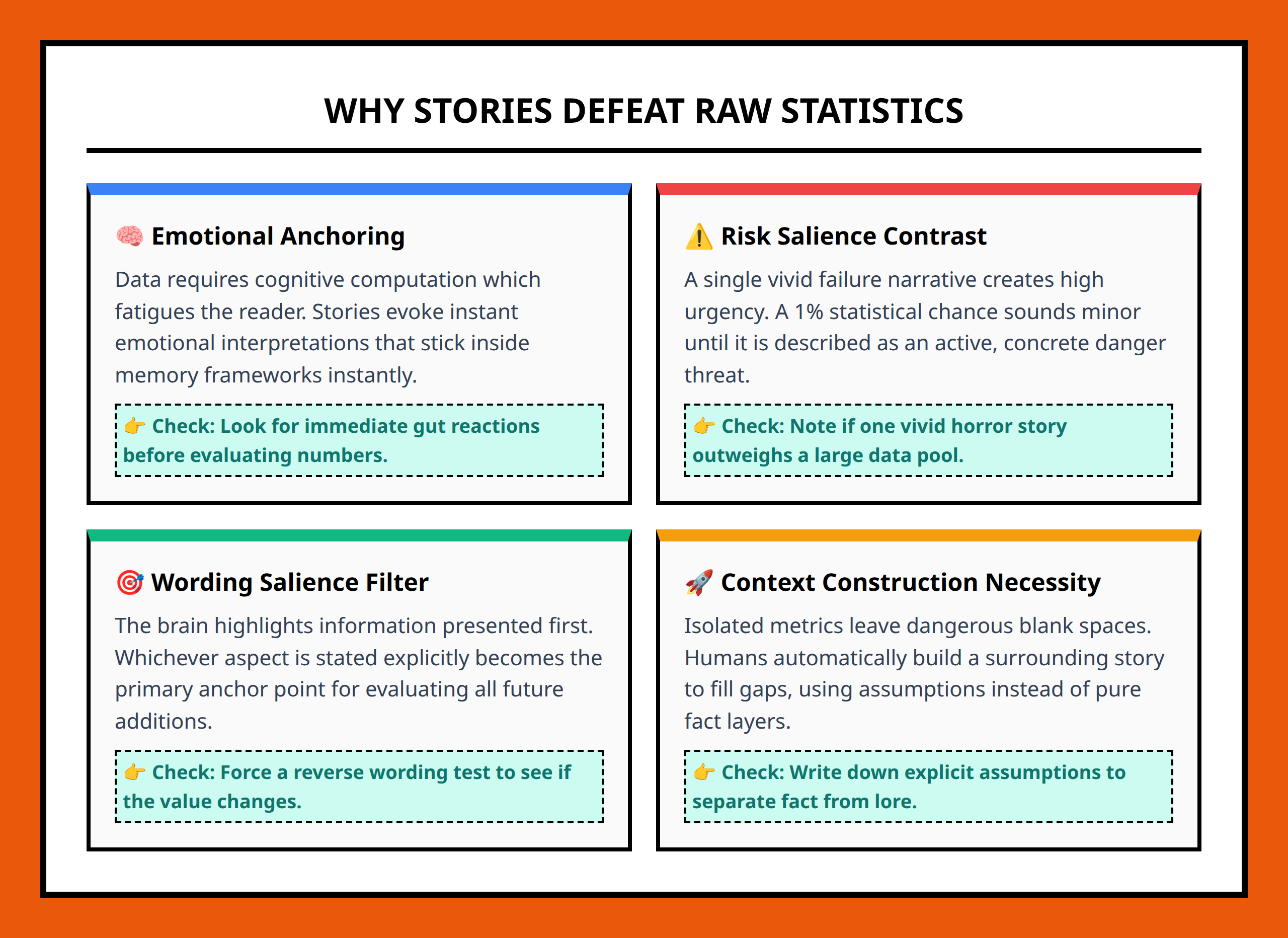
One of the strongest effects of framing appears in situations involving uncertainty or risk.
People often react differently depending on whether outcomes are framed as gains or losses.
I think this explains many strange financial and business decisions.
A manager may resist canceling a failing project because stopping feels like accepting a loss. The same manager might reject a similar new project immediately if presented without the emotional attachment.
The objective numbers may point toward the same conclusion in both cases. But the emotional framing changes the decision.
This also appears in consumer behavior.
A store advertises:
- “Save $50 today.”
instead of:
- “Spend $150 today.”
The financial reality may be nearly identical depending on the original price. But the frame directs attention toward gain rather than spending.
I try to pay attention whenever a decision suddenly feels emotionally obvious. That feeling is often a clue that framing is shaping perception.
Context Changes Meaning Faster Than Facts Do
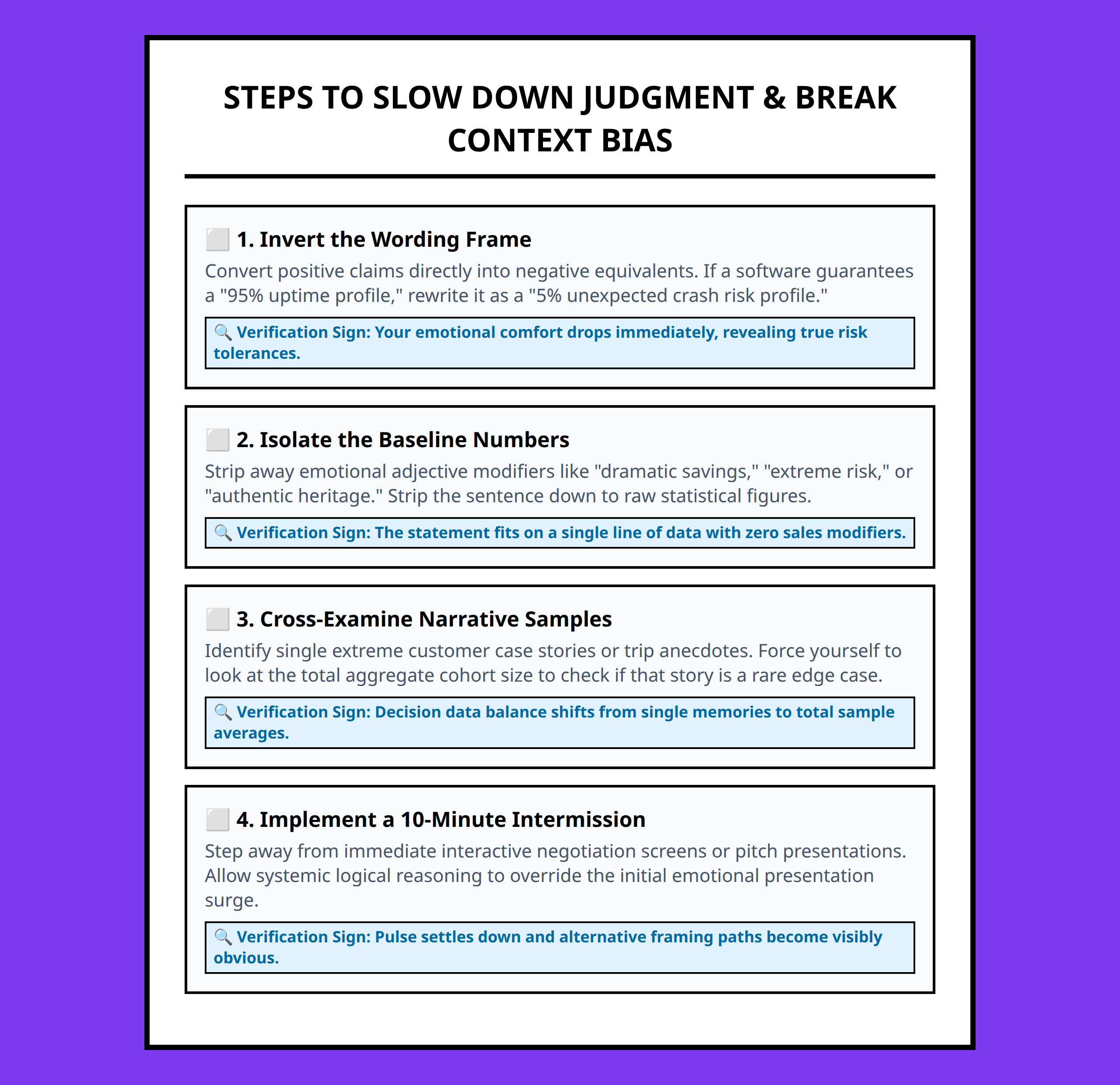
Framing does not only depend on wording. Context itself changes interpretation.
A person can appear confident or arrogant depending on surrounding details. A price can feel expensive or reasonable depending on what came before it. A negotiation offer can feel generous or insulting depending on expectations.
This is why first impressions matter so much.
The brain uses surrounding context to decide how new information should be interpreted.
I notice this clearly in conversations.
If someone is introduced as highly successful before speaking, listeners often interpret their comments differently than if the same person were introduced with no status cues at all.
The words did not change. The interpretive frame changed.
That framing effect often happens automatically and below conscious awareness.
Why Emotional Interpretation Usually Wins
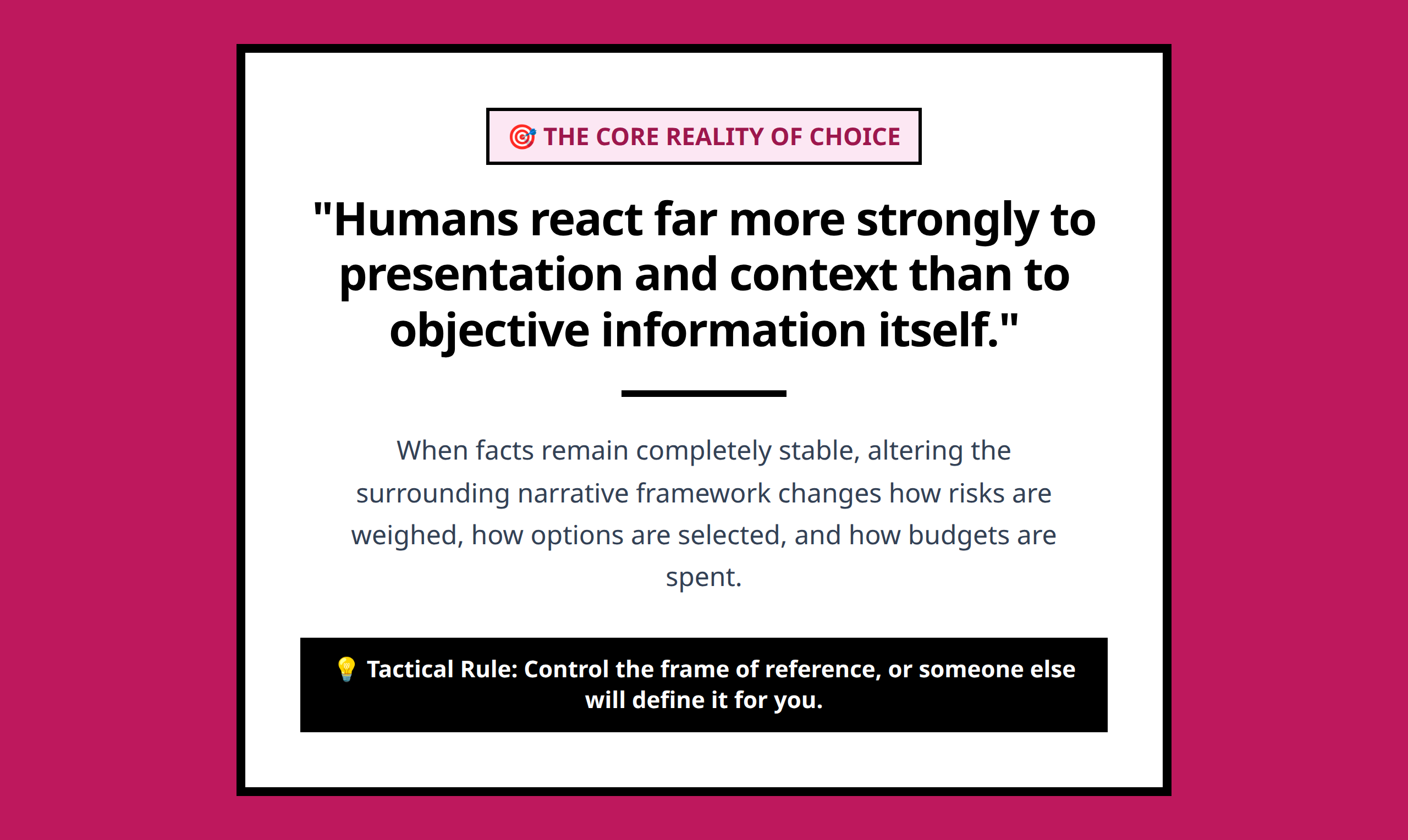
Many people like to imagine themselves as rational decision-makers who follow evidence objectively.
In practice, emotional interpretation usually arrives first.
The brain evolved to make quick judgments under uncertainty. Emotional shortcuts helped humans react rapidly to threats, opportunities, and social situations.
That survival system still shapes modern thinking.
I think this is why emotionally charged framing can overpower statistics so easily. Numbers often feel abstract. Stories feel immediate and human.
For example, hearing that “crime increased by 2%” usually creates less emotional impact than hearing one vivid story about a violent event, even if the larger statistical trend matters more.
The memorable story becomes the frame through which people interpret the broader issue.
Once emotion becomes attached to a frame, people often start filtering information in ways that reinforce the original interpretation.
How I Try to Catch Framing Before It Distorts My Decisions
I do not think framing bias can be eliminated completely. Human beings naturally interpret information through context.
But I do think framing becomes less powerful once it is noticed directly.
When a situation feels emotionally loaded, I try to ask a few simple questions:
- Would this feel different if the wording changed?
- What facts are missing behind the presentation?
- Am I reacting to the information itself or the emotional framing around it?
- How would the opposite frame sound?
Sometimes even a small reframing exercise changes the entire interpretation.
A stressful situation may look different when viewed as temporary instead of catastrophic. A risky choice may feel different when translated into probabilities instead of vivid stories.
I also think it helps to separate presentation from substance.
Confident language, dramatic examples, polished narratives, and emotional wording can all create the illusion of stronger evidence than actually exists.
The more emotionally persuasive a message feels, the more carefully I usually want to examine the underlying facts.
Framing Is Powerful Because Most People Never Notice It Happening
The most important thing about framing bias is that it rarely feels like manipulation while it is occurring.
The interpretation simply feels natural.
That is what makes framing so influential in negotiations, advertising, politics, leadership, and everyday communication. People often believe they are responding to objective reality when they are actually responding to the presentation of reality.
I think this is why slowing down matters so much.
Once a person pauses long enough to compare alternative frames, emotional certainty often weakens. The underlying facts become easier to examine separately from the story wrapped around them.
Most framing effects lose some of their power the moment you realize the presentation itself may be shaping your judgment.
- Framing bias: A cognitive bias where presentation or wording changes how people interpret information.
- Cognitive bias: A predictable mental shortcut or distortion that affects judgment.
- Risk perception: How dangerous, uncertain, or safe a person believes a situation is.
- Narrative thinking: The tendency to understand events through stories instead of raw facts or probabilities.
- Context: Surrounding information or circumstances that influence interpretation.
- Probability: The likelihood that something will happen.
- Emotional framing: Presentation designed to trigger emotional interpretation rather than neutral evaluation.
References:
- https://www.youtube.com/watch?v=eBTHhOnek-g
- https://www.youtube.com/watch?v=DYRMGYfli_c
- https://www.youtube.com/shorts/eeZlKvWcD3A
- https://thedecisionlab.com/biases/framing-effect
- https://www.verywellmind.com/the-framing-effect-in-psychology-8713689
- https://en.wikipedia.org/wiki/Framing_effect_(psychology
- https://en.wikipedia.org/wiki/Framing_effect_(psychology)
- https://nesslabs.com/framing-effect
- https://www.suebehaviouraldesign.com/en/blog/framing-effect-at-work/
- https://pmc.ncbi.nlm.nih.gov/articles/PMC10525293/
- https://profrjstarr.com/cognitive-biases/framing-effect-why-the-way-something-is-said-changes-what-we-hear
- https://www.simplypsychology.org/framing-effect.html
- https://bob-lynn.medium.com/framing-effects-the-hidden-persuaders-shaping-our-choices-8b28431f97da
- https://www.nature.com/nature-index/topics/l4/framing-effects-in-decision-making
- https://www.sciencedirect.com/topics/computer-science/framing-effect